Mucous membrane (cicatricial) pemphigoid !
An autoimmune blistering disease of the mouth, eyes and other mucous membranes that heals with scarring and can lead to blindness or airway narrowing.
Updated 2026-11-01
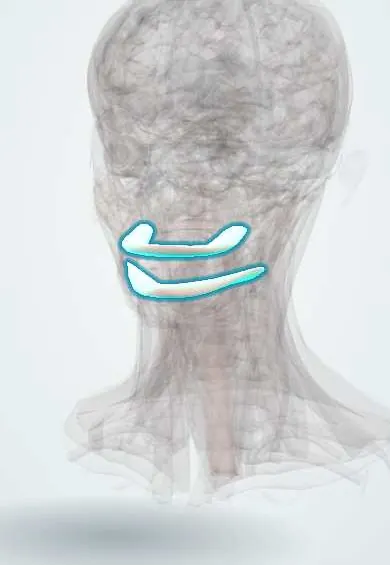
Structures involved
Tap one to see what it is and open it in 3D.
Why it happens
- Fibrosis in organs: TGF-β and the myofibroblast
- Basement membrane
- Conjunctiva, eyelid glands and lacrimal gland
What it is
A group of chronic autoimmune subepithelial blistering diseases that mainly affect mucous membranes (mouth, eyes, nose, throat, oesophagus, genitals) and tend to heal with scarring. The skin is involved in a minority. Its course and treatment differ from bullous pemphigoid because scarring can cause permanent damage.
Who gets it
Rare; it usually begins in older adults (around 60–80 years) and is somewhat more frequent in women. The mouth is involved in most patients and the eyes in more than half. No Colombian data exist; ocular disease is often first treated as chronic conjunctivitis or dry eye.
Causes
- Autoantibodies (IgG and/or IgA) against basement membrane proteins: BP180 (collagen XVII), laminin 332, α6β4 integrin, type VII collagen and others
- Genetic susceptibility (HLA-DQB1*03:01)
- Drug-induced ocular pseudopemphigoid with some long-term eye drops
Risk factors
- Older age
- Female sex
- HLA-DQB1*03:01
- Anti-laminin 332 autoantibodies are associated with a higher risk of internal cancer
Pathophysiology
Autoantibodies bind components of the epithelial basement membrane of mucosae and skin and, with complement and inflammatory cells, separate the epithelium from the underlying connective tissue. Chronic inflammation activates fibroblasts and produces subepithelial fibrosis. In the eye, this scarring shortens the fornices and forms adhesions between the eyelid and the eyeball (symblepharon).
Classification
- Low-risk disease: mouth and/or skin only
- High-risk disease: eyes, larynx, oesophagus, nose or genitals, because scarring is likely
Symptoms and signs
- Painful erosions of the gums (desquamative gingivitis), palate and inner cheeks
- Red, gritty, burning eyes; often starts in one eye before the other
- Shortened conjunctival fornices, symblepharon, inward-turning eyelids and lashes (entropion, trichiasis)
- Nosebleeds, nasal crusting, hoarseness or difficulty swallowing
- Few skin blisters on the head, neck or upper trunk that may scar
Diagnosis
- Clinical
- Chronic erosions and scarring of mucous membranes in an older adult. Ophthalmologic slit-lamp examination stages conjunctival scarring.
- Tests
- Biopsy of perilesional mucosa for direct immunofluorescence: linear IgG, IgA and/or C3 along the basement membrane; repeat biopsies may be needed because sensitivity is lower in the conjunctiva. Indirect immunofluorescence and ELISA for specific antigens; if anti-laminin 332 is present, screen for malignancy.
- Imaging
- Endoscopy of nose, larynx or oesophagus when symptoms suggest involvement; imaging for cancer screening when indicated.
Differential diagnosis
- Bullous pemphigoid (mainly skin, little scarring)
- Pemphigus vulgaris (intraepithelial blister, intercellular staining)
- Erosive oral lichen planus
- Stevens-Johnson syndrome and toxic epidermal necrolysis (acute)
- Chronic conjunctivitis, trachoma and drug-induced pseudopemphigoid
- Epidermolysis bullosa acquisita
Goal of treatment
Stop active inflammation early to prevent irreversible scarring, especially of the eyes and airway; preserve vision, swallowing and breathing.
Treatment
- Medical
- Low-risk (oral or skin only): potent topical corticosteroids, topical calcineurin inhibitors, antiseptic mouthwashes and good dental care; tetracyclines or dapsone if needed.
- Medical
- High-risk (eyes, larynx, oesophagus): aggressive systemic therapy with dapsone and/or systemic corticosteroids combined with immunosuppressants such as mycophenolate, azathioprine or cyclophosphamide; rituximab or intravenous immunoglobulin when refractory.
- Surgical
- Surgery for eyelid malposition and trichiasis, or dilation of oesophageal and laryngeal strictures, ideally when the disease is inactive.
- Follow-up
- Regular ophthalmology review, lubricating eye drops, nutrition and swallowing assessment; nursing checks for airway symptoms and drug toxicity.
Complications
- Blindness from conjunctival and corneal scarring
- Laryngeal and tracheal stenosis with airway compromise
- Oesophageal strictures and malnutrition
- Genital and anal adhesions
- Infections and side effects of immunosuppression
Prognosis
Chronic and often progressive. Early systemic treatment can stop scarring, but damage already done is permanent. Eye and airway involvement determine the outcome.
Test yourself
Think of the answer, then tap the question to see it.
What distinguishes mucous membrane pemphigoid from bullous pemphigoid?
Predominant mucosal involvement and healing with scarring (eyes, mouth, larynx, oesophagus).
What is the most feared complication?
Blindness from conjunctival scarring (symblepharon, entropion, corneal damage).
Which antibody target is linked to an increased cancer risk?
Laminin 332.
How is ocular disease treated?
As high-risk disease, with early systemic immunosuppression (e.g., dapsone, corticosteroids plus immunosuppressants, rituximab).
Related conditions
- Bullous pemphigoid
- Pemphigus vulgaris
- Epidermolysis bullosa acquisita
- Lichen planus
- Stevens–Johnson syndrome and toxic epidermal necrolysis
- Trachoma
- Dry eye disease
- Conjunctivitis
Educational information, not medical advice. For any symptom, see a health professional.
Sources: Mucous membrane pemphigoid (DermNet, 2026); Harrison's Principles of Internal Medicine, 21st ed. Chapter 59: Immunologically Mediated Skin Diseases (McGraw Hill, 2022).
Spotted a mistake?We are always improving for the community. Tell us what is wrong and our team will review it.Report a mistake
Representative model, for educational purposes only.