Conditions · Pediatrics and neonatology
Nocturnal enuresis !
Bedwetting during sleep in a child aged 5 or older. It is common, runs in families and usually goes away; alarms and reassurance help.
Updated 2026-11-01
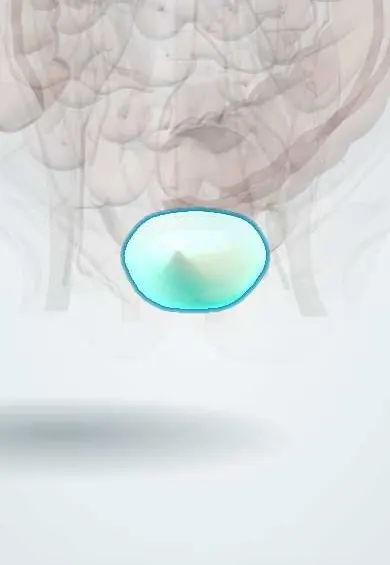
Structures involved
Tap one to see what it is and open it in 3D.
Why it happens
- ADH, thirst and water balance
- The posterior pituitary: ADH and oxytocin
- Micturition and the bladder reflex
What it is
Involuntary passage of urine during sleep at least once a month (more often for diagnostic criteria) in a child aged 5 years or older, for at least 3 months. It is a symptom of delayed maturation of bladder control in most children.
Who gets it
Affects about 15–20% of 5-year-olds, falling by about 15% each year; 1–2% of adolescents still wet. More common in boys. Shame and the belief that the child does it on purpose often delay consultation and can lead to punishment.
Causes
- Night-time polyuria from low nocturnal vasopressin secretion
- Reduced functional bladder capacity or overactive bladder
- Difficulty waking to the signal of a full bladder (high arousal threshold)
- Strong genetic component
Risk factors
- Family history (risk rises sharply if one or both parents wet the bed)
- Male sex
- Constipation
- Obstructive sleep apnoea and snoring
- ADHD and developmental delay
- Psychosocial stress (mainly in secondary enuresis)
Pathophysiology
Bladder control matures with age. Enuresis occurs when the night-time urine volume exceeds bladder capacity and the child does not wake to void. The external urethral sphincter relaxes reflexly as the detrusor contracts during sleep.
Classification
- Primary: never dry for 6 months
- Secondary: wetting returns after at least 6 months dry; look for a cause
- Monosymptomatic: night wetting only
- Non-monosymptomatic: with daytime symptoms (urgency, frequency, daytime wetting)
Symptoms and signs
- Wet bed at night with normal daytime control (monosymptomatic)
- Daytime urgency, frequency or leakage in non-monosymptomatic forms
- Deep sleep and difficulty waking
- Embarrassment, low self-esteem and avoidance of sleepovers
Diagnosis
- Clinical
- History and a 2-week bladder and fluid diary (voided volumes, night wetting); bowel history; examination of the abdomen, genitals, lower back and lower-limb neurology; growth and blood pressure.
- Tests
- Urinalysis for all children (glucose, specific gravity, infection, protein). Further tests only if red flags are present.
- Imaging
- Not needed in monosymptomatic enuresis. Renal and bladder ultrasound or spinal MRI when an anatomical or neurological cause is suspected.
Differential diagnosis
- Urinary tract infection
- Diabetes mellitus and diabetes insipidus
- Neurogenic bladder (spina bifida, tethered cord)
- Posterior urethral valves or ectopic ureter
- Constipation with bladder dysfunction
- Obstructive sleep apnoea
Goal of treatment
Reach dry nights, protect the child's self-esteem and treat any underlying cause; treatment usually starts at 6–7 years when the child is motivated.
Treatment
- Conservative
- Education and reassurance that it is not the child's fault, no punishment, praise for dry nights; regular daytime drinking with less fluid in the evening, voiding before bed, and treating constipation.
- Conservative
- Enuresis (moisture) alarm used every night for several weeks: first-line with the best long-term cure rate, needs family commitment.
- Medical
- Desmopressin (a vasopressin analogue) is first-line for nocturnal polyuria or when a quick effect is needed; evening fluid restriction is essential because of hyponatraemia risk. Anticholinergics are added for overactive bladder.
- Follow-up
- Nursing: review diaries, alarm adherence and relapse; on desmopressin, teach families to restrict evening fluids and recognise headache, vomiting or confusion (water intoxication).
Complications
- Low self-esteem, anxiety and social isolation
- Family conflict and risk of punishment or abuse
- Skin irritation
- Hyponatraemia with desmopressin if fluids are not restricted
Prognosis
Most children become dry spontaneously over time, with about 15% resolving each year. Alarms give the most lasting results; relapses are common after stopping desmopressin.
Prevention
- Regular daytime voiding and adequate daytime fluids
- Prevention and treatment of constipation
- Avoiding caffeine and sugary drinks in the evening
Test yourself
Think of the answer, then tap the question to see it.
From what age is bedwetting called enuresis?
From 5 years of age.
What is the first-line treatment with the best long-term results?
The enuresis (moisture) alarm, with behavioural measures.
What serious adverse effect of desmopressin must families know?
Hyponatraemia and water intoxication if fluids are not restricted in the evening.
Which test should every child with enuresis have?
A urinalysis, to exclude infection, diabetes and concentrating defects.
What is secondary enuresis?
Wetting that returns after at least 6 months of dryness; an underlying cause should be sought.
Related conditions
- Urinary tract infection (acute cystitis)
- Diabetes insipidus (central and nephrogenic)
- Obstructive sleep apnoea
- Functional constipation in children
- Neurogenic bladder
- Posterior urethral valves
- Spina bifida (myelomeningocele)
Educational information, not medical advice. For any symptom, see a health professional.
Sources: Bladder Control Problems & Bedwetting in Children (National Institute of Diabetes and Digestive and Kidney Diseases (NIDDK), 2017); Bedwetting in Children (Enuresis) (Nemours KidsHealth, 2023).
Spotted a mistake?We are always improving for the community. Tell us what is wrong and our team will review it.Report a mistake
Representative model, for educational purposes only.