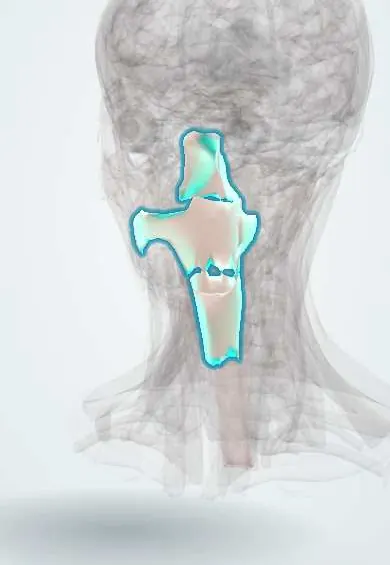
Obstructive sleep apnoea !
Obstructive sleep apnoea is repeated collapse of the throat during sleep, causing breathing pauses, loud snoring and daytime sleepiness.
Updated 2026-10-30
Structures involved
Tap one to see what it is and open it in 3D.
In biochemistry
In embryology
In physiology
- Wakefulness, sleep, the EEG and seizures
- Control of breathing, chemoreceptors and lung reflexes
- Abnormal breathing patterns and sleep apnea
Why it happens
What it is
Repeated partial or complete collapse of the upper airway during sleep, causing pauses in breathing, drops in oxygen and fragmented sleep, with daytime sleepiness and cardiovascular risk.
Who gets it
Common in adults and rising with obesity; most cases are undiagnosed. More frequent in men and after menopause. In children it is mostly due to enlarged tonsils and adenoids. Among 340 university students in Manizales, Colombia, a screening questionnaire (STOP-BANG) flagged moderate to high risk in 23% of men and 3.1% of women.
Causes
- Narrow upper airway from fat deposits in the neck and tongue
- Enlarged tonsils and adenoids (main cause in children)
- Retrognathia or small jaw, craniofacial anomalies
- Reduced dilator muscle tone during sleep
Risk factors
- Obesity and large neck circumference
- Male sex, older age, menopause
- Alcohol and sedatives before sleep
- Smoking
- Nasal obstruction
- Hypothyroidism, acromegaly
- Family history
Pathophysiology
During sleep the tone of the pharyngeal dilator muscles, such as the genioglossus, falls. In a narrow airway, the soft palate, tongue and pharyngeal walls collapse, causing apnoeas and hypopnoeas. Each event lowers oxygen, raises carbon dioxide and ends in a brief arousal with a sympathetic surge, which fragments sleep and raises blood pressure over time.
Classification
- Severity by apnoea-hypopnoea index (AHI) per hour of sleep: mild, moderate, severe (widely used cut-offs: 5, 15 and 30 events per hour in adults)
Symptoms and signs
- Loud habitual snoring
- Witnessed pauses in breathing, gasping or choking at night
- Excessive daytime sleepiness and unrefreshing sleep
- Morning headache
- Poor concentration, irritability
- Night-time urination
- In children: snoring, restless sleep, behaviour and learning problems
Diagnosis
- Clinical
- Suspected from snoring, witnessed apnoeas and sleepiness; questionnaires (STOP-BANG, Epworth sleepiness scale) help screen. Examination looks at BMI, neck circumference, tonsils, palate, jaw and nose.
- Tests
- Overnight polysomnography is the reference test; home sleep apnoea testing in selected adults with high pretest probability. The apnoea-hypopnoea index defines severity.
- Imaging
- Not routinely needed. Drug-induced sleep endoscopy or imaging of the airway in selected patients when surgery is considered.
Differential diagnosis
- Simple snoring
- Insufficient sleep or shift work
- Narcolepsy
- Central sleep apnoea
- Obesity hypoventilation syndrome
- Depression or hypothyroidism
Goal of treatment
Keep the airway open during sleep, relieve sleepiness and improve quality of life, and lower cardiovascular and accident risk.
Treatment
- Lifestyle
- Weight loss, avoiding alcohol and sedatives at night, sleeping on the side when apnoea is positional and treating nasal obstruction.
- Conservative
- Continuous positive airway pressure (CPAP) during sleep is the main treatment for moderate-severe disease; adherence is the main challenge.
- Conservative
- Mandibular advancement oral appliances for mild-moderate disease or CPAP intolerance.
- Medical
- Anti-obesity medicines (incretin-based drug classes) in selected adults with obesity, as part of weight management.
- Surgical
- Adenotonsillectomy is first line in children with enlarged tonsils and adenoids; tonsillectomy or palate surgery in selected adults.
- Surgical
- Maxillomandibular advancement or hypoglossal nerve stimulation in selected adults who cannot use CPAP.
Drugs for this condition
Complications
- Arterial hypertension, often resistant
- Atrial fibrillation and other arrhythmias
- Heart failure, coronary disease and stroke
- Insulin resistance and type 2 diabetes
- Road and work accidents
- Pulmonary hypertension
Prognosis
Chronic, but treatment improves sleepiness and quality of life and lowers blood pressure; adherence to CPAP determines much of the benefit. In children, adenotonsillectomy often cures it.
Prevention
- Keeping a healthy weight
- Limiting alcohol and sedatives
- Not smoking
Test yourself
Think of the answer, then tap the question to see it.
Which index is used to grade the severity of obstructive sleep apnoea?
The apnoea-hypopnoea index (events per hour of sleep): mild, moderate or severe.
What is the reference test for diagnosing obstructive sleep apnoea?
Overnight polysomnography; home testing is used in selected adults.
What is the first-line treatment of moderate to severe obstructive sleep apnoea in adults?
Continuous positive airway pressure (CPAP) during sleep, with weight loss when indicated.
What is the main cause of obstructive sleep apnoea in children?
Enlarged tonsils and adenoids; adenotonsillectomy is first-line treatment.
Which cardiovascular conditions are linked to untreated obstructive sleep apnoea?
Resistant hypertension, atrial fibrillation, heart failure, coronary disease and stroke.
Related conditions
Educational information, not medical advice. For any symptom, see a health professional.
Sources: Obstructive Sleep Apnea (StatPearls (NCBI Bookshelf), 2025); Sex Differences in Predictors of Obstructive Sleep Apnea Risk Among Young Adults: A Cross-Sectional Study in Colombian University Students (Journal of clinical medicine, 2025) · adapted, CC BY 4.0.
Spotted a mistake?We are always improving for the community. Tell us what is wrong and our team will review it.Report a mistake
Representative model, for educational purposes only.