Conditions · Pediatrics and neonatology
Functional constipation in children !
Functional constipation is hard, infrequent, painful stools without a disease behind them, usually from holding stool. Diet, toilet routine and laxatives help.
Updated 2026-11-01
Structures involved
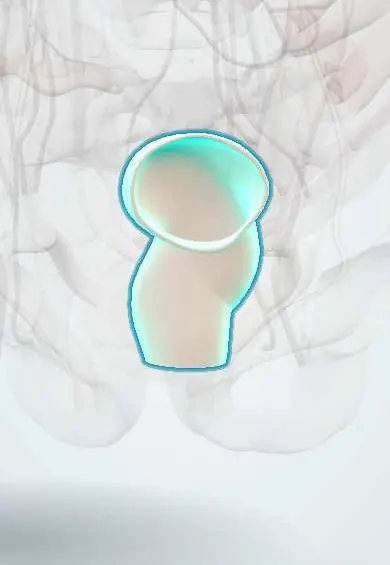
Tap one to see what it is and open it in 3D.
Why it happens
What it is
Constipation in a child without an organic cause, defined by infrequent, hard or painful bowel movements, stool withholding and often fecal soiling. It accounts for the great majority of childhood constipation.
Who gets it
Affects roughly 1 in 10 children worldwide and is one of the most common reasons for pediatric visits. Peaks at three moments: weaning to solid foods, toilet training and school entry. Latin American studies report similar or higher rates, linked to low fiber and water intake.
Causes
- Voluntary stool withholding after a painful bowel movement (the main mechanism)
- Dietary changes: switching to cow's milk, low intake of fiber and fluids
- Toilet training conflicts, avoidance of school toilets, changes in routine or travel
- Psychosocial stress
Risk factors
- Low fiber and water intake, excess cow's milk
- Toilet training age and school entry
- Previous painful defecation or anal fissure
- Low physical activity, obesity
- Developmental or behavioral disorders (autism, ADHD)
Pathophysiology
A hard or painful stool leads the child to contract the external sphincter and gluteal muscles to avoid passing stool. Stool stays in the rectum, more water is absorbed, and it becomes larger and harder, so the next bowel movement is more painful. The rectum gradually dilates and loses sensation, the urge to defecate weakens, and soft stool can leak around the retained mass (overflow incontinence). The full rectum can also press on the bladder, contributing to urinary symptoms.
Classification
- Rome IV criteria: at least 2 of the following for at least 1 month, at any age: 2 or fewer stools per week, withholding, painful or hard stools, large-diameter stools, large rectal fecal mass, and (if toilet trained) fecal incontinence at least weekly
- With or without fecal impaction
Symptoms and signs
- Infrequent, hard, large stools that may block the toilet
- Pain and straining on defecation; streaks of blood from fissures
- Withholding postures: crossing legs, standing on tiptoe, hiding
- Fecal soiling of underwear (often mistaken for diarrhea)
- Abdominal pain, reduced appetite, palpable stool in the left lower abdomen
- Daytime wetting, enuresis or urinary tract infections
Diagnosis
- Clinical
- Based on history and physical exam using Rome IV criteria and the absence of red flags. Exam includes abdominal palpation, inspection of the perianal area and the lumbosacral spine, and neurological exam of the legs. Digital rectal exam is not needed routinely when the picture is typical.
- Tests
- Usually none. Selected tests when red flags or treatment failure: thyroid function, celiac serology, calcium and lead levels; rectal biopsy or anorectal manometry if Hirschsprung disease is suspected.
- Imaging
- Not routinely required; plain abdominal radiograph only when the exam cannot be done or is unreliable. Spinal MRI if neurological signs suggest a spinal cause.
Differential diagnosis
- Hirschsprung disease
- Hypothyroidism
- Celiac disease or cow's milk protein allergy
- Spinal cord anomalies (spina bifida, tethered cord)
- Anorectal malformation or anal stenosis
- Hypercalcemia or lead poisoning
Goal of treatment
Clear any impaction, keep stools soft and painless for months so the rectum recovers, and rebuild a regular toilet habit with the family.
Treatment
- Conservative
- Education and demystification for the family, a positive non-punitive approach, scheduled toilet sitting after meals with foot support and a stool diary.
- Medical
- Disimpaction (oral first choice) followed by maintenance with an osmotic laxative such as polyethylene glycol (first-line), adding a stimulant laxative if needed; slow tapering after months of regular stools.
- Lifestyle
- Adequate fluids and age-appropriate fiber, limiting excess cow's milk, and regular physical activity.
- Follow-up
- Follow-up visits to adjust treatment and support adherence; referral to pediatric gastroenterology if red flags appear or treatment fails.
Drugs for this condition
Complications
- Fecal impaction
- Overflow fecal incontinence and social or emotional problems
- Anal fissures and rectal bleeding
- Urinary tract infections, enuresis and daytime wetting
- Recurrence, especially if laxatives are stopped too early
Prognosis
Most children recover with sustained treatment, but relapses are common and around a third still have symptoms years later. Early treatment and good adherence improve outcomes.
Prevention
- Diet rich in fruit, vegetables and whole grains, with enough water
- Relaxed, child-led toilet training and regular toilet routines
- Prompt treatment of painful defecation and anal fissures
Test yourself
Think of the answer, then tap the question to see it.
What is the main mechanism of functional constipation in children?
Stool withholding after painful defecation, leading to a vicious cycle of harder, larger stools and rectal dilation.
Which laxative class is first-line for maintenance in children?
Osmotic laxatives, with polyethylene glycol as first choice.
What does fecal soiling in a constipated child usually represent?
Overflow incontinence: soft stool leaking around a retained fecal mass.
Which history finding points to Hirschsprung disease instead of functional constipation?
Delayed passage of meconium beyond 48 hours after birth or onset in the first month of life.
Related conditions
- Hirschsprung disease
- Anal fissure
- Constipation and faecal impaction
- Urinary tract infection (acute cystitis)
- Nocturnal enuresis
- Coeliac disease
- Congenital hypothyroidism
- Spina bifida (myelomeningocele)
- Anorectal malformations (imperforate anus)
- Child maltreatment (physical abuse, abusive head trauma, neglect)
Educational information, not medical advice. For any symptom, see a health professional.
Sources: Constipation in Children (National Institute of Diabetes and Digestive and Kidney Diseases (NIDDK), 2018).
Spotted a mistake?We are always improving for the community. Tell us what is wrong and our team will review it.Report a mistake
Representative model, for educational purposes only.