
Ocular ischaemic syndrome
Severe narrowing of the carotid artery starves the whole eye of blood: aching, slow visual loss and new vessels. It signals high cardiovascular risk.
What it is
Chronic hypoperfusion of the eye, usually from severe atherosclerotic stenosis or occlusion of the internal or common carotid artery on the same side. It causes gradual visual loss, eye or brow ache, mid-peripheral retinal haemorrhages and new vessels on the iris. The eye is a warning of severe vascular disease, and these patients have a high risk of stroke and heart attack.
Who gets it
Uncommon; mainly men over 60 with atherosclerosis, diabetes, hypertension and smoking.
Causes
- Severe atherosclerotic carotid stenosis or occlusion
- Less often, giant cell arteritis, carotid dissection or other arteritis
Risk factors
- Smoking
- Diabetes
- Hypertension
- Dyslipidaemia
- Coronary or peripheral artery disease
Pathophysiology
Reduced flow through the ophthalmic artery leaves the retina, optic nerve and anterior segment ischaemic. The retina releases VEGF, causing new vessels on the iris and angle; low perfusion of the ciliary body can keep eye pressure deceptively normal or low.
Symptoms and signs
- Gradual loss of vision in one eye
- Dull ache around the eye or brow
- Slow recovery of vision after bright light
- Transient visual loss
Diagnosis
- Clinical
- Narrowed retinal arteries, dilated but not tortuous veins and blot haemorrhages in the mid-periphery, often with iris new vessels and mild anterior chamber inflammation.
- Tests
- Cardiovascular risk assessment; ESR and CRP to exclude arteritis.
- Imaging
- Carotid Doppler, CT or MR angiography; fluorescein angiography shows delayed filling.
Differential diagnosis
- Diabetic retinopathy
- Central retinal vein occlusion
- Uveitis
- Neovascular glaucoma from other causes
Goal of treatment
Protect the eye from neovascular glaucoma and reduce the risk of stroke and heart attack.
Treatment
- Surgical
- Carotid endarterectomy or stenting when appropriate, decided with vascular surgery.
- Medical
- Antiplatelet therapy, statin, blood pressure and glucose control and smoking cessation.
- Procedure
- Panretinal laser and anti-VEGF injections for new vessels; pressure control for neovascular glaucoma.
Complications
- Neovascular glaucoma
- Severe visual loss
- Stroke and myocardial infarction
Prognosis
Visual prognosis is often poor; survival depends on the associated cardiovascular disease.
Test yourself
Think of the answer, then tap the question to see it.
What usually causes ocular ischaemic syndrome?
Severe stenosis or occlusion of the carotid artery on the same side.
Why can eye pressure stay normal despite angle new vessels?
Because poor blood flow to the ciliary body reduces aqueous production.
What does the diagnosis mean for the patient's general health?
A high risk of stroke and heart attack, requiring vascular assessment and prevention.
Connections
Educational information, not medical advice. For any symptom, see a health professional.
Sources: Ocular Ischemic Syndrome (EyeWiki, American Academy of Ophthalmology, 2026).
Spotted a mistake?We are always improving for the community. Tell us what is wrong and our team will review it.Report a mistake
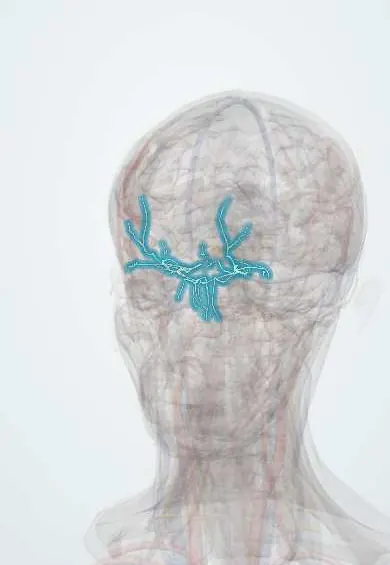
Representative model, for educational purposes only.