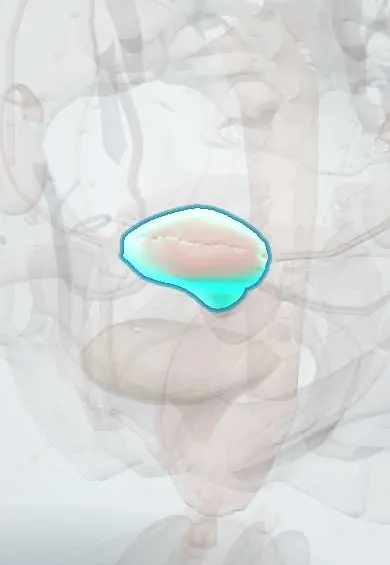
Placental abruption !
Placental abruption is the separation of the placenta from the uterine wall before birth; it causes painful bleeding and a hard uterus and is an emergency.
Updated 2026-10-29
Structures involved
Tap one to see what it is and open it in 3D.
In histology
In embryology
- Placenta: structure, circulation and functions
- Abnormal placentation: previa and the accreta spectrum
- Alcohol: fetal alcohol spectrum disorder
- Ionizing radiation, tobacco and cocaine
In physiology
Why it happens
- Disseminated intravascular coagulation: how consumption causes both clots and bleeding
- Hemorrhage: petechiae, purpura, ecchymosis, hematoma, and what blood loss does
- Drugs of abuse: cocaine, opioids, amphetamines, cannabis
- Coagulation tests: PT/INR, aPTT and platelets
What it is
Separation of a normally implanted placenta from the uterine wall before the baby is born, after 20 weeks. It classically causes painful bleeding with a tender, hard uterus and can quickly threaten mother and fetus.
Who gets it
A major cause of third-trimester bleeding and perinatal death. It is closely linked to hypertensive disorders of pregnancy and to abdominal trauma, including road traffic accidents and intimate partner violence.
Causes
- Hypertension and preeclampsia
- Abdominal trauma (falls, traffic accidents, assault)
- Sudden uterine decompression (rupture of membranes with polyhydramnios, after the first twin)
- Cocaine use and smoking
Risk factors
- Previous placental abruption
- Chronic or pregnancy hypertension, preeclampsia
- Prelabour rupture of membranes, chorioamnionitis
- Smoking, cocaine or other vasoconstrictor drugs
- Older maternal age and high parity
- Thrombophilias, multiple pregnancy
Pathophysiology
Bleeding from maternal vessels in the decidua forms a retroplacental haematoma that pushes the placenta off the uterine wall, reducing the area for gas exchange. Blood may escape through the cervix or stay hidden behind the placenta. Release of tissue factor from the damaged decidua can trigger disseminated intravascular coagulation.
Classification
- Revealed (bleeding visible) or concealed (blood trapped behind the placenta)
- Partial or complete
- Severity grades from mild (no maternal or fetal compromise) to severe (fetal death, maternal shock or coagulopathy)
Symptoms and signs
- Vaginal bleeding with abdominal or back pain
- Tender, firm uterus, sometimes described as woody
- Frequent, strong contractions or a raised uterine tone
- Abnormal fetal heart rate or reduced fetal movements
- Signs of shock out of proportion to the visible bleeding (concealed haemorrhage)
Diagnosis
- Clinical
- Mainly clinical: painful bleeding, uterine tenderness and hypertonus, with continuous fetal heart monitoring. After abdominal trauma, monitoring is continued for several hours even if the woman looks well.
- Tests
- Full blood count, fibrinogen, coagulation studies, blood group and Rh, crossmatch, kidney function; a test for fetal-maternal haemorrhage in Rh-negative women.
- Imaging
- Ultrasound may show a retroplacental clot and excludes placenta previa, but a normal scan does not rule out abruption.
Differential diagnosis
- Placenta previa
- Uterine rupture
- Preterm labour
- Vasa previa
- Chorioamnionitis
- Acute abdomen unrelated to pregnancy
Goal of treatment
Stabilise the mother, correct blood loss and coagulopathy, and decide the timing and route of delivery according to maternal and fetal condition and gestational age.
Treatment
- Acute
- IV access, fluids, early blood products and correction of coagulopathy (fibrinogen, plasma, platelets).
- Surgical
- Urgent caesarean delivery when the fetus is alive and compromised or the mother is unstable.
- Procedure
- Vaginal delivery when the mother is stable, especially if the fetus has died, with close monitoring of clotting.
- Follow-up
- Mild abruption, stable, preterm: expectant care in hospital with continuous monitoring and antenatal corticosteroids.
- Medical
- Anti-D immunoglobulin for Rh-negative women; treatment of hypertension.
Complications
- Haemorrhagic shock
- Disseminated intravascular coagulation
- Couvelaire uterus (blood infiltrating the myometrium) and postpartum haemorrhage
- Acute kidney injury, Sheehan syndrome
- Fetal hypoxia, preterm birth, stillbirth
- Recurrence in later pregnancies
Prognosis
Depends on the extent of separation and how fast the woman reaches care. Mild cases often end well; severe abruption carries a high risk of fetal death and maternal complications.
Prevention
- Control of hypertension in pregnancy
- Avoiding tobacco and cocaine
- Seat belt use in pregnancy and screening for intimate partner violence
Test yourself
Think of the answer, then tap the question to see it.
How does the bleeding of placental abruption differ from that of placenta previa?
Abruption causes painful bleeding with a tender, hard uterus; previa causes painless bleeding with a soft uterus.
What are the two classic causes of placental abruption?
Hypertension (including preeclampsia) and abdominal trauma.
Which coagulation complication is typical of severe abruption?
Disseminated intravascular coagulation, with low fibrinogen.
Does a normal ultrasound exclude placental abruption?
No. Ultrasound often misses it; the diagnosis is mainly clinical.
What is a Couvelaire uterus?
A uterus infiltrated by blood from a severe abruption, which may contract poorly after birth.
Related conditions
Educational information, not medical advice. For any symptom, see a health professional.
Sources: Placental Abruption (StatPearls (NCBI Bookshelf), 2025).
Spotted a mistake?We are always improving for the community. Tell us what is wrong and our team will review it.Report a mistake
Representative model, for educational purposes only.