
Premature ejaculation
Ejaculation that comes too soon and cannot be held back, causing distress. It is the most common male sexual complaint and usually treatable.
What it is
A male sexual dysfunction with three parts (ISSM): ejaculation that always or nearly always comes within about one minute of vaginal penetration from the first sexual experiences (lifelong) or a clear, bothersome shortening, often to about three minutes or less (acquired); inability to delay it on nearly all occasions; and negative personal consequences such as distress or avoiding intimacy.
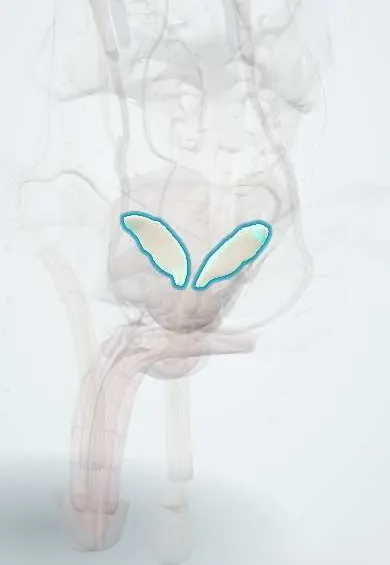
Who gets it
The most frequently reported male sexual complaint: in surveys roughly 20–30% of men report ejaculating too early, but far fewer meet the strict ISSM definition of lifelong PE (a few percent). Acquired PE is commoner in older men and often coexists with erectile dysfunction. Many men never consult because of embarrassment, so the doctor usually has to ask.
Causes
- Lifelong PE: neurobiological, with lower central serotonin signalling and genetic factors suspected; present from the first sexual experiences
- Acquired PE: erectile dysfunction (the man hurries to ejaculate before losing the erection)
- Acquired PE: chronic prostatitis or prostatic inflammation
- Acquired PE: hyperthyroidism
- Performance anxiety, depression and relationship problems (as cause or consequence)
- Withdrawal or detoxification from prescribed or recreational drugs
Risk factors
- Erectile dysfunction
- Anxiety, especially performance anxiety
- Chronic prostatitis or pelvic pain
- Thyroid disease
- Relationship conflict; possibly infrequent sexual activity (studies disagree)
Pathophysiology
Sensory input from the glans travels in the dorsal nerve of the penis and pudendal nerve to the spinal ejaculation centre → at the point of no return, the sympathetic (thoracolumbar) outflow triggers emission: the vas deferens, seminal vesicles and prostate contract and the bladder neck closes → somatic (sacral) outflow through the pudendal nerve produces rhythmic contractions of the bulbospongiosus and pelvic floor, which expel semen → descending serotonin pathways from the brain normally delay this reflex, so a lower serotonergic tone (lifelong PE) or extra excitation (anxiety, inflammation, thyroid excess, an erection the man fears losing) shortens the time to the point of no return → SSRIs raise serotonin at the synapse and lengthen latency, which explains both their use in PE and their side effect of delayed ejaculation in depression.
Classification
- Lifelong (primary): from the first sexual experiences, with almost every partner and situation
- Acquired (secondary): starts after a period of normal latency, often with a medical or psychological cause
- Variable PE: early ejaculation that comes and goes; a normal variation rather than a disorder
- Subjective PE: the man perceives early ejaculation although latency is normal or long
Symptoms and signs
- Ejaculation within about one minute of penetration (lifelong) or a clear shortening (acquired)
- Feeling of little or no control over when ejaculation happens
- Distress, frustration, embarrassment or avoiding sex
- Tension in the relationship; the partner may also be dissatisfied
- In acquired PE, symptoms of the cause: weak erections, perineal or pelvic pain, heat intolerance, palpitations or weight loss
Diagnosis
- Clinical
- A diagnosis from the history, taken in private and without judgement: estimated time to ejaculation, sense of control, distress, whether it has been present from the start (lifelong) or appeared later (acquired), whether it happens with every partner and with masturbation, and whether erections are firm. Ask about drugs, alcohol and the relationship. Validated questionnaires such as the Premature Ejaculation Diagnostic Tool help. Examine the genitals and, if symptoms suggest it, the prostate and thyroid.
- Tests
- No test is needed for typical lifelong PE. In acquired PE, tests follow the suspected cause: TSH only when thyroid excess is suspected, urinalysis and prostate-specific tests for prostatitis, and tests for diabetes, vascular risk and hormones if erectile dysfunction coexists. A stopwatch measurement of latency is a research tool rather than a routine test.
- Imaging
- Not needed for diagnosis.
Differential diagnosis
- Erectile dysfunction misdescribed as 'finishing too early' (the erection fails, not the timing)
- Variable or subjective PE (normal latency, unrealistic expectations)
- Delayed ejaculation or anejaculation (the opposite problem, often from SSRIs or nerve damage)
- Painful ejaculation from prostatitis or urethritis
A man says sex 'ends too soon': which problem is it?
| Problem | Timing and control | Typical man | First step |
|---|---|---|---|
| Lifelong premature ejaculation | About one minute or less from the first experiences; no control | Young, healthy, firm erections, every partner | Drug treatment (on-demand dapoxetine, daily SSRI or topical anaesthetic), with counselling |
| Acquired premature ejaculation | Shorter than his own previous normal, often about three minutes or less | Older; erectile difficulty, prostatitis, thyroid excess or new anxiety | Find and treat the cause, then treat the PE |
| Erectile dysfunction | Sex ends because the erection fails, not because of fast ejaculation | Vascular risk factors, diabetes, drugs | Treat the ED (PDE5 inhibitor, risk factors) |
| Delayed ejaculation | Takes too long or does not happen | On SSRIs, after pelvic surgery, diabetic neuropathy | Review drugs, look for nerve or hormone causes |
Goal of treatment
Give the man (and the couple) a sense of control and satisfaction, not a target number of minutes: treat any cause of acquired PE first, then combine sex education and behavioural work with drug treatment when needed.
Treatment
- Conservative
- Education and reassurance: what normal latency is, that PE is common and treatable, and involving the partner when possible.
- Conservative
- Behavioural and psychosexual therapy: the stop–start and squeeze techniques teach the man to recognise high arousal and pause before the point of no return; couple or sex therapy addresses anxiety and relationship factors. It works best combined with drug treatment.
- Medical
- Selective serotonin reuptake inhibitors (SSRIs), either taken daily or a short-acting SSRI designed for on-demand use (dapoxetine), lengthen latency; a tricyclic with strong serotonergic action is an alternative. Side effects are a common reason for stopping, and daily SSRIs should be tapered over a few weeks rather than stopped abruptly.
- Medical
- Topical local anaesthetics (lidocaine–prilocaine spray or cream) on the glans reduce sensitivity; the man needs clear instructions so that the glans is not numbed completely and the partner is not affected.
- Medical
- PDE5 inhibitors when erectile dysfunction coexists; treating the ED often resolves the acquired PE. On-demand tramadol is an off-label option when other drugs fail, but it carries a risk of addiction.
- Medical
- Treatment of the underlying cause in acquired PE: antithyroid treatment for hyperthyroidism, antibiotics for bacterial prostatitis, and treatment of anxiety or depression.
Complications
- Personal distress, low self-esteem and anxiety
- Relationship conflict and partner dissatisfaction
- Avoidance of sexual relationships
Common traps
- PE is diagnosed with a stopwatch: the definition needs short latency, poor control and distress together; a short time that bothers nobody is not a disorder
- PE is always psychological: lifelong PE has a neurobiological basis (serotonin, genetics), and acquired PE often has a medical cause such as ED, prostatitis or hyperthyroidism
- A man with both ED and PE needs only an SSRI: the ED comes first, because men with fragile erections hurry to ejaculate, and a PDE5 inhibitor may fix both
- SSRIs only delay ejaculation as an unwanted effect: that same effect is the reason they are the main drug class for PE
- Behavioural techniques alone cure most men: they help, but results are best when they are combined with drug treatment and the partner takes part
Prognosis
Lifelong PE tends to persist, so drug treatment is usually long-term. Acquired PE often improves or resolves when its cause (ED, prostatitis, thyroid excess, anxiety) is treated. Success is judged by the couple's satisfaction and sense of control, not by minutes alone.
Prevention
- Early treatment of erectile dysfunction and its vascular risk factors
- Treatment of anxiety, depression and prostatitis
- Open sex education that corrects unrealistic expectations of latency
Test yourself
Think of the answer, then tap the question to see it.
Which three elements make up the ISSM definition of premature ejaculation?
Short latency (about one minute in lifelong, about three minutes or less in acquired), inability to delay ejaculation on nearly all occasions, and negative personal consequences such as distress or avoidance.
A 52-year-old with diabetes says he now ejaculates much sooner than before and his erections are weaker. What is treated first, and why?
The erectile dysfunction: fear of losing the erection drives him to ejaculate early. Treating ED (PDE5 inhibitor, vascular risk factors) often resolves the acquired PE.
Why do SSRIs help premature ejaculation?
Serotonin pathways from the brain delay the ejaculatory reflex; raising serotonin lengthens the time to the point of no return, the same effect that causes delayed ejaculation in depression.
Which nerves carry emission and which carry expulsion of semen?
Emission is sympathetic (thoracolumbar: vas, seminal vesicles, prostate, bladder neck closure); expulsion is somatic, through the sacral pudendal nerve to the bulbospongiosus and pelvic floor.
Which drawback of topical anaesthetics should be explained to the couple?
Used carelessly, they can numb the glans too much and reduce the man's pleasure, and they can numb the partner; he needs clear instructions on how to apply them.
Connections
Educational information, not medical advice. For any symptom, see a health professional.
Sources: An evidence-based unified definition of lifelong and acquired premature ejaculation: report of the second international society for sexual medicine ad hoc committee for the definition of premature ejaculation (Sexual Medicine) (Europe PMC, 2014); Premature ejaculation: an update on definition and pathophysiology (Asian Journal of Andrology) (Europe PMC, 2019); Global Andrology Forum clinical practice guidelines on the management of premature ejaculation (World Journal of Men's Health) (Europe PMC, 2025).
Spotted a mistake?We are always improving for the community. Tell us what is wrong and our team will review it.Report a mistake
Representative model, for educational purposes only.