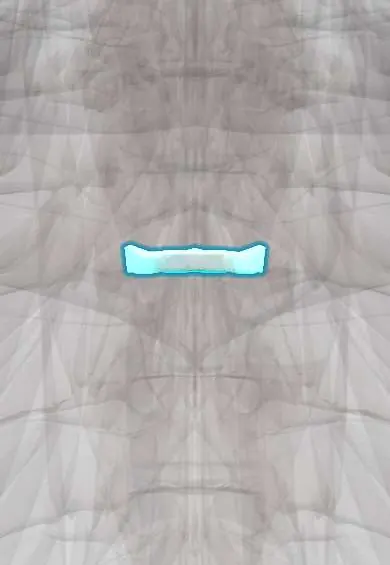
T3–T4 disc !
The T3-T4 disc is the thin cushion between the T3 and T4 vertebrae in the mid-back; it allows the small movement the ribs permit.
Official name: T3-T4
Opens in the Durgical app, no sign-up needed.
What it is
The cushion between T3 and T4: a tough outer ring of fibres (annulus fibrosus) around a soft centre.
What it does
Absorbs load and allows the small amount of movement the rib cage permits.
Key facts
- Where
- Between T3 and T4 bodies; thin thoracic disc; head of rib 4 joins it
- Attaches
- Annulus fibrosus anchored to the endplates and ring apophyses of T3 and T4; anterior and posterior longitudinal ligaments
- Function
- Absorbs and spreads load; herniation rare, often central onto the cord; lateral herniation may irritate the T3 root
Relations
- In front
- Esophagus and trachea just above the tracheal bifurcation; the aortic arch curves backward on the left side of T4
- Lateral
- Head of rib 4 on the disc and its costovertebral joint, with the sympathetic trunk over the rib heads
- Behind
- Posterior longitudinal ligament and the spinal cord, with little spare room in the canal
How to find it
With the arms at the sides, the root of the scapular spine lies at about the T3 spinous process; the disc sits deep, in front of the canal, at roughly the height of that tip.
On imaging
On sagittal T2 MRI the bright rim of fluid in front of the cord is thin at T3–T4, so a protrusion that wipes it out touches the cord. Small thoracic protrusions are frequent in people without symptoms, so the image is read together with the examination.
Common problems
- Thoracic disc herniations are uncommon; many are found by chance on MRI and cause no symptoms.
- A large one can press on the spinal cord, or cause band-like pain around the chest.
How it is diagnosed
MRI; CT shows whether the herniation is calcified (hardened), which matters for surgery.
Treatment
- Usually physical therapy and pain medicine; surgery only if the spinal cord is pressed.
Clinical notes
- Upper thoracic disc pain can imitate angina; a cardiac cause is usually excluded first
- A posterolateral route (transpedicular or costotransversectomy) suits a lateral disc at this height; a central or calcified one may need a transthoracic view of its front
Test yourself
Think of the answer, then tap the question to see it.
Why is cord compression at the T3–T4 disc poorly tolerated?
It is the upper edge of the mid-thoracic watershed (about T4–T9): few feeding arteries reach the cord and the canal is tight around it.
Which heart condition can upper thoracic disc pain at T3–T4 imitate?
Angina, so a cardiac cause is usually excluded first.
Which rib head joins the T3–T4 disc?
The head of rib 4, with its costovertebral joint; the sympathetic trunk lies over the rib heads.
Educational information, not medical advice. For any symptom, see a health professional.
Its names
- Official Latin (TA2)
- discus intervertebralis T3-T4 TA2 1684
- Official Spanish (DeCS)
- Disco T3-T4 DeCS D007403
- English (TA2)
- T3-T4
- Also called
- fibrous ring · fibrocartilago intervertebralis
Related
Sources: Terminologia Anatomica (TA2); DeCS; Anatomy, Back, Intervertebral Discs; 7.3 The Vertebral Column (OpenStax (Rice University), 2022) · adapted, CC BY 4.0.
Spotted a mistake?We are always improving for the community. Tell us what is wrong and our team will review it.Report a mistake
Representative model, for educational purposes only.