Conditions · Pediatrics and neonatology
Beckwith–Wiedemann syndrome !
An overgrowth syndrome with a large tongue, abdominal wall defect, low blood sugar at birth and a higher risk of childhood tumours.
Updated 2026-11-01
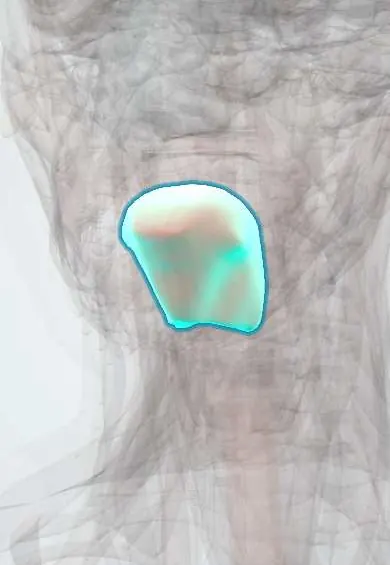
Structures involved
Tap one to see what it is and open it in 3D.
Why it happens
- Nonclassic inheritance: repeat expansions, mitochondrial genes, imprinting, mosaicism
- Genomic imprinting: Prader–Willi and Angelman
- Tumours of infancy and childhood
- Epigenetics: DNA and histone methylation
What it is
The most common congenital overgrowth syndrome, caused by altered imprinted genes on chromosome 11p15. Typical features are macrosomia, macroglossia, abdominal wall defects (omphalocele or umbilical hernia), neonatal hypoglycaemia, lateralised overgrowth (hemihyperplasia), enlarged abdominal organs and an increased risk of embryonal tumours such as Wilms tumour and hepatoblastoma.
Who gets it
About 1 in 10,500 to 13,700 newborns, probably more because mild cases are missed. Affects both sexes equally. More frequent after assisted reproductive technologies. Most cases are sporadic; about 5 to 15% are familial.
Causes
- Loss of methylation at imprinting centre 2 (KCNQ1OT1) on the maternal allele: the most frequent cause (about half of cases)
- Paternal uniparental disomy of 11p15 (about 20%), usually mosaic
- Gain of methylation at imprinting centre 1 (H19/IGF2)
- Loss-of-function variants in maternally expressed CDKN1C (most familial cases)
- Chromosomal duplications, deletions or rearrangements of 11p15 (rare)
Risk factors
- Conception by assisted reproductive technology (in vitro fertilisation, intracytoplasmic sperm injection)
- Family history with a known CDKN1C variant or 11p15 rearrangement
- Twin pregnancy (monozygotic twins discordant for the condition are reported)
Pathophysiology
The 11p15 region contains imprinted genes that regulate fetal growth: IGF2 (paternally expressed, growth-promoting) and H19, CDKN1C and KCNQ1OT1-controlled genes (maternally expressed, growth-restraining). Imprinting errors increase IGF2 activity or reduce CDKN1C, leading to excess cell proliferation, overgrowth of the tongue, body side and organs, islet cell hyperplasia with hyperinsulinism (hypoglycaemia), and persistence of embryonal tissue that can give rise to tumours. Because of mosaicism, overgrowth is often asymmetric.
Classification
- Classic Beckwith–Wiedemann syndrome (meets clinical score with or without a molecular finding)
- Beckwith–Wiedemann spectrum, including isolated lateralised overgrowth with an 11p15 change
- By molecular subtype: IC2 loss of methylation, paternal UPD 11p15, IC1 gain of methylation, CDKN1C variant (tumour risk differs by subtype)
Symptoms and signs
- Large size at birth and rapid growth in early childhood (macrosomia)
- Macroglossia, which can cause feeding, breathing and speech difficulties
- Omphalocele, umbilical hernia or diastasis recti
- Neonatal hypoglycaemia (jitteriness, poor feeding, seizures) from hyperinsulinism
- Lateralised overgrowth (one side of the body larger)
- Ear lobe creases or pits on the back of the ear helix; facial naevus simplex
- Enlarged kidneys, liver, spleen or pancreas; kidney malformations; polyhydramnios and large placenta in pregnancy
Diagnosis
- Clinical
- Suspected from cardinal features (macroglossia, omphalocele, lateralised overgrowth, hyperinsulinism, certain tumours) plus suggestive features; a consensus clinical score guides who needs molecular testing.
- Tests
- Molecular testing of 11p15 methylation and copy number (blood, or skin/tissue if mosaicism is suspected), and CDKN1C sequencing; serial blood glucose in the newborn period; serum alpha-fetoprotein for hepatoblastoma surveillance in early childhood.
- Imaging
- Prenatal ultrasound may show macrosomia, omphalocele, polyhydramnios or organomegaly. Abdominal ultrasound every 3 months during early childhood screens for Wilms tumour and hepatoblastoma.
Differential diagnosis
- Infant of a diabetic mother (macrosomia and hypoglycaemia)
- Simpson–Golabi–Behmel syndrome
- Sotos syndrome and Perlman syndrome
- Isolated omphalocele or isolated hemihyperplasia
- Congenital hypothyroidism (macroglossia, umbilical hernia)
Goal of treatment
Prevent brain injury from neonatal hypoglycaemia, correct structural problems, keep the airway safe and detect embryonal tumours early through surveillance.
Treatment
- Acute
- Neonatal care: frequent glucose monitoring, feeding and intravenous dextrose; diazoxide or other agents if hyperinsulinism persists.
- Surgical
- Surgical repair of omphalocele or umbilical hernia.
- Surgical
- Tongue reduction surgery when macroglossia affects breathing, feeding, speech or dental development.
- Follow-up
- Tumour surveillance: abdominal ultrasound every 3 months and serum alpha-fetoprotein in early childhood, adjusted to the molecular subtype.
- Follow-up
- Follow-up of leg-length discrepancy from lateralised overgrowth (orthopaedic review) and kidney function.
- Conservative
- Supportive care: airway positioning, feeding and speech therapy, genetic counselling for the family.
Complications
- Brain injury from untreated hypoglycaemia
- Wilms tumour, hepatoblastoma, neuroblastoma, rhabdomyosarcoma and adrenocortical carcinoma
- Airway obstruction, obstructive sleep apnoea, feeding and speech difficulties
- Leg-length discrepancy and scoliosis
- Kidney problems such as nephrocalcinosis, medullary sponge kidney or cysts
- Complications of prematurity and of omphalocele
Prognosis
Most children have normal intelligence and a normal life expectancy once early hypoglycaemia and tumours are managed. Overgrowth slows with age, and tumour risk falls sharply after about 8 years.
Test yourself
Think of the answer, then tap the question to see it.
Which chromosome region is affected in Beckwith–Wiedemann syndrome?
Imprinted genes on chromosome 11p15 (IGF2, H19, CDKN1C, KCNQ1OT1).
Which two features are classic in the newborn examination?
Macroglossia and an abdominal wall defect (omphalocele or umbilical hernia), often with macrosomia.
Why do these newborns develop hypoglycaemia?
Pancreatic islet cell hyperplasia causes hyperinsulinism.
Which tumours are screened for, and how?
Wilms tumour and hepatoblastoma, with abdominal ultrasound every 3 months and serum alpha-fetoprotein in early childhood.
Related conditions
- Gastroschisis and omphalocele
- Wilms tumour (nephroblastoma)
- Neonatal hypoglycaemia (including infant of a diabetic mother)
- Neuroblastoma
- Prader–Willi and Angelman syndromes (imprinting)
- Obstructive sleep apnoea
Educational information, not medical advice. For any symptom, see a health professional.
Sources: Beckwith-Wiedemann syndrome (MedlinePlus Genetics (U.S. National Library of Medicine), 2024).
Spotted a mistake?We are always improving for the community. Tell us what is wrong and our team will review it.Report a mistake
Representative model, for educational purposes only.