Ulcerative colitis !
Ulcerative colitis is a chronic inflammatory bowel disease of the colon lining, starting in the rectum; it causes flares of bloody diarrhoea.
Updated 2026-10-29
Structures involved
Tap one to see what it is and open it in 3D.
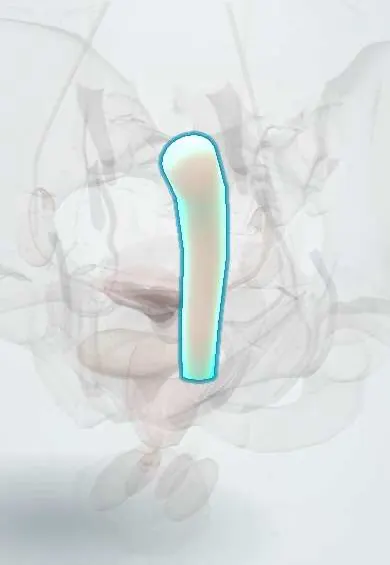
- Rectum
- Sigmoid colon
- Descending colon
- Transverse colon
- Ascending colon
- Cecum
- Colic arteries
- Inferior mesenteric artery
In biochemistry
In immunology
In histology
Why it happens
- Chronic inflammation: causes, cells and features
- Dysplasia and carcinoma in situ
- Precancerous conditions: when chronic inflammation, metaplasia or hyperplasia raise the risk
- Multistep carcinogenesis: the adenoma–carcinoma sequence
- Enteroendocrine cells and GALT
What it is
Chronic inflammatory bowel disease in which inflammation of the colon's mucosa starts in the rectum and extends continuously upwards, causing bloody diarrhoea in relapsing flares.
Who gets it
Usually begins in young adults, with a second smaller peak later in life. Its incidence is rising in Latin America, and in Colombian and regional series it is generally reported more often than Crohn disease.
Causes
- Abnormal immune response to gut bacteria in genetically susceptible people
- Defects of the mucosal barrier
- Environmental factors and microbiome changes
Risk factors
- Family history of inflammatory bowel disease
- Being a former smoker (smoking appears protective, but is never advised)
- Primary sclerosing cholangitis
- Urban, industrialised lifestyle
Pathophysiology
Inflammation is limited to the mucosa and submucosa and is continuous, starting at the rectum. The mucosa becomes friable with ulcers and crypt abscesses, and long-standing disease causes pseudopolyps and loss of haustra. Chronic inflammation raises the risk of dysplasia and colorectal cancer.
Classification
- Montreal extent: proctitis (E1), left-sided colitis (E2), extensive colitis (E3)
- Severity: mild, moderate, severe (Truelove and Witts criteria, Mayo score)
Symptoms and signs
- Bloody diarrhoea with mucus
- Urgency and tenesmus
- Crampy lower abdominal pain, often relieved by defecation
- In severe flares: fever, tachycardia, weight loss, anaemia
- Extraintestinal: arthritis, erythema nodosum, pyoderma gangrenosum, episcleritis, uveitis, primary sclerosing cholangitis
Diagnosis
- Clinical
- Recurrent bloody diarrhoea with urgency; examination for signs of severe disease.
- Tests
- Stool cultures and Clostridioides difficile testing to exclude infection; amoebiasis in endemic areas. Full blood count, CRP, albumin, faecal calprotectin. Colonoscopy with biopsies shows continuous inflammation from the rectum, crypt abscesses and architectural distortion.
- Imaging
- Plain abdominal X-ray in severe flares to look for toxic megacolon (a transverse colon wider than about 6 cm is commonly cited). CT if perforation is suspected.
Differential diagnosis
- Crohn colitis
- Infectious colitis (bacterial, amoebic, C. difficile)
- Ischaemic colitis
- Colorectal cancer
- Radiation or drug-induced colitis
Goal of treatment
Induce and maintain remission with healing of the mucosa, avoid long-term corticosteroids, prevent complications and detect dysplasia early.
Treatment
- Medical
- Aminosalicylates (5-ASA), oral and rectal, for mild to moderate disease and maintenance.
- Medical
- Corticosteroids for flares (oral or rectal; intravenous in acute severe colitis), not for maintenance.
- Medical
- Immunomodulators (thiopurines) and biologic therapy (anti-TNF, anti-integrin, anti-interleukin agents) for moderate to severe or steroid-dependent disease.
- Medical
- Small molecules (JAK inhibitors, S1P receptor modulators) as further options.
- Acute
- Rescue therapy in acute severe colitis (anti-TNF or a calcineurin inhibitor) with joint medical and surgical care.
- Surgical
- Proctocolectomy, often with an ileal pouch-anal anastomosis, for refractory disease, dysplasia or cancer; it cures the bowel disease.
- Follow-up
- Surveillance colonoscopy, usually starting about eight years after onset (earlier with primary sclerosing cholangitis).
Drugs for this condition
- Hydrocortisone
- Mesalazine
- Sulfasalazine
- Azathioprine
- Adalimumab
- Infliximab
- Golimumab
- Ustekinumab
- Tofacitinib
Complications
- Toxic megacolon and perforation
- Severe bleeding
- Colorectal cancer (risk grows with extent and duration)
- Primary sclerosing cholangitis
- Anaemia, osteoporosis (from steroids), venous thromboembolism
- Pouchitis after surgery
Prognosis
Relapsing and remitting; most patients have mild to moderate disease controlled with medicines. Some need colectomy, which cures the colitis. Life expectancy is close to normal.
Prevention
- Adherence to maintenance therapy to prevent flares
- Regular surveillance colonoscopy for dysplasia
Test yourself
Think of the answer, then tap the question to see it.
Where does ulcerative colitis start and how does it extend?
It always involves the rectum and extends continuously upwards through the colon, without skip lesions.
Which layer of the bowel wall does ulcerative colitis affect?
The mucosa (and superficial submucosa), unlike the transmural inflammation of Crohn disease.
Which first-line drug class treats mild to moderate ulcerative colitis?
Aminosalicylates (5-ASA), given orally and rectally.
Which liver disease is classically associated with ulcerative colitis?
Primary sclerosing cholangitis, which also raises the colorectal cancer risk.
What is a feared complication of acute severe ulcerative colitis?
Toxic megacolon, with risk of perforation; it needs urgent medical and surgical assessment.
Related conditions
Educational information, not medical advice. For any symptom, see a health professional.
Sources: Ulcerative Colitis (StatPearls (NCBI Bookshelf), 2023).
Spotted a mistake?We are always improving for the community. Tell us what is wrong and our team will review it.Report a mistake
Representative model, for educational purposes only.