Dissociative disorders !
Conditions in which memory, identity, awareness or the sense of self and surroundings become disconnected, usually after severe trauma.
Updated 2026-11-01
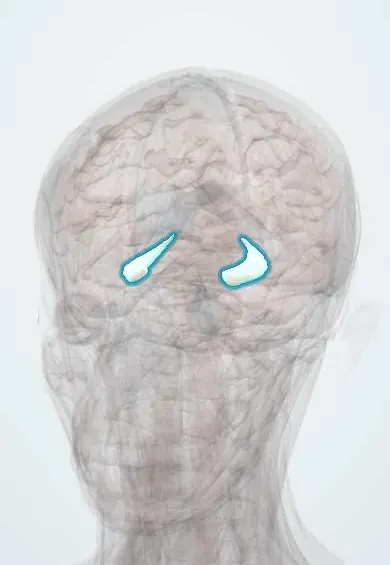
Structures involved
Tap one to see what it is and open it in 3D.
What it is
A group of disorders with a disruption of the normal integration of consciousness, memory, identity, emotion, perception and behaviour. The main forms are dissociative identity disorder (two or more distinct identity states with recurrent memory gaps), dissociative amnesia (inability to recall important personal information, usually traumatic, sometimes with dissociative fugue) and depersonalisation/derealisation disorder (feeling detached from one's body or surroundings, with intact reality testing).
Who gets it
Brief dissociative experiences are common under stress, and transient depersonalisation is frequent in the general population. The disorders themselves each affect around 1 to 2% of adults in community studies, with dissociative identity disorder seen mainly in women in clinical samples. Colombia's long armed conflict, forced displacement and gender-based violence mean that trauma-related dissociation is clinically relevant in the country.
Causes
- Severe, repeated childhood trauma (physical, sexual or emotional abuse, neglect), the main factor in dissociative identity disorder
- Acute overwhelming events such as violence, war, disasters or torture (dissociative amnesia)
- Severe stress, anxiety, sleep deprivation or substance use (triggers for depersonalisation/derealisation)
- Disorganised early attachment
Risk factors
- Childhood abuse or neglect
- Exposure to armed conflict, displacement, kidnapping or sexual violence
- Coexisting post-traumatic stress disorder, depression or borderline personality disorder
- Use of cannabis or hallucinogens (depersonalisation)
Pathophysiology
Dissociation is thought to be a protective response to overwhelming threat in which prefrontal regions over-inhibit limbic emotional responses, producing emotional numbing and detachment. Memory encoding and retrieval through the hippocampus are disrupted, and studies of dissociative identity disorder report smaller hippocampal and amygdala volumes, as in severe post-traumatic stress.
Classification
- Dissociative identity disorder: 2 or more distinct personality states, with recurrent gaps in recall of everyday events, personal information or trauma
- Dissociative amnesia: inability to recall autobiographical information, typically traumatic; with or without dissociative fugue (apparently purposeful travel or bewildered wandering)
- Depersonalisation/derealisation disorder: persistent detachment from oneself or the surroundings with intact reality testing
- Other specified dissociative disorder (for example identity disturbance after coercive persuasion or acute dissociative reactions)
Symptoms and signs
- Gaps in memory for everyday events or important personal information
- Finding oneself in a place without knowing how one got there, or finding unexplained possessions
- Shifts in sense of self, voice, behaviour, preferences or skills reported by others
- Feeling unreal, outside one's body or watching oneself as in a film (depersonalisation)
- Feeling that the world is foggy, dreamlike or artificial (derealisation)
- Coexisting depression, anxiety, self-harm, flashbacks and nightmares
Diagnosis
- Clinical
- Clinical diagnosis after a careful psychiatric and trauma history, often over several visits. Screening tools such as the Dissociative Experiences Scale and structured interviews (for example the SCID-D) support the assessment. Reality testing is intact. Organic causes and substances must be excluded before attributing amnesia to dissociation.
- Tests
- Directed by the presentation: toxicology screen, blood glucose, thyroid tests and thiamine status where relevant; EEG (including video-EEG) when episodes may be seizures, especially temporal lobe epilepsy.
- Imaging
- Brain MRI or CT when there is head injury, neurological signs, late or sudden onset of amnesia, or atypical features.
Differential diagnosis
- Post-traumatic stress disorder
- Temporal lobe epilepsy and other seizures
- Traumatic brain injury, transient global amnesia and Wernicke-Korsakoff syndrome
- Substance intoxication or withdrawal (alcohol blackouts, sedatives, hallucinogens)
- Schizophrenia and other psychotic disorders
- Borderline personality disorder, factitious disorder and malingering
Goal of treatment
Ensure safety, stabilise symptoms, help the person process trauma and gradually integrate memory and identity, while treating coexisting disorders.
Treatment
- Acute
- Safety first: assess suicide and self-harm risk, protect from ongoing abuse and activate protection routes when there is violence.
- Conservative
- Phase-oriented, trauma-focused psychotherapy: stabilisation and grounding skills, then processing of traumatic memories, then integration (for dissociative identity disorder).
- Conservative
- Psychotherapy for depersonalisation/derealisation and dissociative amnesia (cognitive behavioural and psychodynamic approaches); hypnosis has been used by specialists to recover memories.
- Medical
- No drug treats dissociation itself; antidepressants such as SSRIs are used for coexisting depression, anxiety or post-traumatic stress, and other agents for specific symptoms.
- Follow-up
- Long-term follow-up of symptoms, safety and function.
Complications
- Suicide attempts and self-harm
- Revictimisation and unsafe relationships
- Depression, PTSD, eating disorders and substance use disorders
- Problems at work, study and in relationships
Prognosis
Dissociative amnesia often resolves, sometimes suddenly. Dissociative identity disorder and depersonalisation/derealisation disorder tend to be chronic but improve with long-term psychotherapy, especially when the person is safe from ongoing trauma.
Test yourself
Think of the answer, then tap the question to see it.
What is the strongest risk factor for dissociative identity disorder?
Severe, repeated childhood trauma, especially abuse.
In depersonalisation/derealisation disorder, is reality testing intact?
Yes. Patients know the experiences are not real, which separates it from psychosis.
What is dissociative fugue?
Purposeful travel or bewildered wandering with amnesia for identity or personal history, a specifier of dissociative amnesia.
What must be excluded before diagnosing dissociative amnesia?
Organic causes such as head injury, seizures, substance use, transient global amnesia and Wernicke-Korsakoff syndrome.
What is the mainstay of treatment?
Long-term trauma-focused psychotherapy, with medications only for coexisting disorders.
Related conditions
- Post-traumatic stress disorder (PTSD) and acute stress disorder
- Functional neurological symptom disorder (conversion disorder)
- Personality disorders (clusters A, B and C)
- Epilepsy and seizures
- Major depressive disorder
- Suicidal behaviour and suicide risk
- Child maltreatment (physical abuse, abusive head trauma, neglect)
- Factitious disorder and malingering
- Schizophrenia
- Traumatic brain injury
- Wernicke encephalopathy (thiamine deficiency)
- Intimate partner and sexual violence (mental-health care)
Educational information, not medical advice. For any symptom, see a health professional.
Sources: Dissociative disorders (NHS (National Health Service, UK), 2025).
Spotted a mistake?We are always improving for the community. Tell us what is wrong and our team will review it.Report a mistake
Representative model, for educational purposes only.