Conditions · Metabolism (biochemistry)
Wernicke encephalopathy (thiamine deficiency) !
Wernicke encephalopathy is an emergency caused by lack of vitamin B1 (thiamine): confusion, trouble walking and abnormal eye movements.
Updated 2026-10-31
Structures involved
Tap one to see what it is and open it in 3D.
In biochemistry
- Krebs cycle: Step 4 · α-Ketoglutarate dehydrogenase
- Pentose phosphate pathway: Step 5 · Transketolase
- Pyruvate dehydrogenase complex (PDH)
- α-Ketoglutarate dehydrogenase
- Transketolase
- Ethanol
- Thiamine (vitamin B1)
- Magnesium
In the clinical exam
- Mental status: orientation, attention and screening tests
- Cerebellar tests: finger–nose, heel–shin and rapid alternating movements
- Cerebellar syndrome
In physiology
Why it happens
- Alcohol: how it injures the liver, brain, heart and fetus
- Vitamin deficiencies: what each one does to tissue
What it is
Acute brain injury from thiamine deficiency, the coenzyme of PDH, α-ketoglutarate dehydrogenase and transketolase. Untreated, it can leave Korsakoff syndrome (permanent memory loss).
Who gets it
It is linked mostly to heavy alcohol use, but also follows bariatric surgery, prolonged vomiting, malnutrition or parenteral nutrition without vitamins. It is underdiagnosed.
Causes
- Heavy, long-term alcohol use
- Prolonged vomiting (hyperemesis of pregnancy, obstruction)
- Bariatric surgery, malnutrition, anorexia nervosa
- Giving glucose without thiamine to someone with low stores
Risk factors
- Alcohol use disorder
- Cancer and chemotherapy
- Dialysis
Pathophysiology
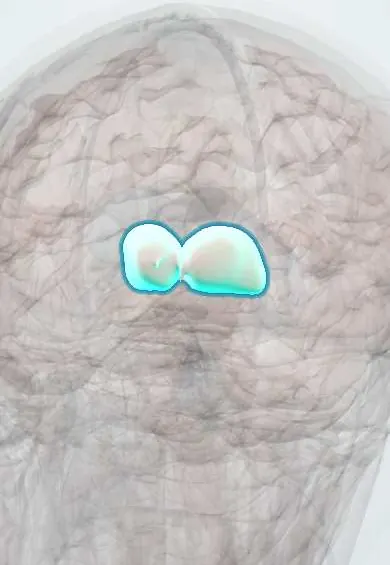
Without thiamine pyrophosphate, PDH and α-ketoglutarate dehydrogenase fail: neurons make less ATP and more lactate, and glutamate builds up. The most energy-hungry areas (medial thalamus, mammillary bodies, around the third ventricle and aqueduct, vermis) swell and die.
Classification
- Wernicke encephalopathy (acute)
- Korsakoff syndrome (chronic, amnesia)
- Dry beriberi (neuropathy) and wet beriberi (high-output heart failure)
Symptoms and signs
- Confusion, disorientation, drowsiness
- Unsteady walking (ataxia)
- Abnormal eye movements: nystagmus, sixth-nerve palsy, double vision
- The full triad appears in only a minority
Diagnosis
- Clinical
- A clinical diagnosis on suspicion: no test is awaited before treating. Caine criteria: malnutrition, eye signs, ataxia and altered mental state (two of four).
- Tests
- Blood thiamine or transketolase activity (before treatment, without delaying thiamine); lactate, glucose, magnesium (its lack stops thiamine from working).
- Imaging
- MRI: symmetric high signal in the medial thalamus, mammillary bodies and grey matter around the aqueduct.
Treatment
- Acute
- High-dose intravenous thiamine at once, before or with glucose
- Medical
- Correct magnesium and other deficiencies
- Rehabilitation
- Rehabilitation and support to stop alcohol
Complications
- Korsakoff syndrome: amnesia with confabulation
- Coma and death without treatment
Prevention
- Thiamine for everyone at risk who receives intravenous glucose or uses alcohol heavily
Test yourself
Think of the answer, then tap the question to see it.
Which enzymes depend on thiamine pyrophosphate?
PDH, α-ketoglutarate dehydrogenase, transketolase and the branched-chain keto acid dehydrogenase.
What is the classic Wernicke triad?
Confusion, ataxia and ophthalmoplegia (or nystagmus); it is often incomplete.
Which structures does the MRI show affected?
Medial thalamus, mammillary bodies and periaqueductal grey.
Related conditions
Educational information, not medical advice. For any symptom, see a health professional.
Sources: Wernicke-Korsakoff syndrome: MedlinePlus Medical Encyclopedia (MedlinePlus, US National Library of Medicine, 2026); Beriberi: MedlinePlus Medical Encyclopedia (MedlinePlus, US National Library of Medicine, 2026); Textbook of Biochemistry for Medical Students, 6th ed. (Jaypee Brothers Medical Publishers (Vasudevan DM, Sreekumari S, Vaidyanathan K), 2011).
Spotted a mistake?We are always improving for the community. Tell us what is wrong and our team will review it.Report a mistake
Representative model, for educational purposes only.