
Fingertip injuries (nail bed, subungual haematoma, fingertip amputation)
The commonest hand injury: a crushed or cut fingertip. Good first care keeps a useful, painless tip and a normal nail, and saves any amputated part.
What it is
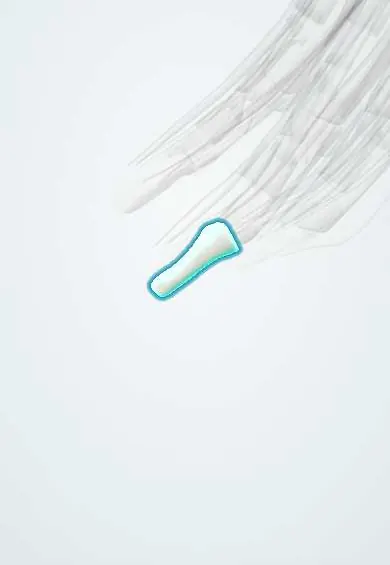
Fingertip injuries are injuries distal to the insertions of the flexor and extensor tendons on the distal phalanx: pulp lacerations and loss, crush with blood under the nail (subungual haematoma), lacerations of the nail bed, fractures of the tuft of the distal phalanx, and partial or complete amputation of the tip. They are the commonest hand injuries in emergency departments, from doors in children and machines, knives and tools in adults.
Who gets it
Fingertip injuries make up a large share of all hand injuries. Toddlers and young children crush their fingers in doors; adults injure them at work with machinery, saws, presses and knives, and in sport. The middle and index fingers of the dominant hand are hit most. In Colombia, occupational hand injuries in construction, agriculture and industry are common, and every December and January the national public health surveillance records hand burns and amputations from fireworks (pólvora), many in children.
Causes
- Crush: car or house doors, hammers, heavy objects, machine presses
- Sharp cuts: knives, saws, glass, kitchen tools
- Avulsion: ring caught on a hook or fence (ring avulsion), rope or chain injuries
- Blast and burn: fireworks, explosives
- Bites (human or animal) and sports injuries such as a ball striking the tip
Risk factors
- Young children around doors and hinges
- Machinery and power tools without guards; manual work in construction, agriculture and industry
- Wearing rings at work
- Fireworks handling, especially by children in the festive season
- Alcohol and fatigue during work with tools
Pathophysiology
The nail bed is firmly attached to the periosteum of the distal phalanx → a crush squeezes the tip between two hard surfaces → the bed bleeds under the rigid nail (subungual haematoma) → pressure in a closed space causes throbbing pain, relieved as soon as the blood drains. A harder crush splits the bed and often breaks the tuft → the fracture lies directly under the torn bed, so it is effectively an open fracture. If the bed heals with a gap or scar → the nail grows split, ridged or does not adhere. If the fold over the nail root (eponychium) sticks to the bed → synechia and a deformed nail. Amputation removes pulp, bed and bone in varying amounts → the digital arteries at the tip are tiny → small pulp-only losses heal by contraction and new skin, while larger losses with exposed bone need cover. An amputated part survives only while its cells tolerate ischaemia → cooling slows metabolism and buys hours, freezing destroys it.
Classification
- Subungual haematoma with an intact nail and intact nail folds
- Nail bed laceration: simple, stellate or with avulsion of the nail plate or loss of bed
- Tuft fracture of the distal phalanx (usually with nail bed injury)
- Seymour fracture in children: fracture through the growth plate of the distal phalanx with the nail bed caught in it (an open fracture)
- Fingertip amputation by level: pulp only, through the nail bed and tip of bone, proximal to the nail base, and at the distal joint or higher
- By angle of the cut: transverse, volar oblique (worse, pulp lost) or dorsal oblique
- By mechanism: clean-cut (guillotine), crush, or avulsion (worst for replantation)
Symptoms and signs
- Throbbing pain under a blue-black nail after a crush (subungual haematoma)
- Bleeding from under the nail or from a cut through the nail and nail bed
- Nail lifted out of its fold or partly torn off
- Missing pulp or part of the tip, sometimes with bone visible
- Drooping tip that cannot be straightened actively (mallet finger)
- Numbness of the tip (digital nerve injury in more proximal cuts)
Diagnosis
- Clinical
- Ask about mechanism (crush, cut, avulsion, bite, blast), time, hand dominance, job, tetanus status and smoking. Examine under good light after a digital nerve block and with a finger tourniquet if needed: nail plate (intact, lifted, fractured), nail folds, nail bed, pulp loss in size and angle, exposed bone, colour and capillary refill, two-point sensation on each side, and active flexion and extension of the distal joint. Look at any amputated part: is it clean-cut or crushed, and what level is it?
- Tests
- No blood tests for an isolated fingertip injury. Before surgery for replantation: blood count, group and save, and coagulation as part of anaesthetic assessment. Tetanus immunisation status is checked in every open injury.
- Imaging
- Plain X-rays of the finger (anteroposterior and true lateral) for tuft fracture, Seymour fracture, avulsion of the base of the distal phalanx (bony mallet or flexor avulsion) and foreign bodies. X-ray the amputated part too when replantation is considered.
Differential diagnosis
- Subungual melanoma or haemorrhage without trauma (a dark nail that grows or does not move out with the nail)
- Paronychia or felon (infection, hours to days later, with throbbing and redness)
- Mallet finger (extensor tendon) or flexor tendon avulsion
- High-pressure injection injury
- Frostbite or burns of the fingertips
- Glomus tumour under the nail (chronic pain, cold sensitivity)
A hurt fingertip: which injury, and what to do?
| Injury | What you see | Key X-ray or exam clue | What to do |
|---|---|---|---|
| Subungual haematoma | Throbbing pain, blue-black blood under an intact nail | Nail and its folds intact; tuft fracture in some | Drain through a small hole in the nail (trephination); leave the nail on |
| Nail bed laceration | Nail cut, lifted out of its fold or torn off; bleeding bed | Tuft fracture often under the cut (open fracture) | Remove the nail, repair the bed, splint the fold open with the nail or a stent |
| Mallet finger | Tip droops and cannot be actively straightened | Normal X-ray or a bony fragment at the dorsal base of the distal phalanx | Continuous extension splint of the distal joint; surgery for selected fractures |
| Seymour fracture (child) | Tip looks like a mallet finger, nail base lifted over the fold, blood at the fold | Widened growth plate of the distal phalanx on the lateral view | Treat as an open fracture: wash out, free the trapped bed, reduce, antibiotics |
| Paronychia or felon | Red, hot, throbbing fold or tense pulp, hours to days after a small wound | Pus at the fold or a tense pulp space; X-ray for bone involvement if late | Drainage and antibiotics; see hand infections |
Goal of treatment
A painless, sensate, durable fingertip of useful length with a normal-looking nail; save an amputated part in the right conditions so a hand surgeon can decide on replantation; prevent infection and tetanus.
Treatment
- Procedure
- Subungual haematoma: when painful and the nail and its folds are intact, drain it through one or more small holes in the nail (heated cautery tip or needle) after or without a digital block. The nail is left in place even when the haematoma is large, because removal to look for a bed injury does not improve the result when the nail is intact.
- Surgical
- Nail bed laceration or nail avulsion: under a digital block and finger tourniquet, remove the nail, wash, repair the bed accurately with fine absorbable sutures or tissue adhesive, reduce any tuft fracture, and splint the nail fold open by replacing the nail (or a stent) to prevent the fold sticking to the bed.
- Conservative
- Small pulp-only loss without exposed bone: clean, non-adherent dressings and healing by secondary intention give excellent, sensate tips, especially in children.
- Surgical
- Larger losses or exposed bone: trimming of the bone with closure, skin grafts, or local flaps (advancement or cross-finger flaps) chosen to keep length and padding; avoid pulling the nail bed over the tip, which causes a hooked nail.
- Acute
- Amputated part: rinse gently with saline, wrap in saline-moistened gauze, seal in a plastic bag and place the bag on a mixture of ice and water. Never put the part directly on ice or in water, and never freeze it. Cover the stump with a moist dressing, elevate, control bleeding with pressure, and call the hand or replantation team at once.
- Surgical
- Replantation (microsurgery): favoured for the thumb, several fingers, partial hand, any level in a child, and a single finger cut beyond the insertion of the superficial flexor tendon. Usually not done for a single finger cut in the zone between the superficial flexor insertion and the palm in an adult, for badly crushed or avulsed parts, injuries at several levels, or patients too unwell for long surgery.
- Medical
- Tetanus prophylaxis according to immunisation status for every open fingertip injury. Antibiotics are reserved for contaminated wounds, bites and open fractures such as the Seymour fracture; routine antibiotics for simple tuft fractures with a repaired bed are not clearly needed.
- Rehabilitation
- Early movement of the uninjured joints, scar massage and desensitisation of a tender tip, and hand therapy after flaps or replantation.
Complications
- Nail deformity: split nail, ridges, non-adherence or no nail growth
- Hooked nail when the bed is pulled over a short tip
- Cold intolerance and a tender, hypersensitive tip
- Painful neuroma at the tip
- Infection: paronychia, felon or osteomyelitis of the distal phalanx
- Stiffness of the finger
- Growth disturbance after a Seymour fracture
- Failure of a replant from arterial or venous thrombosis
Common traps
- A subungual haematoma over half the nail always needs nail removal to repair the bed: if the nail and its folds are intact, simple trephination gives the same result
- An amputated fingertip should go straight onto ice: direct ice or immersion in water freezes and waterlogs the tissue; wrap it in moist gauze, bag it, and place the bag on ice and water
- A child's drooping fingertip after a door crush is just a mallet finger: a nail lifted over the fold with bleeding points to a Seymour fracture, an open growth-plate fracture needing wash-out
- Pulling the nail bed over the bone tip gives a neat closure: the nail later curves over the short tip (hooked nail); trim the bone or use a flap instead
- Every amputated finger should be replanted: a single finger cut in the zone near the palm in an adult often ends stiff and painful; replantation is aimed at the thumb, several fingers, children and cuts beyond the superficial flexor insertion
Prognosis
Most fingertip injuries heal well. A drained haematoma or an accurately repaired bed usually gives a normal nail, which takes several months to grow back fully. Cold intolerance is common for a year or longer. Replanted digits survive in most well-selected cases; clean-cut injuries do much better than crush or avulsion, and children regain the best sensation.
Prevention
- Door guards and hinge covers where small children live
- Machine guards, push sticks and training for power tools
- No rings at work with machinery
- Keep fireworks away from children and leave them to trained operators
- Gloves suited to the task and safe knife technique
Test yourself
Think of the answer, then tap the question to see it.
A carpenter crushed his thumb with a hammer two hours ago. Black blood fills 70% of the nail, which is intact with intact folds; the pain is throbbing. What do you do?
Trephinate the nail to drain the haematoma and leave the nail on. Size does not decide nail removal when the nail and folds are intact; X-ray for a tuft fracture.
Why does a crush that splits the nail bed often count as an open fracture?
The bed is fixed directly to the distal phalanx, so the tuft fracture beneath it communicates with the wound through the torn bed.
A 9-year-old caught his finger in a car door; the tip droops, the nail base sits on top of the fold and there is blood at the fold. Diagnosis and why it matters?
Seymour fracture: a growth-plate fracture of the distal phalanx with the nail bed trapped in it. It is an open fracture that needs wash-out, reduction and antibiotics, not just a splint.
A worker's index finger tip is cut off cleanly at the nail base. How should the amputated part travel to the hospital?
Rinsed, wrapped in saline-moist gauze, sealed in a plastic bag, and the bag placed in ice water: cold but never frozen or soaked, to give the replant team the most time.
Which amputations are strongest candidates for replantation?
Thumb, several fingers, partial hand, any level in a child, and a single finger cut beyond the superficial flexor insertion, especially when clean-cut rather than crushed or avulsed.
Connections
Educational information, not medical advice. For any symptom, see a health professional.
Sources: Fingertip Injuries (StatPearls (NCBI Bookshelf), 2023); Subungual Hematoma Drainage (StatPearls (NCBI Bookshelf), 2025); Digit Replantation (StatPearls (NCBI Bookshelf), 2022); Finger Injuries and Disorders (MedlinePlus (U.S. National Library of Medicine), 2025).
Spotted a mistake?We are always improving for the community. Tell us what is wrong and our team will review it.Report a mistake
Representative model, for educational purposes only.