Conditions · Infectious and tropical diseases
Tetanus !
Tetanus is a toxin disease from a soil bacterium entering a wound. It causes lockjaw and painful spasms, can be fatal, and is prevented by vaccination.
Updated 2026-11-01
Structures involved
Tap one to see what it is and open it in 3D.
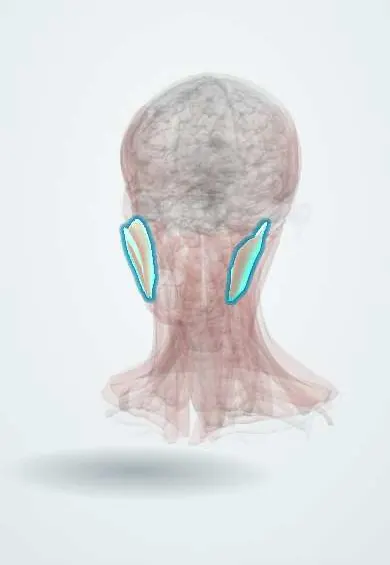
- Masseter
- Spinal cord
- Temporalis
- Orbicularis oris
- Sternocleidomastoid
- Vocal folds
- Medulla oblongata
- Rectus abdominis
- Diaphragm
- Trapezius
Microorganisms that cause it
Why it happens
What it is
An acute, often fatal disease caused by tetanospasmin, a neurotoxin made by Clostridium tetani after its spores enter a wound or, in newborns, the umbilical stump. It produces sustained muscle rigidity and painful spasms with a clear mind.
Who gets it
Rare where vaccine coverage is high, but still seen in unvaccinated or under-vaccinated adults (older people, rural workers, people who use injected drugs) after minor wounds. Neonatal tetanus has fallen sharply worldwide since 2000 thanks to maternal immunisation and clean delivery, and the Americas, including Colombia, work to keep it eliminated as a public-health problem. Surviving tetanus does not give immunity.
Causes
- Clostridium tetani, an anaerobic spore-forming gram-positive rod found in soil, dust and animal faeces
- Spores enter through puncture wounds, lacerations, burns, bites, ulcers, injection sites or surgery
- Neonatal tetanus: unclean cutting or dressing of the umbilical cord in a baby whose mother was not immunised
Risk factors
- No vaccination, an incomplete primary series or no booster in the last ten years
- Deep, dirty or necrotic wounds, crush injuries and retained foreign bodies
- Older age, rural or agricultural work and injected drug use
- Diabetes and chronic skin ulcers
- Home births without clean cord care
Pathophysiology
In low-oxygen tissue the spores germinate and release tetanospasmin, which reaches motor nerve endings and travels by retrograde axonal transport to the spinal cord and brainstem. There it cleaves synaptobrevin and blocks the release of the inhibitory transmitters GABA and glycine from interneurons. Motor neurons fire without restraint, giving rigidity and reflex spasms, and loss of sympathetic inhibition causes autonomic storms. Binding is irreversible, so recovery requires new nerve terminals over weeks.
Classification
- Generalised tetanus: the most common form, descending from the jaw to the trunk and limbs
- Localised tetanus: rigidity limited to muscles near the wound; may progress to generalised
- Cephalic tetanus: after head or face wounds, with cranial nerve palsies (often facial) and a short incubation
- Neonatal tetanus: a generalised form in newborns, usually 4 to 14 days after birth
Symptoms and signs
- Trismus (lockjaw) from masseter rigidity, often the first sign
- Risus sardonicus: a fixed grin from facial muscle spasm
- Neck stiffness, difficulty swallowing and a rigid board-like abdomen
- Opisthotonus: arching of the back from spasm of the back muscles
- Painful generalised spasms triggered by noise, light or touch, with the patient fully conscious
- Autonomic instability: sweating, fever, tachycardia and swings in blood pressure
- In newborns: inability to suck or feed, excessive crying, then rigidity and spasms
Diagnosis
- Clinical
- The diagnosis is clinical: trismus, rigidity and reflex spasms in a person with a wound and incomplete vaccination. No laboratory test confirms or rules it out; wound cultures are often negative and antibody levels are not reliable.
- Tests
- Tests mainly exclude mimics and monitor complications: electrolytes, calcium and magnesium, creatine kinase, renal function, arterial blood gases, and toxicology when strychnine poisoning is possible.
- Imaging
- Not needed for diagnosis. Chest X-ray if aspiration pneumonia is suspected; brain imaging only when another cause of the symptoms is considered.
Differential diagnosis
- Strychnine poisoning
- Dystonic reaction to drugs such as antipsychotics or metoclopramide
- Hypocalcaemic tetany
- Dental or peritonsillar abscess and temporomandibular joint disease causing trismus
- Meningitis or encephalitis, seizures and rabies
- Neonatal sepsis or meningitis in newborns
Goal of treatment
Neutralise toxin that has not yet bound, remove the source, control spasms and protect the airway, support the patient through autonomic instability until the nerves recover, and complete active immunisation.
Treatment
- Acute
- Admission to intensive care, early control of the airway (often tracheostomy) and mechanical ventilation when spasms compromise breathing; a quiet, dimly lit room with minimal handling.
- Medical
- Human tetanus immune globulin to neutralise circulating toxin, plus surgical cleaning and debridement of the wound.
- Medical
- Antibiotics against C. tetani, with metronidazole commonly preferred; penicillin is an alternative.
- Acute
- Spasm control with benzodiazepines, magnesium sulfate and, in severe cases, neuromuscular blockade with sedation and ventilation; treatment of autonomic instability.
- Follow-up
- Nursing priorities: airway and respiratory monitoring, cardiac monitoring, nutrition, pressure-area care, thromboprophylaxis and prevention of aspiration.
- Medical
- Tetanus toxoid vaccine started during recovery, because the disease itself does not leave immunity.
Drugs for this condition
Complications
- Respiratory failure, laryngospasm and aspiration pneumonia
- Autonomic dysfunction with arrhythmias, hypertension, hypotension and cardiac arrest
- Fractures of the spine or long bones from violent spasms
- Rhabdomyolysis and acute kidney injury
- Complications of prolonged intensive care: ventilator pneumonia, thrombosis, pressure ulcers
Prognosis
About one in ten generalised cases is fatal even with intensive care, with higher mortality in older people, after a short incubation and in neonatal tetanus without modern care. Survivors usually recover fully over several weeks as new nerve terminals form.
Prevention
- Routine childhood vaccination with tetanus-toxoid-containing vaccines and boosters through adolescence and adulthood
- Immunisation of pregnant women and women of reproductive age, clean delivery and clean cord care
- Wound prophylaxis: clean the wound; give a tetanus booster if the last dose was more than 10 years ago for clean minor wounds or more than 5 years ago for other wounds
- Tetanus immune globulin as well as vaccine for dirty or major wounds when the primary series is incomplete or unknown
Test yourself
Think of the answer, then tap the question to see it.
How does tetanospasmin cause muscle rigidity?
It travels retrogradely to the spinal cord and brainstem and blocks the release of GABA and glycine from inhibitory interneurons, so motor neurons fire unchecked.
What is usually the first sign of generalised tetanus?
Trismus (lockjaw) from rigidity of the masseter muscles.
How is tetanus diagnosed?
Clinically, from trismus, rigidity and reflex spasms after a wound in an under-vaccinated person; no laboratory test confirms it.
Which wounds need tetanus immune globulin in addition to vaccine?
Dirty or major wounds in a person whose primary tetanus vaccine series is incomplete or unknown.
Why must a tetanus survivor still be vaccinated?
The tiny amount of toxin that causes disease does not induce protective immunity.
Related conditions
- Mammalian bites (dog, cat, human)
- Burns (thermal, chemical, electrical; inhalation injury)
- Neonatal sepsis
- Botulism
- Rabies
- Diphtheria
Educational information, not medical advice. For any symptom, see a health professional.
Sources: Tetanus (World Health Organization, 2026); Clinical Overview of Tetanus (Centers for Disease Control and Prevention (CDC), 2024).
Spotted a mistake?We are always improving for the community. Tell us what is wrong and our team will review it.Report a mistake
Representative model, for educational purposes only.