Conditions · Gastroenterology and hepatology
Functional dyspepsia !
Functional dyspepsia is ongoing upper-belly pain, burning or early fullness after meals with no ulcer, cancer or other cause found on tests.
Updated 2026-11-01
Structures involved
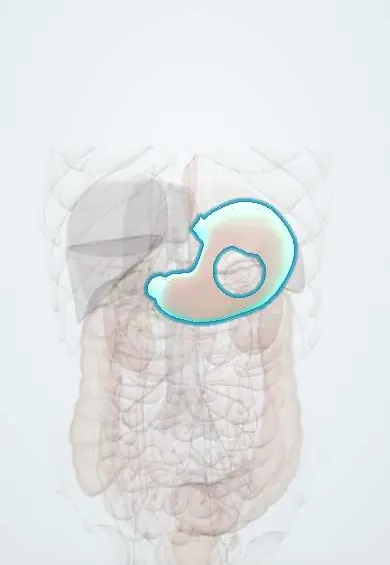
Tap one to see what it is and open it in 3D.
Why it happens
- Gastric motility and emptying
- Visceral and referred pain
- The enteric nervous system, slow waves and GI control
What it is
A common disorder of gut–brain interaction in which a person has bothersome, recurrent upper abdominal (epigastric) symptoms such as pain, burning, after-meal fullness or early satiety, while endoscopy and other tests show no structural disease that explains them.
Who gets it
Dyspepsia affects about one in five adults each year, and most people investigated for it end up with a functional diagnosis rather than an ulcer or cancer. It is one of the most frequent reasons for primary-care visits. In Colombia and much of Latin America, where Helicobacter pylori infection and gastric cancer are common, testing for H. pylori and a low threshold for endoscopy are part of the work-up.
Causes
- No single cause; several mechanisms combine
- Delayed gastric emptying or poor relaxation of the upper stomach (impaired accommodation) after meals
- Visceral hypersensitivity: normal stretch or acid felt as pain
- Low-grade duodenal inflammation (eosinophils, mast cells) and increased permeability, sometimes after a gut infection
- Altered gut–brain signalling, linked to anxiety and depression
Risk factors
- Female sex
- Psychological stress, anxiety or depression
- Previous acute gastroenteritis (post-infectious dyspepsia)
- Smoking
- NSAID use
- Helicobacter pylori infection
- Other functional disorders such as irritable bowel syndrome
Pathophysiology
After a meal the upper stomach normally relaxes to hold food and the stomach then empties at a steady rate. In functional dyspepsia this accommodation may fail, emptying may be slow, and sensory nerves react to ordinary distension or acid. Subtle duodenal immune activation and altered central processing of gut signals amplify the symptoms, without visible damage to the mucosa.
Classification
- Postprandial distress syndrome: meal-related fullness and early satiety (the most common subtype)
- Epigastric pain syndrome: epigastric pain or burning, not necessarily linked to meals
- Overlap of both subtypes
- Rome IV time criterion: symptoms in the last 3 months, starting at least 6 months before diagnosis
Symptoms and signs
- Bothersome fullness after normal-sized meals
- Early satiety: unable to finish a normal meal
- Epigastric pain
- Epigastric burning (without the retrosternal heartburn typical of reflux)
- Bloating in the upper abdomen, belching or nausea
- Symptoms that come and go over months or years
Diagnosis
- Clinical
- A diagnosis made on typical symptoms (Rome IV criteria) once alarm features have been looked for and NSAID use, reflux and biliary pain have been considered. Examination is usually normal apart from mild epigastric tenderness.
- Tests
- Non-invasive testing for Helicobacter pylori (urea breath test or stool antigen) with treatment if positive; complete blood count. Upper endoscopy with biopsies is done when there are alarm features, at older age, or where gastric cancer risk is high; in functional dyspepsia it is normal.
- Imaging
- Not needed routinely. Abdominal ultrasound if biliary pain is suspected; a gastric emptying study if gastroparesis is considered.
Differential diagnosis
- Peptic ulcer disease
- Gastro-oesophageal reflux disease
- Gastric cancer
- Gastroparesis
- Biliary colic
- Chronic pancreatitis or pancreatic cancer
- Coeliac disease
- Drug-induced dyspepsia (NSAIDs, iron, some antibiotics)
Goal of treatment
Rule out organic disease, explain the condition clearly, reduce symptoms and improve quality of life; the aim is control, not cure.
Treatment
- Lifestyle
- Clear explanation and reassurance, smaller and more frequent meals, less fatty food, stopping smoking and avoiding NSAIDs where possible.
- Medical
- Eradication of Helicobacter pylori when the test is positive; it helps a minority of patients and lowers ulcer and cancer risk.
- Medical
- Acid suppression with a proton pump inhibitor (or an H2-receptor antagonist) is usually tried first, especially for epigastric pain syndrome.
- Medical
- Prokinetic agents for meal-related fullness, and low-dose tricyclic antidepressants or other neuromodulators when symptoms persist.
- Conservative
- Psychological therapies such as cognitive behavioural therapy, hypnotherapy or relaxation techniques for refractory cases.
Complications
- Impaired quality of life and work absence
- Anxiety and depression
- Weight loss from food avoidance in severe cases
- Repeated investigations and long-term medication use
Prognosis
Benign: it does not shorten life or turn into cancer. Symptoms often fluctuate over years, and many patients improve with explanation and treatment, although some keep long-term symptoms.
Prevention
- Avoiding unnecessary NSAID use
- Testing for and treating Helicobacter pylori
- Managing stress and coexisting anxiety or depression
Test yourself
Think of the answer, then tap the question to see it.
Which four symptoms define functional dyspepsia under Rome IV?
Bothersome postprandial fullness, early satiety, epigastric pain and epigastric burning, with no structural cause found.
What are the two Rome IV subtypes of functional dyspepsia?
Postprandial distress syndrome (meal-induced fullness and early satiety) and epigastric pain syndrome (epigastric pain or burning).
Which infection should be tested for and treated in a patient with dyspepsia?
Helicobacter pylori, using a urea breath test or stool antigen test.
Which alarm features call for prompt endoscopy in dyspepsia (name three)?
Any three of: older age at onset, weight loss, dysphagia, persistent vomiting, GI bleeding or iron-deficiency anaemia, mass, family history of gastric cancer.
Which drug class is usually tried first for functional dyspepsia?
A proton pump inhibitor; prokinetics and tricyclic antidepressants are later options.
Related conditions
- Peptic ulcer disease
- Helicobacter pylori gastritis
- Gastro-oesophageal reflux disease (GERD)
- Gastroparesis (delayed gastric emptying)
- Irritable bowel syndrome
- Gastric cancer
- Coeliac disease
- Generalized anxiety disorder
Educational information, not medical advice. For any symptom, see a health professional.
Sources: Definition & Facts of Indigestion (National Institute of Diabetes and Digestive and Kidney Diseases (NIDDK), 2026); Treatment of Indigestion (National Institute of Diabetes and Digestive and Kidney Diseases (NIDDK), 2026).
Spotted a mistake?We are always improving for the community. Tell us what is wrong and our team will review it.Report a mistake
Representative model, for educational purposes only.