Irritable bowel syndrome !
Irritable bowel syndrome is a common gut-brain disorder with recurring belly pain and changes in bowel habit, without visible damage to the gut.
Updated 2026-10-29
Structures involved
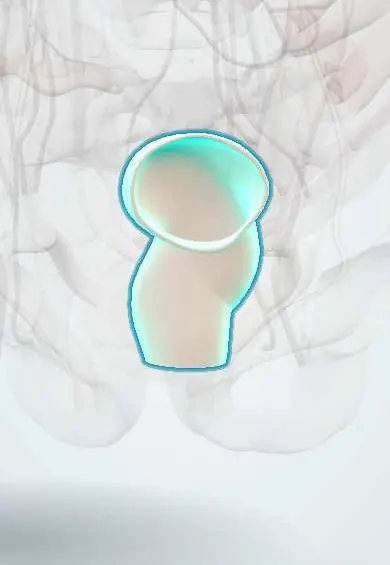
Tap one to see what it is and open it in 3D.
In biochemistry
In physiology
- The enteric nervous system, slow waves and GI control
- Small bowel and colon motility
- Defecation and continence
Why it happens
What it is
Common disorder of gut-brain interaction with recurrent abdominal pain linked to bowel movements and a change in stool frequency or form, without a structural or biochemical cause.
Who gets it
One of the most frequent reasons for gastroenterology visits worldwide and in Latin America. It is more common in women and in young and middle-aged adults.
Causes
- Visceral hypersensitivity
- Altered gut motility
- Disturbed gut-brain signalling
- After an infectious gastroenteritis (post-infectious IBS)
- Changes in the gut microbiome and low-grade immune activation
Risk factors
- Female sex
- Previous infectious gastroenteritis
- Anxiety, depression, psychological stress
- History of abuse or adverse life events
- Family history
Pathophysiology
Normal amounts of gas and stretch are felt as pain because sensory nerves and their processing in the brain are oversensitive. Motility and secretion are altered, giving diarrhoea, constipation or both. Stress, food and the microbiome modulate these signals.
Classification
- By main stool pattern: IBS with constipation (IBS-C), with diarrhoea (IBS-D), mixed (IBS-M), unclassified (IBS-U)
- Diagnosis uses the Rome criteria (current version Rome IV)
Symptoms and signs
- Recurrent abdominal pain related to defecation
- Change in stool frequency and form (diarrhoea, constipation or both)
- Bloating and visible distension
- Feeling of incomplete evacuation, mucus in stools
- Symptoms often worse after meals or with stress
Diagnosis
- Clinical
- A positive diagnosis based on the Rome criteria: recurrent abdominal pain on at least one day a week over the last three months, linked to defecation or a change in stool frequency or form, starting at least six months earlier, with no alarm features.
- Tests
- Limited testing: full blood count, CRP, coeliac serology; faecal calprotectin in diarrhoea; stool tests for parasites such as Giardia where relevant. Colonoscopy only with alarm features or for screening by age.
- Imaging
- Not needed when there are no alarm features.
Differential diagnosis
- Coeliac disease
- Inflammatory bowel disease
- Colorectal cancer
- Intestinal parasites (giardiasis)
- Lactose intolerance, bile acid diarrhoea
- Thyroid disease
Goal of treatment
Relieve the most troublesome symptoms and improve quality of life through a clear explanation, diet, medicines aimed at the main symptom and psychological therapies.
Treatment
- Conservative
- Explanation and reassurance, with a good clinician-patient relationship; regular exercise and sleep.
- Lifestyle
- Dietary changes: regular meals, soluble fibre (for example psyllium), and a low-FODMAP diet guided by a dietitian.
- Medical
- Antispasmodics for pain and cramps.
- Medical
- For IBS-C: osmotic laxatives and secretagogues. For IBS-D: antidiarrhoeal opioid-receptor agonists and, in some cases, a gut-selective antibiotic or bile acid binders.
- Medical
- Gut-brain neuromodulators (low-dose tricyclic antidepressants, SSRIs) for persistent pain.
- Conservative
- Psychological therapies: cognitive behavioural therapy, gut-directed hypnotherapy.
Drugs for this condition
Complications
- Reduced quality of life and work absence
- Anxiety and depression
- Unnecessary investigations and surgery
Prognosis
Chronic with fluctuating symptoms, but it does not shorten life or lead to cancer or inflammatory bowel disease. Many patients improve with treatment and time.
Prevention
- Early clear diagnosis to avoid repeated testing
- Stress management
Test yourself
Think of the answer, then tap the question to see it.
Which criteria are used to diagnose irritable bowel syndrome?
The Rome criteria (Rome IV): recurrent abdominal pain related to defecation and change in stool frequency or form, over the last three months, with onset at least six months before.
Which alarm features need further investigation in suspected IBS?
Rectal bleeding, unintentional weight loss, nocturnal symptoms, iron deficiency anaemia, onset at older age, or family history of colorectal cancer or IBD.
Which blood test is recommended to exclude a common mimic of IBS with diarrhoea?
Coeliac serology (anti-tissue transglutaminase IgA with total IgA).
What is post-infectious IBS?
IBS that begins after an episode of infectious gastroenteritis.
Related conditions
- Coeliac disease
- Crohn disease
- Ulcerative colitis
- Colorectal cancer
- Acute (viral) gastroenteritis
- Gallstones (cholelithiasis)
- Diverticular disease and diverticulitis
- Endometriosis
Educational information, not medical advice. For any symptom, see a health professional.
Sources: Irritable Bowel Syndrome (StatPearls (NCBI Bookshelf), 2025).
Spotted a mistake?We are always improving for the community. Tell us what is wrong and our team will review it.Report a mistake
Representative model, for educational purposes only.