Conditions · Gastroenterology and hepatology
Gastroparesis (delayed gastric emptying) !
The stomach empties too slowly although nothing blocks it. It causes early fullness, nausea and vomiting, and is most often linked to diabetes.
Updated 2026-11-01
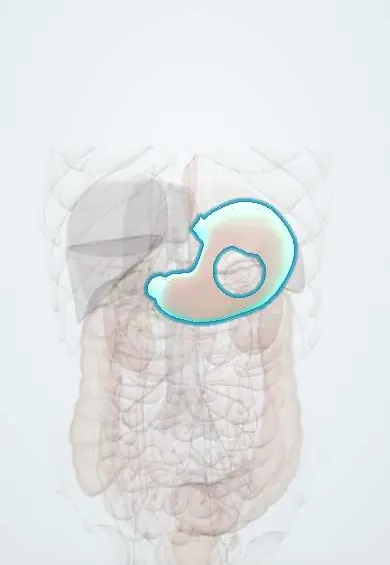
Structures involved
Tap one to see what it is and open it in 3D.
Why it happens
- Gastric motility and emptying
- The enteric nervous system, slow waves and GI control
- The GI tract wall: mucosa, submucosa, muscularis, serosa; enteric plexuses
What it is
A chronic disorder in which the stomach empties solid food abnormally slowly without any mechanical obstruction of the outlet. It is a problem of the nerves and muscles that move food out of the stomach.
Who gets it
Uncommon in the general population but frequent among people with long-standing diabetes, especially type 1, and more common in women. With rising rates of type 2 diabetes in Colombia and Latin America, diabetic gastroparesis is met increasingly in internal medicine and gastroenterology clinics.
Causes
- Diabetes mellitus with autonomic neuropathy (the most common known cause)
- Idiopathic, often after a viral infection
- After surgery on the stomach or oesophagus with vagus nerve injury (including fundoplication and bariatric surgery)
- Medicines that slow emptying: opioids, anticholinergics, GLP-1 receptor agonists, some antidepressants
- Neurological disease (Parkinson disease), hypothyroidism, systemic sclerosis and other connective tissue diseases
Risk factors
- Long-standing, poorly controlled diabetes with other microvascular complications (neuropathy, retinopathy, nephropathy)
- Female sex
- Previous upper gastrointestinal surgery
- Chronic opioid use
- Recent viral gastroenteritis
Pathophysiology
Normal emptying needs coordinated antral contractions, pyloric relaxation and fundic accommodation, controlled by the vagus nerve, the enteric nerves and the interstitial cells of Cajal (the gut pacemaker cells). In diabetes, high glucose and neuropathy damage these nerves and pacemaker cells, so the antrum contracts weakly and the pylorus may not relax. Food stays in the stomach, causing fullness, nausea and vomiting, and erratic absorption of food makes blood glucose hard to control. Acute hyperglycaemia itself slows emptying further.
Classification
- By cause: diabetic, idiopathic, postsurgical, drug-induced and other secondary forms
- By severity: mild (controlled with diet), compensated (needs medicines), severe or refractory (poor nutrition, repeated admissions)
Symptoms and signs
- Early satiety (feeling full after a few bites)
- Postprandial fullness that lasts for hours
- Nausea and vomiting of undigested food eaten hours earlier
- Upper abdominal bloating and discomfort
- Weight loss and poor appetite
- Unpredictable blood glucose, with hypoglycaemia after meals in people on insulin
Diagnosis
- Clinical
- Suspected in a person with typical upper gastrointestinal symptoms, especially with diabetes or a recent opioid prescription. A succussion splash may be heard over the stomach. Mechanical obstruction must be excluded first.
- Tests
- Gastric emptying scintigraphy of a standard solid meal over four hours is the gold standard (more than about 10% of the meal left at four hours confirms delay). A gastric emptying breath test or a wireless motility capsule are alternatives. Blood tests check glucose, HbA1c, electrolytes, kidney function and thyroid function. Medicines that slow emptying are stopped before testing when possible.
- Imaging
- Upper endoscopy is done first to rule out a pyloric ulcer, stricture or tumour; retained food without obstruction supports the diagnosis. CT or a contrast study may exclude small bowel obstruction.
Differential diagnosis
- Gastric outlet obstruction (peptic ulcer, gastric cancer, pyloric stricture)
- Functional dyspepsia
- Rumination syndrome and cyclic vomiting syndrome, including cannabinoid hyperemesis
- Small bowel obstruction or pseudo-obstruction
- Medication side effect (opioids, GLP-1 receptor agonists)
- Pregnancy, uraemia or adrenal insufficiency causing vomiting
Goal of treatment
Relieve symptoms, keep the person hydrated and well nourished, improve blood glucose control and remove factors that slow emptying.
Treatment
- Lifestyle
- Small, frequent, low-fat and low-fibre meals; liquid or puréed foods when solids are poorly tolerated; staying upright after eating; avoiding alcohol and smoking.
- Medical
- Tight glucose control and review of drugs that slow emptying. Prokinetic agents (metoclopramide, or erythromycin for short courses) and antiemetics such as antidopaminergics or serotonin 5-HT3 antagonists for symptoms.
- Procedure
- For refractory cases: feeding through a jejunostomy tube, venting gastrostomy, endoscopic pyloromyotomy (G-POEM), pyloric botulinum toxin injection or gastric electrical stimulation in selected patients.
- Follow-up
- Nursing focus: daily weight, intake and output, signs of dehydration, electrolytes, frequent glucose checks with insulin timing matched to delayed absorption, and watching for tardive dyskinesia and other movement effects with metoclopramide.
Drugs for this condition
Complications
- Dehydration, electrolyte disturbances and acute kidney injury
- Malnutrition and weight loss
- Poor glycaemic control with hypoglycaemia and hyperglycaemia
- Bezoars (hardened masses of undigested food)
- Oesophagitis and Mallory-Weiss tears from vomiting
- Reduced quality of life and repeated hospital admissions
Prognosis
Usually chronic with symptoms that come and go. Post-viral gastroparesis often improves over months; diabetic gastroparesis tends to persist but can be controlled with diet, glucose control and medicines. Severe forms carry a high burden of hospital admissions.
Prevention
- Good long-term blood glucose control in diabetes
- Careful use of opioids and other drugs that slow gastric emptying
Test yourself
Think of the answer, then tap the question to see it.
What is the most common known cause of gastroparesis?
Diabetes mellitus with autonomic (vagal) neuropathy.
Which test is the gold standard to confirm gastroparesis?
Gastric emptying scintigraphy of a solid meal measured over four hours.
What must be excluded with upper endoscopy before diagnosing gastroparesis?
Mechanical gastric outlet obstruction, such as a pyloric ulcer, stricture or tumour.
Which serious adverse effect limits long-term use of metoclopramide?
Tardive dyskinesia and other extrapyramidal movement disorders.
Why do people with gastroparesis on insulin get hypoglycaemia after meals?
Food reaches the small intestine late, so absorption of glucose is delayed relative to the insulin dose.
Related conditions
- Type 1 diabetes mellitus
- Type 2 diabetes mellitus
- Hypoglycaemia (including insulin-induced)
- Gastro-oesophageal reflux disease (GERD)
- Peptic ulcer disease
- Gastric cancer
- Hypothyroidism
- Parkinson disease
- Systemic sclerosis (scleroderma, including CREST)
- Opioid use disorder, overdose and withdrawal
- Dumping syndrome (rapid gastric emptying)
- Small intestinal bacterial overgrowth (SIBO)
Educational information, not medical advice. For any symptom, see a health professional.
Sources: Gastroparesis - NIDDK (National Institute of Diabetes and Digestive and Kidney Diseases (NIDDK), 2025).
Spotted a mistake?We are always improving for the community. Tell us what is wrong and our team will review it.Report a mistake
Representative model, for educational purposes only.