Conditions · Gastroenterology and hepatology
Hiatal hernia !
Part of the stomach slides or rolls up through the opening in the diaphragm into the chest. Often silent, but it can worsen acid reflux.
Updated 2026-11-01
Structures involved
Tap one to see what it is and open it in 3D.
In embryology
Why it happens
What it is
Protrusion of part of the stomach, and sometimes other abdominal organs, through the oesophageal hiatus of the diaphragm into the thorax. Most are small sliding hernias linked to reflux; paraoesophageal hernias are less common but can strangulate.
Who gets it
Very common, especially after age 50, and often found incidentally on endoscopy or imaging. Obesity, a growing problem in Colombia and Latin America, increases its frequency.
Causes
- Widening of the oesophageal hiatus and weakening of the phrenoesophageal ligament with age
- Raised intra-abdominal pressure: obesity, pregnancy, chronic cough, straining
- Shortening of the oesophagus from chronic reflux and scarring
- Previous upper abdominal or hiatal surgery, or trauma
Risk factors
- Age over 50
- Obesity
- Pregnancy
- Chronic constipation, heavy lifting or chronic cough
- Kyphosis and other spinal deformities
Pathophysiology
Normally the lower oesophageal sphincter sits at the level of the diaphragmatic crura, which add an external pinch that prevents reflux. In a sliding hernia the gastro-oesophageal junction moves up into the chest, separating the sphincter from the crura and creating an acid pocket, so reflux increases. In a paraoesophageal hernia the junction stays in place but the fundus rolls up beside the oesophagus, where it can twist (volvulus), obstruct or lose its blood supply.
Classification
- Type I, sliding: the gastro-oesophageal junction moves above the diaphragm (most common)
- Type II, paraoesophageal: the junction stays in place and the fundus herniates beside the oesophagus
- Type III, mixed: features of types I and II
- Type IV: other organs (colon, omentum, spleen) also herniate
Symptoms and signs
- Often none
- Heartburn and regurgitation (sliding hernia)
- Postprandial fullness, chest pain or epigastric pain
- Dysphagia
- Dyspnoea after meals with large hernias
Diagnosis
- Clinical
- Usually suspected from reflux symptoms or found incidentally; a large hernia may produce bowel sounds or dullness in the lower chest.
- Tests
- Upper endoscopy shows the gastro-oesophageal junction above the diaphragmatic pinch and assesses oesophagitis, Barrett oesophagus and Cameron lesions. Oesophageal manometry before surgery.
- Imaging
- Barium swallow defines size and type best. Chest radiograph may show a retrocardiac air-fluid level. CT is used for large or complicated hernias and suspected volvulus.
Differential diagnosis
- Gastro-oesophageal reflux disease without hernia
- Acute coronary syndrome
- Achalasia and other motility disorders
- Peptic ulcer disease
- Congenital diaphragmatic hernia (Bochdalek or Morgagni)
Goal of treatment
Relieve reflux symptoms, prevent complications of large hernias, and repair hernias that cause symptoms or carry a risk of volvulus.
Treatment
- Lifestyle
- Weight loss, smaller meals, not lying down after eating, raising the head of the bed, and avoiding tobacco and alcohol.
- Medical
- Proton pump inhibitors or H2 receptor antagonists for reflux symptoms.
- Surgical
- Laparoscopic hernia repair: reduction of the stomach, excision of the sac, closure of the crura and fundoplication. Indicated for symptomatic paraoesophageal hernias and refractory reflux.
- Acute
- Emergency surgery for gastric volvulus, strangulation or perforation, after nasogastric decompression and resuscitation.
Complications
- Gastro-oesophageal reflux disease, oesophagitis and Barrett oesophagus
- Cameron erosions with chronic blood loss and iron-deficiency anaemia
- Gastric volvulus, incarceration and strangulation (paraoesophageal type)
- Aspiration and respiratory symptoms
Prognosis
Sliding hernias are usually benign and controlled with lifestyle measures and acid suppression. Paraoesophageal hernias that cause symptoms do well after elective repair, while emergency surgery for volvulus or strangulation carries much higher risk; recurrence after repair is common but often without symptoms.
Prevention
- Keeping a healthy weight
- Avoiding chronic straining and treating chronic cough
Test yourself
Think of the answer, then tap the question to see it.
What is the most common type of hiatal hernia?
Type I, sliding hernia, in which the gastro-oesophageal junction moves above the diaphragm.
Why does a sliding hiatal hernia promote reflux?
The lower oesophageal sphincter is separated from the crura, losing the external pinch of the diaphragm.
What is the Borchardt triad?
Severe epigastric pain, retching without vomiting and inability to pass a nasogastric tube: gastric volvulus.
What are Cameron lesions?
Linear erosions of the gastric mucosa at the level of the diaphragm in a large hernia, causing chronic blood loss and anaemia.
Related conditions
- Gastro-oesophageal reflux disease (GERD)
- Barrett oesophagus
- Oesophageal cancer
- Iron deficiency anaemia
- Peptic ulcer disease
- Congenital diaphragmatic hernia
Educational information, not medical advice. For any symptom, see a health professional.
Sources: Hiatal hernia: MedlinePlus Medical Encyclopedia (MedlinePlus (U.S. National Library of Medicine), 2024); Hiatal Hernia | MedlinePlus (MedlinePlus (U.S. National Library of Medicine), 2024).
Spotted a mistake?We are always improving for the community. Tell us what is wrong and our team will review it.Report a mistake
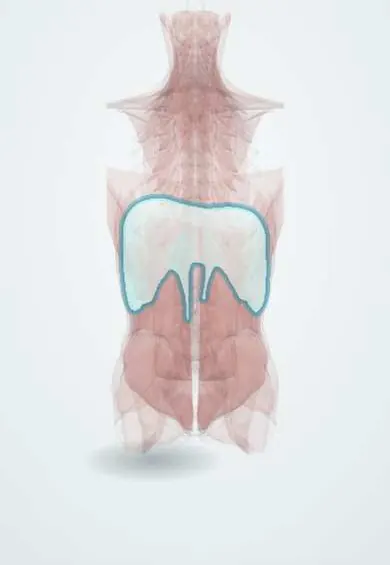
Representative model, for educational purposes only.