Conditions · Obstetrics and gynecology
Hyperemesis gravidarum !
Hyperemesis gravidarum is severe, persistent nausea and vomiting in pregnancy that causes dehydration and weight loss and may need hospital care.
Updated 2026-11-01
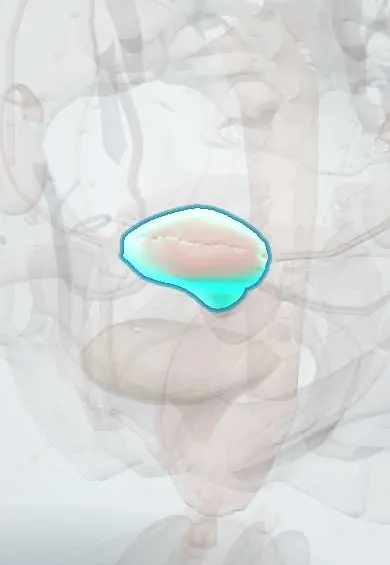
Structures involved
Tap one to see what it is and open it in 3D.
Why it happens
- Vomiting and its control
- The placenta and pregnancy hormones
- Metabolic alkalosis and its compensation
- Ketogenesis (ketone body synthesis)
What it is
The most severe end of nausea and vomiting of pregnancy: persistent vomiting that causes weight loss (often more than 5% of pre-pregnancy weight), dehydration, ketosis and electrolyte disturbances. It starts in the first trimester and usually improves by 16–20 weeks, though it lasts longer in some women.
Who gets it
Nausea and vomiting affect most pregnant women, but hyperemesis gravidarum affects about 0.3–3%. It is a leading cause of hospital admission in early pregnancy and tends to recur in later pregnancies.
Causes
- Placental hormones: the growth and differentiation factor GDF15 is now considered a main driver; hCG and oestrogen also contribute
- Genetic susceptibility (variants in GDF15 and its receptor)
- Conditions with high hCG levels, such as multiple pregnancy and molar pregnancy
Risk factors
- Hyperemesis in a previous pregnancy
- Family history (mother or sister affected)
- Multiple pregnancy and molar pregnancy
- First pregnancy and young age
- History of motion sickness or migraine
- Female fetus
Pathophysiology
High levels of placental GDF15 act on brainstem receptors in the area postrema, which control nausea and food aversion; women with low pre-pregnancy GDF15 seem more sensitive. hCG can also stimulate the TSH receptor, causing transient gestational thyrotoxicosis. Repeated vomiting causes loss of fluid, hydrogen ions, chloride and potassium (hypokalaemic hypochloraemic metabolic alkalosis), starvation ketosis and, without supplements, thiamine depletion.
Classification
- Nausea and vomiting of pregnancy (mild to moderate, no dehydration)
- Hyperemesis gravidarum (weight loss, dehydration, electrolyte imbalance)
- Severity scores such as PUQE (Pregnancy-Unique Quantification of Emesis) guide treatment
Symptoms and signs
- Persistent nausea and frequent vomiting, unable to keep food or fluids down
- Weight loss
- Dizziness, dry mouth, reduced and dark urine (dehydration)
- Excess saliva (ptyalism) and fatigue
- Anxiety and low mood from prolonged symptoms
Diagnosis
- Clinical
- Clinical diagnosis of exclusion: severe vomiting beginning in early pregnancy with weight loss and dehydration, after other causes have been ruled out. Assessment includes weight, vital signs, hydration and a severity score.
- Tests
- Urine ketones and specific gravity; electrolytes (potassium, sodium, chloride), urea and creatinine; liver enzymes (often mildly raised); thyroid function (suppressed TSH from hCG is common and usually needs no antithyroid treatment); urine culture; glucose.
- Imaging
- Obstetric ultrasound to confirm a viable intrauterine pregnancy and to exclude multiple or molar pregnancy. Abdominal ultrasound if biliary or pancreatic disease is suspected.
Differential diagnosis
- Gastroenteritis, hepatitis, cholecystitis and pancreatitis
- Urinary tract infection and pyelonephritis
- Hyperthyroidism from Graves disease
- Molar pregnancy
- Diabetic ketoacidosis, adrenal insufficiency and intracranial causes
Goal of treatment
Restore hydration and electrolytes, control nausea and vomiting, prevent thiamine deficiency and support nutrition and mental health until symptoms settle.
Treatment
- Lifestyle
- Small, frequent, bland meals and fluids; avoiding triggers; ginger may help milder cases.
- Medical
- Step-wise antiemetics: pyridoxine with doxylamine or other antihistamines first, then dopamine antagonists (metoclopramide, prochlorperazine) and serotonin antagonists (ondansetron); corticosteroids only for refractory cases under specialist care.
- Acute
- Intravenous fluids with sodium chloride and potassium replacement; thiamine before any dextrose-containing fluid to prevent Wernicke encephalopathy.
- Procedure
- Enteral tube feeding or, rarely, parenteral nutrition for persistent weight loss despite treatment.
- Follow-up
- Nursing priorities: daily weight, strict intake and output, urine ketones, electrolytes, mental status and eye movements; venous thromboembolism prophylaxis when admitted and immobile; emotional support.
Complications
- Dehydration, acute kidney injury and electrolyte disorders (hypokalaemia, hyponatraemia)
- Wernicke encephalopathy from thiamine deficiency
- Mallory-Weiss tear and oesophageal rupture (rare)
- Venous thromboembolism
- Depression, anxiety and post-traumatic stress
- Low birth weight when maternal weight gain is poor
Prognosis
Symptoms usually improve by mid-pregnancy and resolve after delivery. With treatment, outcomes for mother and baby are generally good. The condition commonly recurs in later pregnancies.
Prevention
- Taking a multivitamin around conception may reduce severe nausea
- Early treatment of nausea and vomiting before it becomes severe
- Planning early treatment in women with previous hyperemesis
Test yourself
Think of the answer, then tap the question to see it.
What acid-base disorder is typical of hyperemesis gravidarum?
Hypokalaemic hypochloraemic metabolic alkalosis, often with ketosis.
What must be given before glucose-containing fluids?
Thiamine, to prevent Wernicke encephalopathy.
Which two conditions should an ultrasound exclude?
Multiple pregnancy and molar pregnancy, both associated with high hCG.
Why is TSH often low, and does it need antithyroid drugs?
hCG stimulates the TSH receptor (gestational transient thyrotoxicosis); it usually resolves without antithyroid treatment.
Which placental hormone is now thought to be a main cause?
GDF15 (growth and differentiation factor 15).
Related conditions
- Molar pregnancy (hydatidiform mole)
- Wernicke encephalopathy (thiamine deficiency)
- Graves disease (hyperthyroidism)
- Acute (viral) gastroenteritis
- Acute pancreatitis
- Urinary tract infection (acute cystitis)
- Gestational trophoblastic neoplasia (choriocarcinoma)
Educational information, not medical advice. For any symptom, see a health professional.
Sources: Hyperemesis gravidarum (MedlinePlus (U.S. National Library of Medicine), 2024).
Spotted a mistake?We are always improving for the community. Tell us what is wrong and our team will review it.Report a mistake
Representative model, for educational purposes only.