
Ingrown toenail (onychocryptosis)
The edge of a toenail, usually the big toe's, digs into the skin beside it and causes pain, swelling and infection. Lifting the edge often fixes it.
What it is
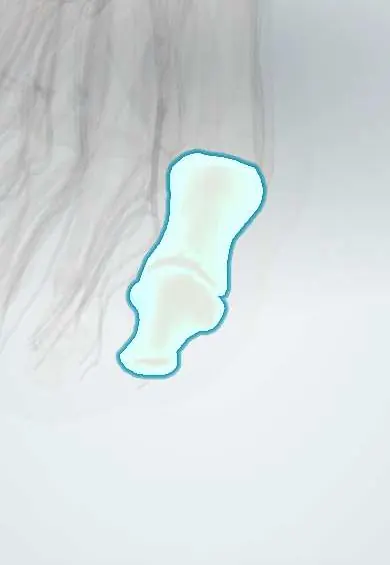
A painful condition in which the lateral or medial edge of the nail plate penetrates the adjacent nail fold, most often of the great toe. The puncture causes inflammation, then infection and, if it persists, overgrowth of granulation tissue and a hypertrophied fold.
Who gets it
A very common problem: ingrown toenails account for about 20% of foot problems seen in primary care. They mostly affect the great toe and are most frequent in adolescents and young adults, especially young men. Recurrence after surgery is reported between 1.7% and 27%, depending on the technique; destroying the lateral matrix lowers it.
Causes
- Improper trimming: cutting too short or rounding the corners, which leaves a spike that grows into the fold
- Tight or narrow-toed shoes that press the fold against the nail edge
- Repeated toe trauma (running, kicking) or a single injury to the nail
- Anatomy: wide or curved (pincer) nails, bulky nail folds, an abnormal hallux interphalangeal angle
- Hyperhidrosis and onychomycosis, which soften the fold or deform the nail
Risk factors
- Adolescence and young adulthood, male sex
- Sports with repeated toe impact
- Reduced ability to care for one's own nails (older age, obesity, poor vision)
- Sweaty feet and fungal nail infection
- Previous ingrown toenail treated without destroying the matrix
Pathophysiology
A spike or edge of nail plate presses into the lateral nail fold → the epidermis is pierced and the nail acts as a foreign body → inflammation: pain, redness and swelling of the fold → swelling pushes the fold further over the nail, so the conflict worsens → bacteria enter through the break, with pus (an ingrown-nail paronychia) → if the nail keeps cutting in, moist granulation tissue overgrows the edge and the fold hypertrophies → chronic pain, drainage and recurrence until the nail is moved out of the fold or the fold away from the nail.
Classification
- Grade (stage) I, mild: pain, slight redness and swelling of the fold, no pus
- Grade II, moderate: more swelling, pus or drainage (infection)
- Grade III, severe: chronic granulation tissue and hypertrophy of the nail fold, often recurrent
- Other systems exist (Heifetz, Mogensen) with the same logic: inflammation → infection → granulation and fold hypertrophy
Symptoms and signs
- Pain at one side of the great toenail, worse with shoes and pressure
- Redness and swelling of the lateral or medial nail fold
- Pus or clear drainage from the fold
- Moist, bleeding red tissue overgrowing the nail edge in long-standing cases
- Limping or difficulty wearing closed shoes
Diagnosis
- Clinical
- Clinical: the nail edge is seen or felt buried in a red, swollen fold, with or without pus and granulation tissue. Grade it, look for onychomycosis, and in every patient check foot pulses, sensation and diabetes history before choosing treatment. Look carefully for features that do not fit (pigment, nail destruction, a mass under the nail).
- Tests
- Usually none. Swab for culture only if pus persists after the nail spike is removed or cellulitis spreads. Glucose or HbA1c when diabetes is suspected; ankle-brachial index if pulses are weak. Biopsy any atypical or recurrent granulation-like or pigmented lesion.
- Imaging
- Plain X-ray of the toe when a subungual exostosis is suspected, or when healing is poor for several weeks and osteomyelitis is a concern. Doppler ultrasound if peripheral artery disease is suspected.
Differential diagnosis
- Acute or chronic paronychia without an ingrown edge
- Subungual exostosis (bony growth lifting the nail)
- Pyogenic granuloma of the nail fold
- Melanoma of the nail unit, including amelanotic melanoma
- Onychomycosis and pincer nail deformity
- Diabetic foot infection or ulcer
Painful red toe beside the nail: ingrown toenail or something else?
| Condition | Where it starts | Key look | Clue | Next step |
|---|---|---|---|---|
| Ingrown toenail | Nail edge in the lateral fold | Red swollen fold, spike buried, ± granulation | Young person, trimming or tight shoes | Lift or remove the edge; matricectomy if recurrent |
| Paronychia | Nail fold, after a break in the cuticle | Red, tender, pus at the fold, no buried edge | Manicure, nail biting, wet work (fingers) | Warm soaks; drainage if abscess |
| Subungual exostosis | Bone of the distal phalanx under the nail | Firm, painful bump lifting the nail plate | Young person, often after trauma | X-ray; surgical excision |
| Pyogenic granuloma | Nail fold or bed | Bright red, friable, bleeding nodule | Grows fast; may follow injury or some drugs | Biopsy and removal |
| Nail unit melanoma | Nail matrix | Pigmented band, nail destruction, or a pink non-healing mass | Adult, one nail, pigment on the fold (Hutchinson sign) | Urgent biopsy |
| Onychomycosis | Nail plate and bed | Thick, yellow, crumbly nail | Often several nails, tinea pedis | Confirm with microscopy or culture; antifungal |
Goal of treatment
Relieve pain, end the conflict between nail and fold, clear infection, prevent recurrence, and avoid wound problems in people with diabetes or poor circulation.
Treatment
- Conservative
- For grades I–II without much pain or pus: open or wide-toe-box shoes, warm soapy soaks, and lifting the nail edge with wisps of cotton or dental floss under it, or taping the fold away from the plate. Continue until the normal nail grows past the end of the fold, which takes weeks.
- Procedure
- Gutter splint: after a digital block, a slit sterile plastic tube is slid over the nail edge and fixed, so the edge cannot cut the fold; it often relieves pain quickly and lets the nail grow out.
- Surgical
- Partial nail avulsion for grade II–III or failed conservative care: under a digital block, the offending lateral strip of nail is cut back to the cuticle and removed whole, checking that no fragment is left. Removing the whole nail is not preferred.
- Procedure
- Matricectomy for recurrent or severe cases: the exposed lateral horn of the nail matrix is destroyed, usually chemically with phenol (or sodium hydroxide), so that strip of nail never regrows; it cuts recurrence sharply compared with avulsion alone. Phenol is a relative concern in uncontrolled diabetes and peripheral artery disease and is avoided in pregnancy.
- Medical
- Oral or topical antibiotics before or after the procedure do not improve outcomes; give them only for clear spreading cellulitis. Treat onychomycosis and hyperhidrosis that drive recurrence; a short course of a topical corticosteroid can calm an inflamed fold during conservative care.
- Follow-up
- In diabetes, neuropathy or peripheral artery disease, assess circulation before any procedure (peripheral vascular disease is a contraindication to avulsion in primary care) and follow the wound closely; refer early to a diabetic foot service when healing stalls.
Complications
- Paronychia, cellulitis and, rarely, osteomyelitis of the distal phalanx
- Recurrence, especially after avulsion without matricectomy
- Prolonged oozing after excessive phenol application
- A regrown nail spike from incomplete matricectomy
- Pyogenic granuloma, nail dystrophy or permanent nail loss
- Foot ulcer and amputation risk in diabetes or peripheral artery disease
Common traps
- Every red, swollen ingrown toenail needs antibiotics: antibiotics before or after nail procedures do not improve outcomes; removing the buried edge does, and antibiotics are kept for spreading cellulitis
- Rounding the corners of the toenail prevents ingrowing: rounding and cutting short leave a spike the fold grows over; cut the nail straight across
- Removing the whole nail is the definitive cure: complete avulsion is not preferred and recurrence is common; partial avulsion with destruction of the lateral matrix is what stops it
- Red tissue at the nail fold is always granulation from an ingrown nail: a single persistent lesion in an adult, or a pigment band, can be melanoma of the nail unit and needs biopsy
- A toenail procedure is minor in every patient: in diabetes or peripheral artery disease, check the circulation first, because poor healing can lead to ulcer and amputation
Prognosis
Mild cases usually settle with conservative care once the nail grows past the fold. Partial avulsion with chemical matricectomy succeeds in more than 95% of cases, with low recurrence. Outcomes are worse, and wounds heal more slowly, in diabetes and peripheral artery disease.
Prevention
- Cut toenails straight across, not too short, without rounding the corners
- Wear shoes with enough room for the toes
- Keep feet dry; treat sweaty feet and fungal nail infection
- People with diabetes or poor circulation: daily foot checks and professional nail care
Test yourself
Think of the answer, then tap the question to see it.
Why does rounding off the corners of a toenail cause ingrowing rather than prevent it?
It leaves a short, sharp corner beneath the fold; the soft tissue grows over it, and as the nail grows forward the spike pierces the fold.
A 17-year-old has a red, swollen lateral fold of the great toe with a little pus. Why is an oral antibiotic alone the wrong plan?
The buried nail edge is a foreign body; until it is lifted, splinted or removed, the fold stays inflamed, and antibiotics do not improve outcomes.
What does chemical matricectomy add to partial nail avulsion, and why?
It destroys the lateral horn of the nail matrix, so that strip of nail never regrows and cannot ingrow again; recurrence falls sharply.
Before treating an ingrown toenail in a 70-year-old with diabetes, what must be checked and why?
Foot pulses, sensation and glucose control: peripheral artery disease and neuropathy impair healing, and a minor nail wound can become an ulcer.
Which features make a lesion at the nail fold suspicious for melanoma rather than ingrown-nail granulation?
An adult with a single nail affected, a pigmented band or pigment on the fold, nail destruction, or a mass that keeps recurring: biopsy it.
Connections
Educational information, not medical advice. For any symptom, see a health professional.
Sources: Ingrown Toenail Management (American Family Physician) (American Academy of Family Physicians, 2019); A new perspective on the nail plate for treatment of ingrown toenail (Dermatology Practical & Conceptual) (Europe PMC, 2018); Six steps to standardize the surgical approach for ingrown toenail (Anais Brasileiros de Dermatologia) (Europe PMC, 2021).
Spotted a mistake?We are always improving for the community. Tell us what is wrong and our team will review it.Report a mistake
Representative model, for educational purposes only.