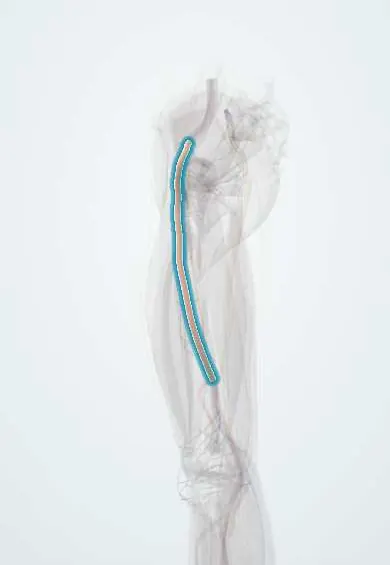
Peripheral artery disease !
Peripheral artery disease is narrowing of the leg arteries, usually by atherosclerosis; it reduces blood flow and causes calf pain when walking.
Updated 2026-10-29
Structures involved
Tap one to see what it is and open it in 3D.
- Femoral artery
- Popliteal artery
- Posterior tibial artery
- Dorsalis pedis artery
- External iliac artery
- Deep femoral artery
- Anterior tibial artery
- Fibular artery
- Gastrocnemius (inner head)
- Soleus
In the clinical exam
- Peripheral pulses and the ankle–brachial index
- Acute limb ischemia and chronic arterial insufficiency
In physiology
- Flow, pressure and resistance: Poiseuille and turbulent flow
- Local and humoral control of blood flow
- Muscle blood flow and the cardiovascular response to exercise
Why it happens
- Tobacco: how smoking injures tissue
- What delays healing: infection, diabetes, nutrition, glucocorticoids, poor blood flow
- Patterns of necrosis: coagulative, liquefactive, caseous, fat, fibrinoid, gangrenous
- Blood vessels: artery, vein and capillary layers
What it is
Narrowing or blockage of the arteries of the legs, usually from atherosclerosis, which reduces blood flow to the muscles and skin.
Who gets it
Common in older adults and often underdiagnosed because many patients have no symptoms. Shares the same risk factors as coronary and cerebrovascular disease, which are leading causes of death in Colombia.
Causes
- Atherosclerosis (most cases)
- Less often: vasculitis, thromboangiitis obliterans, embolism, entrapment or trauma
Risk factors
- Smoking (the strongest modifiable factor)
- Diabetes
- High blood pressure
- Dyslipidaemia
- Older age
- Chronic kidney disease
Pathophysiology
Atherosclerotic plaques narrow the aorto-iliac, femoropopliteal or tibial arteries. At rest flow may be enough, but during exercise the muscles beyond the narrowing do not get the extra blood they need, causing ischaemic pain. When collateral flow fails even at rest, skin and tissue break down.
Classification
- Fontaine stages (I asymptomatic to IV ulcer or gangrene)
- Rutherford categories
- Chronic limb-threatening (critical) ischaemia: rest pain, ulcers or gangrene
Symptoms and signs
- Intermittent claudication: cramping calf, thigh or buttock pain on walking, relieved by rest
- Cool foot, shiny hairless skin and thick nails
- Weak or absent foot pulses
- Slow-healing wounds on the toes or foot
- Erectile dysfunction in aorto-iliac disease
Diagnosis
- Clinical
- History of claudication, pulse examination, skin changes, Buerger test and capillary refill.
- Tests
- Ankle–brachial index (a value of 0.90 or less is widely used to diagnose PAD); toe–brachial index when arteries are calcified; exercise testing; lipid profile and glucose.
- Imaging
- Duplex ultrasound first; CT or MR angiography, or catheter angiography, to plan revascularisation.
Differential diagnosis
- Lumbar spinal stenosis (neurogenic claudication)
- Sciatica
- Chronic compartment syndrome
- Venous claudication
- Hip or knee osteoarthritis
- Baker cyst
Goal of treatment
Relieve symptoms, improve walking distance, save the limb and lower the high risk of heart attack and stroke.
Treatment
- Lifestyle
- Stopping smoking and supervised walking exercise programmes.
- Medical
- Antiplatelet agents, statins and control of blood pressure and diabetes; some patients receive drugs that improve walking distance.
- Procedure
- Endovascular angioplasty with or without stents for disabling claudication or critical ischaemia.
- Surgical
- Bypass grafting or endarterectomy; amputation when the limb cannot be saved.
Drugs for this condition
Complications
- Chronic limb-threatening ischaemia
- Ischaemic ulcers and gangrene
- Amputation
- Acute limb ischaemia
- Heart attack and stroke
Prognosis
Most patients with claudication remain stable with risk-factor control and exercise, but cardiovascular events are the main cause of death. Critical limb ischaemia carries a high risk of amputation and death.
Prevention
- Not smoking
- Control of diabetes, blood pressure and cholesterol
- Regular physical activity
Test yourself
Think of the answer, then tap the question to see it.
What is intermittent claudication?
Reproducible exercise-induced muscle pain, usually in the calf, relieved within minutes by rest.
Which ankle–brachial index value is commonly used to diagnose peripheral artery disease?
0.90 or less; values above about 1.40 suggest non-compressible, calcified arteries.
Which is the strongest modifiable risk factor for peripheral artery disease?
Smoking; diabetes is the other major one.
What defines critical (chronic limb-threatening) ischaemia?
Ischaemic rest pain, non-healing ulcers or gangrene from chronic arterial disease.
Claudication in the buttocks with erectile dysfunction suggests disease at which level?
Aorto-iliac occlusion (Leriche syndrome).
Related conditions
- Diabetic foot
- Myocardial Infarction (Heart Attack)
- Lumbar spinal stenosis
- Sciatica (Lumbar Radiculopathy)
- Carotid artery stenosis
- Acute limb ischaemia
- Venous leg ulcer
- Erectile dysfunction
Educational information, not medical advice. For any symptom, see a health professional.
Sources: Peripheral Arterial Disease (StatPearls (NCBI Bookshelf), 2026).
Spotted a mistake?We are always improving for the community. Tell us what is wrong and our team will review it.Report a mistake
Representative model, for educational purposes only.