Conditions · Metabolism: mitochondria and energy
MELAS (mitochondrial encephalomyopathy, lactic acidosis and stroke-like episodes) !
MELAS is a maternally inherited mitochondrial disease that causes stroke-like episodes, lactic acidosis, muscle weakness and hearing loss.
Updated 2026-11-01
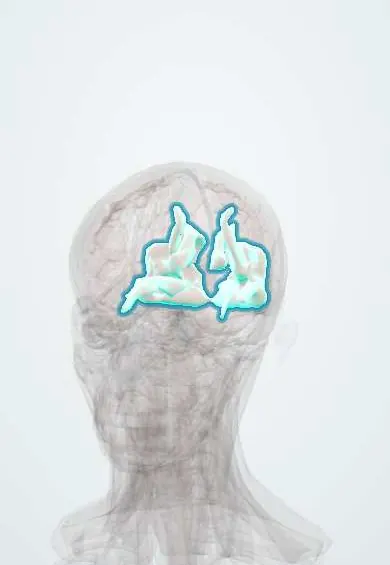
Structures involved
Tap one to see what it is and open it in 3D.
In biochemistry
- Cell organelles and their metabolism
- Transfer RNA (tRNA)
- Ribosome (and the antibiotics that target it)
- Complex I (NADH dehydrogenase)
Why it happens
- Mechanisms of cell injury: ATP, mitochondria, calcium, membranes and DNA
- Nonclassic inheritance: repeat expansions, mitochondrial genes, imprinting, mosaicism
What it is
A multisystem mitochondrial disease, almost always due to a mitochondrial DNA variant, with stroke-like episodes that begin in childhood or young adulthood.
Who gets it
One of the more common mitochondrial diseases; together, mitochondrial diseases affect about 1 in 4,000 people. There are no figures specific to Colombia.
Causes
- The m.3243A>G variant of MT-TL1 (leucine transfer RNA) in most cases
- Other variants in MT-ND1, MT-ND5, MT-TH or MT-TV
- Maternal inheritance; the share of mutant DNA (heteroplasmy) varies between tissues and relatives
Risk factors
- A carrier mother (even with few symptoms)
- Triggers of episodes: infections, fever, fasting, dehydration, some drugs
Pathophysiology
A variant in a mitochondrial transfer RNA disrupts synthesis of the proteins encoded by mitochondrial DNA, several of them subunits of complexes I, III, IV and V. Oxidative phosphorylation falls, NADH builds up and pyruvate is diverted to lactate: lactic acidosis in blood and cerebrospinal fluid. Neurons and muscle, with high ATP demand, fail first; small-vessel dysfunction with low nitric oxide adds to it. Brain lesions do not respect arterial territories and favour the posterior cortex.
Symptoms and signs
- Stroke-like episodes: hemiparesis, loss of vision on one side, aphasia
- Migraine-like headache with vomiting
- Seizures
- Muscle weakness and exercise intolerance
- Short stature
- Sensorineural hearing loss
- Diabetes
- Progressive cognitive decline
Diagnosis
- Clinical
- A stroke in a young person with short stature, deafness, diabetes or a similar maternal history suggests MELAS.
- Tests
- Lactate and pyruvate in blood and cerebrospinal fluid; mitochondrial DNA testing (often in urine or muscle, where heteroplasmy is higher); muscle biopsy with ragged-red fibres and abnormal COX fibres; electrocardiogram and blood glucose.
- Imaging
- Brain MRI: posterior cortical lesions that cross vascular territories and change over time; spectroscopy shows a lactate peak. CT can show basal ganglia calcification.
Treatment
- Acute
- During stroke-like episodes, intravenous arginine or citrulline is used in specialised centres, with control of seizures and acidosis.
- Medical
- Supplements such as coenzyme Q₁₀ and oral arginine between episodes; evidence is limited.
- Medical
- Avoiding drugs toxic to mitochondria, such as valproate; metformin is used with caution because of the lactic acidosis risk.
- Rehabilitation
- Rehabilitation, hearing aids or cochlear implant, and management of diabetes and the heart.
- Follow-up
- Multidisciplinary follow-up and genetic counselling of the maternal family line.
Complications
- Progressive dementia
- Refractory epilepsy
- Cardiomyopathy and conduction disorders
- Cortical blindness
- Early death
Prognosis
Progressive; the course varies widely with heteroplasmy. Many patients accumulate deficits after each episode.
Test yourself
Think of the answer, then tap the question to see it.
Which genetic variant causes most cases of MELAS?
m.3243A>G in MT-TL1, which encodes a mitochondrial leucine transfer RNA.
Why do MELAS brain lesions not look like an ordinary stroke?
They do not follow arterial territories: they come from energy failure of neurons and small vessels, not from a blocked artery.
What classic finding does a muscle biopsy show in MELAS?
Ragged-red fibres, from abnormal mitochondria piling up under the membrane.
Why is MELAS inherited only through the mother?
Mitochondrial DNA comes from the egg; fathers do not pass it on.
Related conditions
- Leigh syndrome
- Leber hereditary optic neuropathy (LHON)
- Lactic acidosis
- Ischaemic stroke
- Type 2 diabetes mellitus
Educational information, not medical advice. For any symptom, see a health professional.
Sources: Mitochondrial encephalomyopathy, lactic acidosis, and stroke-like episodes: MedlinePlus Genetics (MedlinePlus, US National Library of Medicine, 2026); MT-TL1 gene: MedlinePlus Genetics (MedlinePlus, US National Library of Medicine, 2026); Mitochondrial Diseases: MedlinePlus (MedlinePlus, US National Library of Medicine, 2026).
Spotted a mistake?We are always improving for the community. Tell us what is wrong and our team will review it.Report a mistake
Representative model, for educational purposes only.