Conditions · Pediatrics and neonatology
Multisystem inflammatory syndrome in children (MIS-C) !
A rare, serious inflammation of many organs, especially the heart, that appears weeks after a COVID-19 infection in children. It needs hospital care.
Updated 2026-11-01
Structures involved
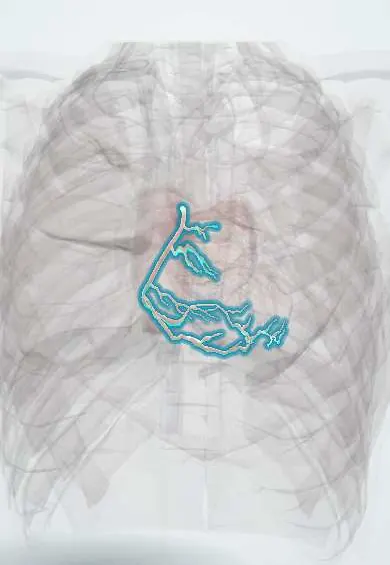
Tap one to see what it is and open it in 3D.
Why it happens
- Systemic effects of inflammation: fever, acute-phase proteins, leukocytosis, sepsis
- Shock: types, stages and the organs it damages
What it is
A post-infectious hyperinflammatory syndrome that follows SARS-CoV-2 infection by about 2–6 weeks. Fever and raised inflammatory markers are joined by involvement of two or more organ systems, most often the heart, gut, skin and mucosae, and it can cause shock.
Who gets it
It peaked about a month after each COVID-19 wave and became much rarer with population immunity and vaccination; cases still occur. Latin American hospital series, including from Colombia, reported a high share of children needing intensive care; many had had mild or no COVID-19 symptoms.
Causes
- Recent SARS-CoV-2 infection or exposure (often 2–6 weeks earlier)
- A dysregulated immune response rather than direct viral damage
- Many children had an asymptomatic or mild initial infection
Risk factors
- School age (median around 8–9 years)
- No COVID-19 vaccination
- Periods of high community transmission of SARS-CoV-2
Pathophysiology
Weeks after the virus is cleared, a cytokine storm with endothelial injury and a hypercoagulable state develops. Inflammation of the myocardium causes ventricular dysfunction and vasodilatory or cardiogenic shock, and inflamed coronary arteries can dilate or form aneurysms, as in Kawasaki disease. The gut, kidneys, skin, eyes and brain may also be involved.
Classification
- MIS-C without shock
- MIS-C with shock or ventricular dysfunction
- MIS-C with Kawasaki-like features (with or without coronary changes)
Symptoms and signs
- Persistent fever
- Abdominal pain, vomiting and diarrhoea, sometimes mimicking appendicitis
- Rash, non-purulent conjunctivitis, red cracked lips and swollen hands or feet
- Fatigue, irritability, headache or confusion
- Low blood pressure, cold extremities and fast breathing in severe cases
Diagnosis
- Clinical
- Fever with multisystem involvement in a child with recent SARS-CoV-2 infection or exposure, after excluding other causes; case definitions from public health agencies guide reporting.
- Tests
- High CRP, ESR, ferritin and D-dimer; lymphopenia, thrombocytopenia, low albumin; raised troponin and BNP; SARS-CoV-2 serology or PCR; blood cultures and tests for other infections; ECG.
- Imaging
- Echocardiography for ventricular function and coronary arteries, repeated during follow-up; abdominal ultrasound if surgical abdomen is considered.
Differential diagnosis
- Kawasaki disease
- Toxic shock syndrome and bacterial sepsis
- Viral myocarditis
- Rickettsial infections and dengue
- Acute appendicitis
- Macrophage activation syndrome
Goal of treatment
Stop the inflammation quickly, support the circulation and protect the coronary arteries and heart function.
Treatment
- Acute
- Hospital admission, often to intensive care, with fluid resuscitation used cautiously, inotropes or vasopressors for shock, and respiratory support as needed.
- Medical
- Immunomodulation: intravenous immunoglobulin and systemic glucocorticoids are first line; biologic agents such as anakinra are used for refractory cases.
- Medical
- Low-dose aspirin is prescribed by the medical team for coronary involvement or thrombosis risk, and anticoagulants in selected patients; empirical antibiotics until cultures exclude sepsis.
- Follow-up
- Nursing: continuous cardiorespiratory monitoring, fluid balance and urine output, daily inflammatory markers. After discharge, cardiology follow-up with repeat echocardiograms and restriction of strenuous exercise until cleared.
Complications
- Shock and multi-organ failure
- Left ventricular dysfunction and myocarditis
- Coronary artery dilation or aneurysm
- Arrhythmias
- Thrombosis
- Acute kidney injury
Prognosis
With prompt treatment most children recover fully; heart function and inflammation usually normalise within 6 months. Death is uncommon. Some children have fatigue or attention and mood problems that mostly resolve within 2 years.
Prevention
- COVID-19 vaccination lowers the risk of MIS-C
- Measures that reduce SARS-CoV-2 transmission
Test yourself
Think of the answer, then tap the question to see it.
When does MIS-C typically appear relative to SARS-CoV-2 infection?
About 2–6 weeks after the infection, often after a mild or silent case.
Which classic paediatric vasculitis does MIS-C resemble?
Kawasaki disease, including possible coronary artery aneurysms.
What are the first-line immunomodulating treatments?
Intravenous immunoglobulin and systemic glucocorticoids.
Which imaging test is essential at diagnosis and follow-up?
Echocardiography, to assess ventricular function and the coronary arteries.
Related conditions
- COVID-19
- Kawasaki disease
- Myocarditis
- Toxic shock syndrome
- Sepsis and septic shock
- Acute pericarditis
- Heart failure
Educational information, not medical advice. For any symptom, see a health professional.
Sources: About MIS (Centers for Disease Control and Prevention (CDC), 2025); Clinical Treatment of Multisystem Inflammatory Syndrome in Children (Centers for Disease Control and Prevention (CDC), 2026).
Spotted a mistake?We are always improving for the community. Tell us what is wrong and our team will review it.Report a mistake
Representative model, for educational purposes only.