Acute pericarditis !
Acute pericarditis is inflammation of the pericardium, the sac around the heart, causing sharp chest pain and sometimes fluid around the heart.
Updated 2026-10-29
Structures involved
Tap one to see what it is and open it in 3D.
Microorganisms that cause it
In the clinical exam
- Cardiac auscultation: the areas and the order
- Cardiac tamponade: Beck triad and pulsus paradoxus
- Chest pain: ischemic, pericardial, pleural and other patterns
In physiology
Why it happens
- Patterns of acute inflammation: serous, fibrinous, purulent, abscess, ulcer
- The myocardial infarct over time: what the pathologist sees from hours to months
- Vascular changes in acute inflammation: vasodilation, leakage, exudate vs transudate
- The heart wall, valves and conduction tissue
What it is
Acute inflammation of the pericardium, the sac around the heart, causing sharp chest pain and sometimes a pericardial effusion.
Who gets it
A common cause of non-ischaemic chest pain in emergency departments, mostly in young and middle-aged adults. In high-income settings most cases are idiopathic or viral; in Colombia and Latin America tuberculosis must be considered, especially with large effusions or HIV.
Causes
- Idiopathic or presumed viral (most cases)
- Tuberculosis and other bacterial infections
- After myocardial infarction or cardiac surgery (post-injury syndromes)
- Autoimmune diseases such as lupus and rheumatoid arthritis
- Uraemia, malignancy, chest radiation and some drugs
Risk factors
- Recent viral illness
- Male sex and young adult age
- Recent heart attack or cardiac surgery
- Autoimmune disease
- Kidney failure
- Tuberculosis exposure or HIV
Pathophysiology
Inflammation of the visceral and parietal pericardium causes fibrinous exudate, which produces pain and a friction rub. Inflammation of the adjacent epicardium gives diffuse ST changes. Fluid may accumulate; if it builds quickly, it can compress the heart.
Classification
- Acute (first episode)
- Incessant (lasting several weeks without remission)
- Recurrent (new episode after a symptom-free interval)
- Chronic (lasting months) and constrictive pericarditis
Symptoms and signs
- Sharp, pleuritic central chest pain
- Pain better sitting up and leaning forward, worse lying flat
- Pain radiating to the trapezius ridge (phrenic innervation)
- Pericardial friction rub, scratchy and best heard at the left sternal border
- Fever and recent flu-like illness
Diagnosis
- Clinical
- Usually requires two of four features: typical chest pain, friction rub, compatible ECG changes and a new or worsening pericardial effusion. Raised inflammatory markers support it.
- Tests
- ECG: diffuse concave ST elevation with PR depression (PR elevation in aVR), evolving over days. Troponin to detect myocardial involvement; CRP, blood count, renal function; further tests by suspected cause.
- Imaging
- Echocardiography for effusion and ventricular function. Chest X-ray is often normal; cardiac MRI shows pericardial inflammation in unclear cases.
Differential diagnosis
- Acute myocardial infarction
- Pulmonary embolism
- Aortic dissection
- Pneumonia with pleurisy
- Myocarditis
- Pneumothorax
Goal of treatment
Relieve pain and inflammation, treat the underlying cause and prevent recurrence and tamponade.
Treatment
- Medical
- Non-steroidal anti-inflammatory drugs (NSAIDs) or aspirin, tapered as symptoms and inflammatory markers settle.
- Medical
- Colchicine added to reduce symptoms and lower the risk of recurrence.
- Medical
- Corticosteroids reserved for specific causes, contraindications or refractory cases; cause-specific treatment such as antituberculous therapy.
- Conservative
- Rest from strenuous exercise until symptoms and markers resolve (longer in athletes and with myocarditis).
- Follow-up
- Follow-up with CRP and echocardiography; admission for high-risk features.
Complications
- Recurrent pericarditis
- Pericardial effusion and cardiac tamponade
- Constrictive pericarditis
- Myopericarditis
Prognosis
Idiopathic or viral pericarditis usually settles within weeks with good outcome. Recurrence is common without colchicine. Tuberculous, bacterial and malignant causes carry higher risks of tamponade and constriction.
Test yourself
Think of the answer, then tap the question to see it.
Which posture typically relieves the pain of acute pericarditis?
Sitting up and leaning forward; lying flat makes it worse.
What is the classic ECG finding in acute pericarditis?
Diffuse concave ST elevation with PR depression, not limited to one coronary territory, and PR elevation in aVR.
Which drug classes are first-line for idiopathic acute pericarditis?
NSAIDs or aspirin combined with colchicine, which also lowers the risk of recurrence.
Why can pericarditis pain radiate to the trapezius ridge?
The parietal pericardium is supplied by the phrenic nerves (C3–C5), which share segments with the shoulder region.
Which infectious cause should be considered in Latin America for pericarditis with a large effusion?
Tuberculosis, especially in people with HIV.
Related conditions
- Cardiac tamponade
- Myocardial Infarction (Heart Attack)
- Pulmonary tuberculosis
- Systemic lupus erythematosus
- Pulmonary embolism
- Aortic dissection
- Pneumothorax
- Costochondritis
Educational information, not medical advice. For any symptom, see a health professional.
Sources: Pericarditis (StatPearls (NCBI Bookshelf), 2026).
Spotted a mistake?We are always improving for the community. Tell us what is wrong and our team will review it.Report a mistake
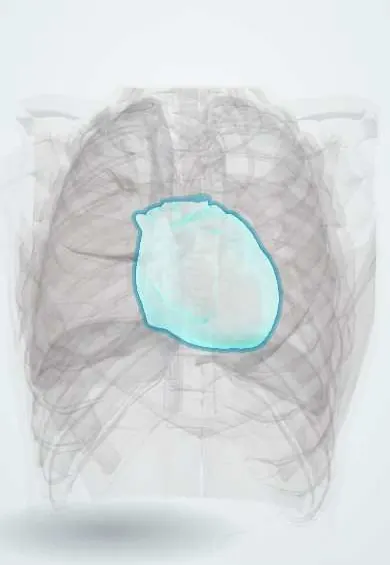
Representative model, for educational purposes only.