Conditions · Infectious and tropical diseases
COVID-19 !
COVID-19 is a respiratory infection by the SARS-CoV-2 coronavirus. Most cases are mild, but it can cause severe pneumonia, clots and lasting symptoms.
Updated 2026-11-01
Structures involved
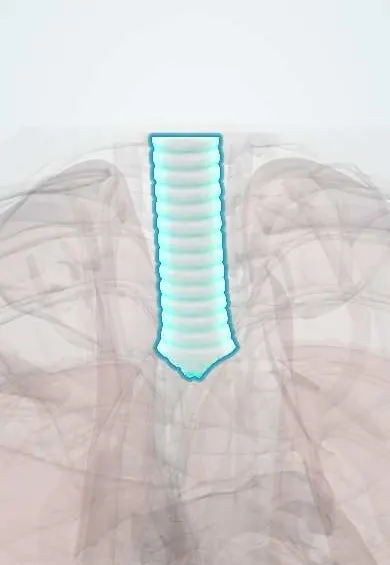
Tap one to see what it is and open it in 3D.
Microorganisms that cause it
Why it happens
- Hypercoagulable states: inherited and acquired
- The causes of hypoxemia
- The alveolus: type I and II pneumocytes, surfactant, the blood–air barrier
What it is
An infectious disease caused by the coronavirus SARS-CoV-2, ranging from no symptoms or a mild cold-like illness to severe pneumonia, acute respiratory distress syndrome and multiorgan failure.
Who gets it
Caused a pandemic declared in 2020, with millions of deaths worldwide; Latin America, including Colombia, was among the most affected regions. It now circulates endemically with waves driven by new variants, and remains under surveillance within severe acute respiratory infection (IRAG) monitoring.
Causes
- SARS-CoV-2, an enveloped RNA betacoronavirus
- Spread mainly by respiratory droplets and aerosols, especially indoors with poor ventilation
- Infectious from about two days before symptoms; variants differ in transmissibility and immune escape
Risk factors
- Older age, the strongest risk factor for severe disease
- Lack of vaccination
- Obesity, diabetes, hypertension and chronic heart, lung, kidney or liver disease
- Immunosuppression, cancer and advanced HIV
- Pregnancy
Pathophysiology
The viral spike protein binds the ACE2 receptor, with help from the TMPRSS2 protease, on cells of the nasal and airway epithelium, type II pneumocytes and endothelium. Early disease is driven by viral replication; in severe cases a later inflammatory phase with cytokine release, endothelial injury and a prothrombotic state damages the alveoli, causing diffuse alveolar damage, hypoxaemia and thrombosis.
Classification
- Asymptomatic or presymptomatic infection
- Mild: symptoms without pneumonia or hypoxaemia
- Moderate: pneumonia without severe hypoxaemia
- Severe: oxygen saturation below 94% on room air, high respiratory rate or extensive lung infiltrates
- Critical: respiratory failure, septic shock or multiorgan dysfunction
Symptoms and signs
- Fever, chills and sore throat
- Cough, fatigue, headache and muscle aches
- Loss of smell or taste
- Shortness of breath in moderate to severe disease
- Silent hypoxaemia: low saturation with little sense of breathlessness
Diagnosis
- Clinical
- Respiratory symptoms, fever or anosmia, ideally with a history of exposure; severity is graded by respiratory rate, oxygen saturation and imaging.
- Tests
- RT-PCR on nasopharyngeal swab (reference) or rapid antigen test in the first days of symptoms. In hospital: lymphopenia, raised CRP, D-dimer, ferritin, LDH and troponin as markers of severity.
- Imaging
- Chest X-ray or CT: bilateral, peripheral and basal ground-glass opacities with or without consolidation; CT pulmonary angiography if embolism is suspected.
Differential diagnosis
- Influenza and other respiratory viruses
- Bacterial community-acquired pneumonia
- Pulmonary embolism
- Heart failure
- Dengue in endemic areas
Goal of treatment
Most cases need only symptom relief and isolation. In high-risk and hospitalised patients the aims are to limit viral replication early, control the inflammatory phase, support oxygenation and prevent thrombosis.
Treatment
- Conservative
- Mild disease: rest, fluids and antipyretics, with home isolation and monitoring for warning signs.
- Medical
- Early antivirals (e.g. nirmatrelvir with ritonavir, remdesivir) for non-severe disease in people at high risk of progression, checking drug interactions.
- Medical
- Systemic corticosteroids for patients who need oxygen; in selected severe cases, immunomodulators such as IL-6 receptor blockers or JAK inhibitors.
- Acute
- Oxygen therapy, high-flow nasal oxygen, non-invasive or mechanical ventilation and prone positioning for respiratory failure.
- Medical
- Thromboprophylaxis with heparins in hospitalised patients.
- Follow-up
- Pulse oximetry, respiratory rate and level of consciousness; isolation with droplet and airborne precautions during aerosol-generating procedures.
Drugs for this condition
Complications
- Acute respiratory distress syndrome and respiratory failure
- Venous and arterial thromboembolism (pulmonary embolism, stroke)
- Myocarditis and arrhythmias
- Acute kidney injury and secondary infections
- Multisystem inflammatory syndrome in children (MIS-C)
- Post-COVID-19 condition (long COVID): fatigue, breathlessness, cognitive problems
Prognosis
Most people recover within one to two weeks. Mortality is concentrated in older and unvaccinated people with comorbidities. A minority develop persistent symptoms for months.
Prevention
- Vaccination, prioritising older adults, people with comorbidities, pregnant women and health workers
- Staying home and away from others when ill or after a positive test
- Masks in health facilities and around vulnerable people, hand hygiene and ventilation of indoor spaces
Test yourself
Think of the answer, then tap the question to see it.
Which receptor does SARS-CoV-2 use to enter cells?
Angiotensin-converting enzyme 2 (ACE2), aided by the TMPRSS2 protease.
What is the typical chest CT pattern of COVID-19 pneumonia?
Bilateral, peripheral and basal ground-glass opacities, sometimes with consolidation.
Which COVID-19 patients benefit from systemic corticosteroids?
Those with severe or critical disease who need supplemental oxygen or ventilation; they are not used in mild disease.
Why do hospitalised COVID-19 patients receive thromboprophylaxis?
Because the infection causes endothelial injury and a prothrombotic state with a high risk of venous thromboembolism.
Related conditions
- Influenza (flu)
- Acute respiratory distress syndrome (ARDS)
- Community-acquired pneumonia
- Pulmonary embolism
- Myocarditis
- Sepsis and septic shock
- Kawasaki disease
- Heart failure
- Dengue
Educational information, not medical advice. For any symptom, see a health professional.
Sources: Coronavirus disease (COVID-19) (World Health Organization (WHO), 2025).
Spotted a mistake?We are always improving for the community. Tell us what is wrong and our team will review it.Report a mistake
Representative model, for educational purposes only.