
Nutrition in kidney disease (CKD, dialysis and AKI)
Diet in kidney disease depends on the stage: protein, potassium, phosphate, salt and fluid are set differently in CKD, on dialysis and in AKI.
What it is
The dietary management of kidney disease: protein, energy, sodium, potassium, phosphate and fluid are adjusted to what the kidneys can still excrete, to what dialysis or acute illness removes or consumes, and to the blood results, while avoiding malnutrition.
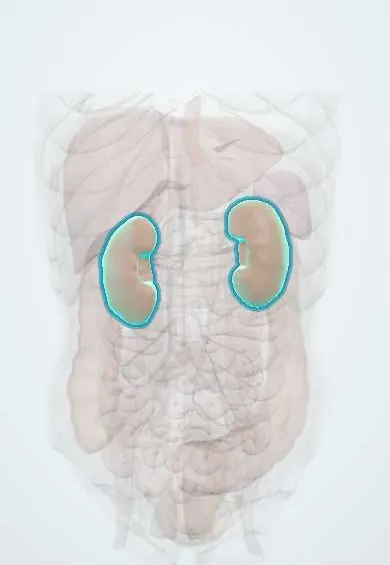
See it in 3D
Who gets it
Malnutrition is highly prevalent in AKI and independently predicts in-hospital mortality; in AKI a body mass index below 18.5 kg/m² is linked to higher mortality. In CKD, both protein restriction done badly and poor appetite can lead to protein–energy wasting and sarcopenia.
Causes
- Falling glomerular filtration: urea, acid, phosphate, potassium, sodium and water are retained
- Intermittent dialysis: potassium, phosphate and fluid accumulate between sessions
- Critical illness with AKI (sepsis, trauma, multiple organ failure): catabolism raises protein needs
- Poor appetite, altered taste, inflammation and over-restrictive diets: they drive malnutrition
Risk factors
- Advanced CKD and dialysis
- Diabetes, which changes protein advice and adds glucose control
- Older age and frailty, where restriction risks malnutrition and sarcopenia
- Critical illness with AKI, especially on continuous kidney replacement therapy
Pathophysiology
Dietary protein is broken down to urea and, from animal sources, to acid → a failing kidney retains both, so in stable CKD a lower protein intake reduces azotaemia and acidosis and, in trials, slowed progression → phosphate (most absorbable from food additives, least from plants) accumulates, raising FGF23 and harming bone and vessels → sodium retention expands volume and raises blood pressure and proteinuria → potassium that cannot be excreted risks arrhythmia, yet plant foods rich in potassium also bring fibre, alkali and less absorbable phosphate → on dialysis, waste is removed in batches, so protein can rise while potassium, phosphate, salt and fluid between sessions are limited → in AKI, illness drives catabolism, so the aim is adequate protein and energy, reached gradually.
Classification
- CKD stages 3–5 not on dialysis, metabolically stable: the KDOQI 2020 guideline suggests a low-protein diet (or a very low-protein diet with keto-acid analogues) under dietitian supervision; a moderately reduced intake is suggested with diabetes
- Maintenance dialysis: protein is not restricted (high-quality protein is encouraged); potassium, phosphate, sodium and fluid are limited
- AKI: protein is not cut to delay dialysis; needs follow the underlying illness and are higher on continuous kidney replacement therapy; early enteral nutrition is preferred
Symptoms and signs
- Weight loss, loss of muscle and poor appetite (wasting)
- Muscle weakness or palpitations (potassium out of range)
- Itchy skin and bone or joint pain (high phosphate)
- Swelling, breathlessness, high blood pressure and large weight gain between dialysis sessions (salt and fluid)
Diagnosis
- Clinical
- Diet history, appetite, weight trend, muscle mass and, on dialysis, weight gain between sessions and dry weight; subjective global assessment of nutritional status; review by a renal dietitian.
- Tests
- Potassium, phosphate, bicarbonate, albumin, urea and glucose; nitrogen balance and energy intake in AKI; urine sodium excretion when salt intake is in question.
- Imaging
- Imaging has little role; body composition can be estimated with bioelectrical impedance.
Differential diagnosis
- Protein–energy wasting from inflammation or uraemia rather than diet alone
- Fluid overload from inadequate dialysis or heart failure
- Hyperkalaemia and hyperphosphataemia that need drugs (binders) as well as diet
- Sarcopenia of ageing
Same nutrient, three situations
| Nutrient | CKD not on dialysis | Dialysis | AKI |
|---|---|---|---|
| Protein | Reduced (low-protein diet) in stable patients, with a dietitian; moderately reduced with diabetes | Not restricted; high-quality protein encouraged | Not restricted to delay dialysis; matches the illness, higher on continuous kidney replacement therapy |
| Potassium | Individualised to keep blood potassium normal; plant foods are not banned by default | Limited: high-potassium foods in small portions, potatoes diced and boiled to leach potassium | Adjusted to blood levels and kidney replacement therapy |
| Phosphate | Adjusted to keep blood phosphate normal; prefer plant sources and avoid phosphate additives | Limited, balanced against protein needs because meat and milk carry both | Followed in blood with other electrolytes |
| Sodium | Restricted to lower blood pressure, volume and proteinuria | Restricted, also on dialysis | Guided by volume status |
| Fluid | Often free early; limited when the kidneys cannot remove it | Limited to keep weight gain between sessions small and reach dry weight | Guided by fluid balance; overload is avoided |
| Energy | Adequate, so that protein is not burned as fuel | Adequate | Built up gradually to the target in critical illness; overfeeding harms |
Goal of treatment
Keep potassium, phosphate, sodium and fluid in range, slow CKD progression where diet can help, and prevent malnutrition and sarcopenia in every stage.
Treatment
- Lifestyle
- CKD before dialysis: a low-protein, plant-dominant eating plan built with a renal dietitian, with adequate energy, heart-healthy fats and fibre; the exact protein target is set by the guideline and the dietitian.
- Lifestyle
- Salt and phosphate: limit sodium (the KDOQI limit applies in CKD and on dialysis), avoid packaged foods with phosphate additives (ingredients containing «phos») and prefer plant protein sources.
- Lifestyle
- Dialysis: high-quality protein (meat, poultry, fish, eggs), small portions of high-potassium foods, leaching of potatoes, fluid limits to reach dry weight, and phosphate kept in balance with protein.
- Medical
- AKI in critical illness: early enteral nutrition; parenteral nutrition when more than 60% of energy and protein needs cannot be met enterally within 7–10 days; energy increased gradually; protein not restricted.
- Medical
- Drugs that widen the diet: potassium binders may allow more plant foods, and phosphate binders help when diet alone cannot control phosphate.
- Follow-up
- Regular review of weight, appetite, albumin, potassium, phosphate and bicarbonate by the renal team and dietitian.
Complications
- Protein–energy wasting, sarcopenia and loss of appetite from over-restriction
- Hyperkalaemia and arrhythmia
- Hyperphosphataemia with bone disease, vascular damage and itch
- Fluid overload with hypertension and pulmonary oedema
- In AKI, overfeeding: hyperglycaemia, hypertriglyceridaemia and fluid overload
Common traps
- Every patient with kidney disease needs a low-protein diet: the low-protein diet is for stable CKD before dialysis; on dialysis protein is encouraged, and in AKI protein is not cut to delay dialysis
- Fruit and vegetables are forbidden in CKD: strict potassium restriction loses the benefits of plant foods (less absorbable phosphate, less acid, more fibre), so potassium is individualised to the blood level
- Cutting phosphate just means eating less meat and milk: phosphate additives in processed foods and drinks are the most absorbable source, so labels with «phos» ingredients matter as much
- More calories help AKI recover faster: in AKI a higher energy intake gave no better nitrogen balance and more hyperglycaemia, high triglycerides and fluid overload; energy is built up gradually
Prognosis
In a meta-analysis of randomised trials in CKD, protein restriction was associated with a lower risk of kidney failure and better survival, with higher bicarbonate and lower phosphate. In AKI, better protein intake, nitrogen balance and albumin are associated with lower mortality.
Prevention
- Early referral to a renal dietitian when CKD is diagnosed
- Plant-rich, low-salt eating patterns from the early stages
- Avoiding over-restriction in older and frail patients
- Early nutrition planning for patients with AKI in intensive care
Test yourself
Think of the answer, then tap the question to see it.
Why is protein reduced in stable CKD but encouraged on dialysis?
Before dialysis less protein means less urea and acid for a failing kidney; on dialysis waste is removed by the machine and the risk shifts to malnutrition.
Why are plant foods no longer automatically restricted in CKD?
Their phosphate is less absorbable, they lower the acid load and add fibre; potassium is managed by blood level and binders rather than a blanket ban.
What is the most absorbable dietary source of phosphate?
Phosphate additives in processed foods and drinks (ingredients containing «phos»).
A septic patient with AKI in intensive care cannot reach his nutrition targets by tube after a week. What is the next step, and should protein be cut?
Consider parenteral nutrition when more than 60% of needs are unmet enterally by 7–10 days; protein is not restricted in AKI.
Why do dialysis patients limit fluid between sessions?
Fluid builds up between sessions and only so much can be removed safely at once; large gains cause swelling, hypertension and lung congestion.
Connections
Educational information, not medical advice. For any symptom, see a health professional.
Sources: Healthy Eating for Adults with Chronic Kidney Disease - NIDDK (National Institute of Diabetes and Digestive and Kidney Diseases (NIDDK), 2025); Eating & Nutrition for Hemodialysis - NIDDK (National Institute of Diabetes and Digestive and Kidney Diseases (NIDDK), 2016); Personalized nutritional management in the transition from non-dialysis dependent chronic kidney disease to dialysis (Kidney Research and Clinical Practice, 2024); Nutrition support for acute kidney injury 2020-consensus of the Taiwan AKI task force (Journal of the Chinese Medical Association, 2022).
Spotted a mistake?We are always improving for the community. Tell us what is wrong and our team will review it.Report a mistake
Representative model, for educational purposes only.