
Maintenance dialysis (haemodialysis and peritoneal dialysis)
Dialysis takes over the cleaning and fluid removal of failed kidneys, using a machine filter (haemodialysis) or the lining of the belly (peritoneal dialysis).
What it is
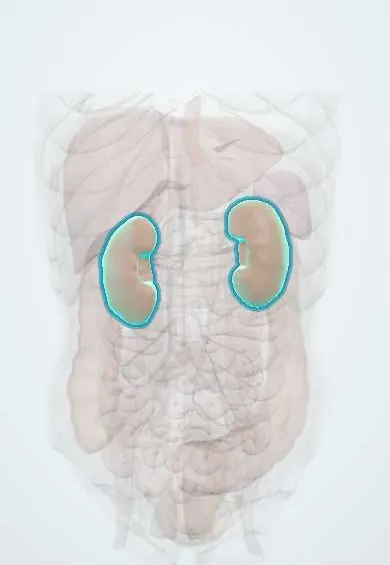
Long-term kidney replacement for kidney failure (CKD stage 5) that removes waste solutes, potassium, acid and excess water. Haemodialysis pumps blood through an external filter, usually in a centre several times a week; peritoneal dialysis uses the patient's own peritoneum as the membrane, with fluid exchanged in the abdomen at home.
Who gets it
More than 3.5 million people worldwide receive dialysis, nearly 90% of them haemodialysis; diabetes and hypertension are the main causes of kidney failure. In Colombia, CKD and its stage 5 are high-cost diseases followed by the Cuenta de Alto Costo (CAC): in 2023 it recorded about 40,000 people with stage 5 CKD and about 44,500 on some form of kidney replacement therapy, haemodialysis being the most common. Insurers (EPS) must report every affiliate with CKD or its precursors (hypertension, diabetes) under Resolución 4700 de 2008, modified by Resolución 2463 de 2014, and the CAC tracks dialysis quality indicators (dialysis dose by Kt/V, haemoglobin, albumin, phosphate) and supports kidney-protection (nefroprotección) programmes.
Causes
- Diabetic kidney disease and hypertensive nephrosclerosis, the commonest causes of kidney failure
- Glomerulonephritis, polycystic kidney disease and obstructive uropathy
- Acute kidney injury that does not recover and becomes dialysis-dependent
- Failure of a kidney transplant
Risk factors
- Late referral to nephrology, which leaves no time to create a fistula or prepare for peritoneal dialysis, so dialysis starts urgently through a catheter
- A central venous catheter as the access (highest risk of bloodstream infection)
- Large fluid gains between haemodialysis sessions, heart disease, diabetes and older age (intradialytic hypotension)
- Very high urea at the first session (dialysis disequilibrium)
Pathophysiology
Too few nephrons → urea, potassium, acid, phosphate and water accumulate → uraemic symptoms, hyperkalaemia, acidosis and fluid overload that medicines can no longer control → dialysis: solutes diffuse down their concentration gradient across a semipermeable membrane into the dialysate, and water is removed by ultrafiltration (pressure in haemodialysis, the osmotic pull of glucose in peritoneal dialysis) → haemodialysis does in a few hours what healthy kidneys do over days, so plasma volume and osmolality change fast → if ultrafiltration outpaces refilling from the tissues and the heart cannot compensate, blood pressure falls (intradialytic hypotension); if urea falls faster in blood than in brain, water moves into brain cells (disequilibrium) → peritoneal dialysis works continuously and slowly, so these shifts are small, but the catheter and exchanges can carry bacteria into the peritoneum.
Classification
- Haemodialysis: in a centre, usually a few sessions of several hours each week, or at home
- Peritoneal dialysis: continuous ambulatory (manual exchanges during the day) or automated (a cycler overnight)
- Vascular access for haemodialysis: arteriovenous fistula, arteriovenous graft, central venous catheter (tunnelled or temporary)
- Conservative kidney management: planned care of kidney failure without dialysis
Symptoms and signs
- Uraemic symptoms that prompt starting dialysis: nausea, vomiting, loss of appetite, itching, fatigue, poor concentration
- Fluid overload with breathlessness or oedema that diuretics no longer control
- Uraemic pericarditis, pleuritis or encephalopathy
- Progressive weight loss and malnutrition
- During haemodialysis: dizziness, cramps or nausea from a falling blood pressure
Diagnosis
- Clinical
- Starting maintenance dialysis is a clinical decision: an eGFR in the kidney-failure range plus symptoms or complications that medical treatment no longer controls. Planned early start on eGFR alone did not improve survival (IDEAL trial), and most patients start because of symptoms. Preparation (education, choosing the modality or conservative care, creating a fistula or placing a peritoneal catheter) begins months earlier in advanced CKD.
- Tests
- Trend of creatinine and eGFR, potassium, bicarbonate, calcium, phosphate, PTH, haemoglobin and albumin. On dialysis: adequacy (Kt/V), regular blood tests, and hepatitis B, hepatitis C and HIV serology for infection control in the unit. Suspected peritonitis: effluent cell count with differential, Gram stain and culture (peritonitis is confirmed by abdominal pain or cloudy effluent, a raised effluent white cell count with mainly neutrophils, and a positive culture). Suspected catheter infection: blood cultures.
- Imaging
- Doppler ultrasound mapping of arm arteries and veins before creating a fistula, and to study a failing one; fistulography or venography for stenosis; echocardiography for volume status and pericardial effusion.
Differential diagnosis
- Acute kidney injury that may still recover (temporary dialysis, not maintenance)
- Reversible falls in eGFR: dehydration, obstruction, nephrotoxic drugs
- Symptoms from anaemia, heart failure or depression mistaken for uraemia
- Conservative kidney management as a valid alternative for very old or frail patients
Haemodialysis or peritoneal dialysis?
| Feature | Haemodialysis | Peritoneal dialysis |
|---|---|---|
| Membrane | Synthetic filter outside the body | The patient's own peritoneum |
| Where and how | Mostly in a centre, a few long sessions a week | At home, exchanges through the day or a night-time cycler |
| Access | Fistula, graft or central venous catheter | Catheter tunnelled into the abdomen |
| Circulation | Fast shifts: intradialytic hypotension, cramps, disequilibrium | Slow and continuous: gentler on the heart |
| Typical infection | Catheter bloodstream infection, endocarditis | Peritonitis, exit-site and tunnel infection |
| Suits | No help at home, extensive abdominal scarring, patient choice | Autonomy, living far from a centre, preserved residual kidney function |
Goal of treatment
Control uraemia, fluid, potassium and acid, keep a working access free of infection, replace the kidney's other functions with medicines, and plan transplantation for suitable patients or conservative care when dialysis would not help.
Treatment
- Procedure
- Haemodialysis through an arteriovenous fistula, the first choice (highest flow, fewest infections and clots, longest life, but it needs weeks to months to mature); an arteriovenous graft when the veins are unsuitable; a central venous catheter as a bridge or last resort.
- Procedure
- Peritoneal dialysis through a catheter placed surgically or percutaneously in the abdomen, done at home as manual daytime exchanges or with a night-time cycler.
- Medical
- Replacing the kidney's other jobs: erythropoiesis-stimulating agents and iron for anaemia, phosphate binders, active vitamin D or calcimimetics for mineral and bone disorder, and blood pressure control; drugs are chosen and adjusted for dialysis as set by the guideline.
- Lifestyle
- Limits on salt, fluid, potassium and phosphate (stricter in haemodialysis), adequate protein, and protecting the access arm: no blood draws, cannulas or blood pressure cuffs on it.
- Acute
- Peritoneal dialysis peritonitis: treat cloudy effluent as peritonitis until proven otherwise, send effluent for cell count and culture, and start empirical antibiotics the same day, preferably intraperitoneal, then adjust to the culture. Catheter bloodstream infection: blood cultures, antibiotics and often removal of the catheter.
- Acute
- Intradialytic hypotension: stop or slow ultrafiltration, lay the patient flat and give fluid if needed; prevent it with smaller weight gains between sessions, longer or extra sessions, cooler dialysate and review of antihypertensives taken before dialysis.
- Surgical
- Kidney transplantation, the best long-term option for suitable patients; evaluation starts before or soon after dialysis begins.
- Conservative
- Conservative kidney management: symptom control, fluid and potassium management and palliative support without dialysis, for patients (often very old, frail or with heavy comorbidity) in whom dialysis is unlikely to lengthen life or improve its quality.
- Follow-up
- Regular checks of dialysis adequacy, potassium, haemoglobin, albumin and phosphate; access surveillance (thrill, bruit, flow); in Colombia, reporting of every patient to the Cuenta de Alto Costo.
Complications
- Access thrombosis or stenosis and access infection; catheters carry the highest risk of bloodstream infection and endocarditis
- Intradialytic hypotension and cramps, the commonest complication of a haemodialysis session; repeated episodes are linked to fistula thrombosis and higher mortality
- Dialysis disequilibrium syndrome: headache, nausea, confusion and seizures from cerebral oedema, mostly at the first sessions; not described with peritoneal dialysis
- Peritonitis and exit-site or tunnel infection in peritoneal dialysis; repeated peritonitis damages the membrane and can end the technique
- Hyperkalaemia and fluid overload after missed sessions or dietary excess
- Cardiovascular disease, the leading cause of death, followed by infection; CKD-mineral and bone disorder, calciphylaxis and anaemia
Common traps
- Dialysis starts when the eGFR reaches a set number: the trigger is symptoms or complications that medical treatment cannot control; an early start on eGFR alone did not improve survival
- A central catheter is a fine long-term access: catheters have the most bloodstream infections and clots; a fistula is first choice, which is why it is created months in advance
- Cloudy peritoneal fluid can wait for the culture result: cloudy effluent is peritonitis until proven otherwise; take a sample and start empirical antibiotics the same day
- Confusion after the first haemodialysis means the uraemia is worse: think disequilibrium, where urea fell faster in the blood than in the brain and water moved into the brain; the fix is gentler, shorter first sessions
- Dialysis replaces the kidney: it replaces only part of filtration; anaemia, bone disease and blood pressure still need treatment, and only a transplant replaces the whole organ
Prognosis
Survival on dialysis is much lower than in people of the same age without kidney failure; cardiovascular disease causes most deaths, followed by sepsis. Transplantation gives better survival for suitable patients. In very old, frail people with several serious illnesses, dialysis may not lengthen life or preserve function and adds burden, which is why conservative care is a legitimate, informed choice.
Prevention
- Early detection and kidney-protection programmes for CKD so that kidney failure is delayed and dialysis is planned rather than urgent
- Creating a fistula months before dialysis is expected and preserving arm veins
- Avoiding catheters whenever possible; strict aseptic technique and exit-site care
- Hepatitis B vaccination before starting dialysis
Test yourself
Think of the answer, then tap the question to see it.
Which is the preferred long-term vascular access for haemodialysis, and why is it created early?
An arteriovenous fistula: highest flow, fewest infections and clots, longest life. It needs weeks to months to mature, so it is made before dialysis is needed.
A patient on peritoneal dialysis has abdominal pain and cloudy effluent. What is the working diagnosis and the first step?
Peritonitis until proven otherwise. Send effluent for cell count with differential, Gram stain and culture, and start empirical antibiotics the same day, preferably intraperitoneal.
Why does dialysis disequilibrium syndrome happen, and who is at risk?
Urea falls faster in the blood than in the brain, so water moves into brain cells and causes cerebral oedema. Risk: first sessions, very high urea, children, older people, existing brain disease.
What decides when to start maintenance dialysis in advanced CKD?
Symptoms and complications that medical treatment no longer controls (uraemia, fluid overload, hyperkalaemia, acidosis, serositis, malnutrition), not an eGFR value alone.
Which dialysis modality is gentler on the circulation, and what is its main risk?
Peritoneal dialysis, because it removes fluid slowly and continuously. Its main risk is peritonitis from the catheter and the exchanges.
Connections
Educational information, not medical advice. For any symptom, see a health professional.
Sources: Hemodialysis (StatPearls (NCBI Bookshelf), 2026); Hemodialysis - NIDDK (National Institute of Diabetes and Digestive and Kidney Diseases (NIH), 2026); ISPD Peritonitis Recommendations: 2016 Update on Prevention and Treatment (Peritoneal Dialysis International, 2016); An update review of intradialytic hypotension: concept, risk factors, clinical implications and management (Clinical Kidney Journal, 2020); Dialysis disequilibrium syndrome prevention and management (International Journal of Nephrology and Renovascular Disease, 2019); ERC - Cuenta de Alto Costo (Cuenta de Alto Costo (Colombia), 2026).
Spotted a mistake?We are always improving for the community. Tell us what is wrong and our team will review it.Report a mistake
Representative model, for educational purposes only.