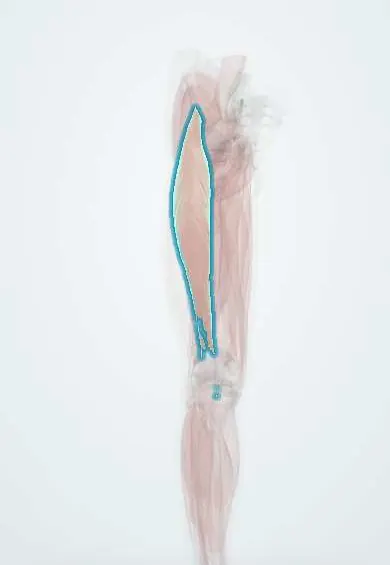
Sarcopenia !
Sarcopenia is the age-related loss of muscle strength and mass. It slows walking, causes falls and is a core part of frailty in older adults.
Updated 2026-11-01
Structures involved
Tap one to see what it is and open it in 3D.
- Rectus femoris
- Vastus lateralis
- Gastrocnemius (inner head)
- Gastrocnemius (outer head)
- Vastus medialis
- Soleus
- Gluteus maximus
- Gluteus medius
- Femur
Why it happens
- Atrophy
- Cellular aging: telomeres, DNA damage, senescence and proteostasis
- How organs age: normal changes vs disease
- Autophagy
- Cachexia, anorexia nervosa and bulimia
- Muscle hypertrophy, atrophy and remodeling
What it is
A progressive and generalised skeletal muscle disorder in which low muscle strength, together with low muscle quantity or quality, increases the risk of falls, fractures, disability and death. The European EWGSOP2 consensus puts low strength first as the key feature.
Who gets it
Common in older adults, more so after 75, in hospital patients and in care homes; estimates vary widely with the definition used. Latin American population studies on ageing, such as the SABE surveys (including Colombia), describe a high burden of weakness, slow gait and frailty in older adults, linked to poverty, poor nutrition and chronic disease.
Causes
- Primary (age-related): loss of motor neurons and fast muscle fibres with ageing
- Physical inactivity, bed rest and immobility
- Low intake of energy and protein, malnutrition and malabsorption
- Chronic diseases: heart failure, COPD, chronic kidney disease, diabetes, cancer and inflammatory diseases
- Hormonal changes: lower testosterone, growth hormone and vitamin D
Risk factors
- Older age
- Sedentary life or recent hospitalisation
- Low protein intake and weight loss
- Obesity (sarcopenic obesity) and insulin resistance
- Smoking and chronic inflammation
- Multimorbidity and long-term glucocorticoid use
Pathophysiology
With age, muscle protein synthesis responds less to food and exercise (anabolic resistance), motor units are lost and fast type II fibres shrink. Fat infiltrates the muscle, lowering its quality, while chronic low-grade inflammation and inactivity accelerate breakdown. Strength falls faster than mass, which is why function and strength are measured first.
Classification
- Probable sarcopenia: low muscle strength
- Confirmed sarcopenia: low strength plus low muscle quantity or quality
- Severe sarcopenia: low strength, low muscle mass and low physical performance
- Primary (age-related) or secondary (to disease, inactivity or malnutrition); acute or chronic
Symptoms and signs
- Weakness and trouble rising from a chair or climbing stairs
- Slow walking and fatigue
- Falls and loss of balance
- Thinner arms and legs, sometimes hidden by excess fat
- Difficulty carrying bags, opening jars or with daily activities
Diagnosis
- Clinical
- EWGSOP2 path (find, assess, confirm, severity): case finding with the SARC-F questionnaire or clinical suspicion (falls, slowness, weakness); strength measured with handgrip dynamometry or the five-times chair stand test; physical performance with gait speed, the Short Physical Performance Battery (SPPB) or the Timed Up and Go test. Calf circumference is a simple field measure of muscle mass.
- Tests
- Blood tests look for causes and contributors: blood count, albumin, kidney and liver function, glucose, thyroid function, vitamin D and, when relevant, testosterone, inflammatory markers and creatine kinase.
- Imaging
- Muscle quantity is confirmed with DXA (appendicular lean mass) or bioelectrical impedance in routine care; CT, MRI and muscle ultrasound are used in research or specialised settings.
Differential diagnosis
- Cachexia from cancer, heart failure or other chronic disease
- Malnutrition without primary muscle disease
- Myopathies (inflammatory, drug-induced such as statins or glucocorticoids, endocrine)
- Neurological disease: Parkinson disease, neuropathy, motor neuron disease
- Hypothyroidism and depression
Goal of treatment
Recover or preserve muscle strength and function, prevent falls and disability, and treat the conditions that drive muscle loss.
Treatment
- Rehabilitation
- Progressive resistance (strength) training is the core treatment, combined with balance and aerobic exercise and supervised by physiotherapy when possible.
- Lifestyle
- Adequate energy and protein intake spread through the day, with nutritional supplements when intake is low; vitamin D correction if deficient.
- Medical
- Treatment of the underlying diseases and review of medicines that cause weakness or falls; no drug is approved specifically for sarcopenia.
- Follow-up
- Repeat grip strength, gait speed and weight over time; fall-risk assessment and bone health assessment.
Complications
- Falls and hip and other fragility fractures
- Loss of independence in daily activities
- Frailty and institutionalisation
- Longer hospital stays, more complications after surgery and higher mortality
- Swallowing and breathing muscle weakness in severe cases
Prognosis
Sarcopenia predicts disability, hospital admission and death, but it is partly reversible: resistance training with good protein intake improves strength and function even in very old adults.
Prevention
- Regular physical activity with strength exercises throughout adult life
- Sufficient protein and energy intake in older age
- Avoiding unnecessary bed rest during hospital stays
Test yourself
Think of the answer, then tap the question to see it.
According to EWGSOP2, which feature is the main criterion for probable sarcopenia?
Low muscle strength, measured with handgrip dynamometry or the chair stand test.
Which questionnaire is used for case finding of sarcopenia?
The SARC-F, a five-item questionnaire about strength, walking, rising from a chair, climbing stairs and falls.
Which test is the usual way to confirm low muscle mass in routine practice?
Dual-energy X-ray absorptiometry (DXA), or bioelectrical impedance analysis; CT and MRI are reference methods mainly in research.
How is severe sarcopenia defined?
Low strength plus low muscle quantity or quality plus low physical performance, such as slow gait speed or a low SPPB score.
What is the main treatment of sarcopenia?
Progressive resistance exercise together with adequate protein and energy intake.
Related conditions
- Frailty syndrome
- Falls in older adults
- Osteoporosis
- Malnutrition and unintentional weight loss in older adults
- Immobility syndrome and hospital-associated deconditioning
- Oropharyngeal dysphagia in older adults
- Femoral Neck Fracture
- Type 2 diabetes mellitus
- Heart failure
- Chronic kidney disease
- Chronic obstructive pulmonary disease (COPD)
Educational information, not medical advice. For any symptom, see a health professional.
Sources: Sarcopenia: revised European consensus on definition and diagnosis (Age and Ageing, 2019).
Spotted a mistake?We are always improving for the community. Tell us what is wrong and our team will review it.Report a mistake
Representative model, for educational purposes only.