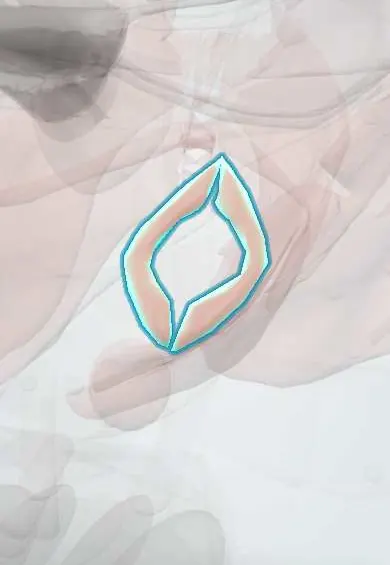
Obstetric perineal tears and anal sphincter injury !
Perineal tears happen during vaginal birth and are graded first to fourth degree; third- and fourth-degree tears reach the anal sphincter.
Updated 2026-10-29
Structures involved
Tap one to see what it is and open it in 3D.
- External anal sphincter
- Perineal body
- Vagina
- Rectum
- Superficial transverse perineal
- Bulbospongiosus
- Puborectalis
- Pudendal nerve
In physiology
Why it happens
What it is
Tears of the perineum and vagina during vaginal birth, graded from first to fourth degree. Third- and fourth-degree tears involve the anal sphincter and are called obstetric anal sphincter injuries (OASIS).
Who gets it
Some perineal trauma happens in most vaginal births, especially first births. Sphincter injuries are less frequent but are a leading cause of anal incontinence in women; many are missed if the anus is not examined after delivery.
Causes
- Stretching and tearing of the perineum as the baby's head and shoulders are delivered
- Extension of an episiotomy, particularly a midline one
- Rapid or uncontrolled delivery of the head
Risk factors
- First vaginal birth
- Instrumental delivery, especially forceps
- Large baby
- Occiput posterior position
- Prolonged second stage of labour
- Shoulder dystocia
- Midline episiotomy
- Short perineal body
Pathophysiology
The perineal body joins the bulbospongiosus, the superficial transverse perineal muscles and the external anal sphincter. A tear beyond skin and muscle can split the external and internal anal sphincters and, in the most severe cases, the anal and rectal mucosa. Unrecognized or poorly healed sphincter damage weakens anal closure and can lead to incontinence or fistula.
Classification
- First degree: vaginal epithelium or perineal skin only
- Second degree: perineal muscles, but not the anal sphincter
- Third degree 3a: less than half of the external anal sphincter thickness torn
- Third degree 3b: more than half of the external anal sphincter torn
- Third degree 3c: external and internal anal sphincters torn
- Fourth degree: anal sphincter complex and anorectal mucosa torn
Symptoms and signs
- Visible perineal tear and bleeding after vaginal birth
- Perineal pain and swelling
- Later: anal incontinence of flatus, liquid or solid stool, or faecal urgency
- Dyspareunia or perineal discomfort
- Passage of gas or stool through the vagina (rectovaginal fistula)
Diagnosis
- Clinical
- Systematic inspection of the vagina and perineum and a digital rectal examination after every vaginal birth, before suturing, to grade the tear and look for sphincter damage.
- Tests
- Anorectal manometry in women with symptoms after repair, to measure sphincter function.
- Imaging
- Endoanal ultrasound to assess sphincter integrity in women with symptoms after repair or when planning future births.
Differential diagnosis
- Vulvar or vaginal haematoma
- Cervical tear (source of bleeding)
- Pre-existing anal incontinence or haemorrhoids
- Rectovaginal fistula from another cause (Crohn disease, infection)
Goal of treatment
Recognize and repair every tear correctly at the time of birth, especially sphincter injuries, to prevent infection, pain, incontinence and fistula.
Treatment
- Conservative
- Small first-degree tears that are aligned and not bleeding may be left unsutured; second-degree tears are repaired in layers, usually in the delivery room.
- Surgical
- Third- and fourth-degree tears are repaired by an experienced clinician in theatre, with good light and anaesthesia: mucosa first, then the internal sphincter and the external sphincter (overlapping or end-to-end), then the perineum.
- Medical
- Broad-spectrum antibiotics after sphincter repair, stool softeners or laxatives, and analgesia.
- Rehabilitation
- Pelvic floor physiotherapy after a sphincter injury.
- Follow-up
- Specialist follow-up after a sphincter injury to check symptoms, with tests if needed, and counselling about the mode of future births.
Complications
- Perineal pain and dyspareunia
- Wound infection or breakdown
- Anal incontinence of flatus or stool
- Rectovaginal fistula
- Psychological distress and impact on future births
Prognosis
Most perineal tears heal well. After a recognized and correctly repaired sphincter injury most women are continent, but a minority have lasting symptoms; an unrecognized injury carries a worse outcome.
Prevention
- Controlled, slow delivery of the head with manual perineal protection
- Restrictive use of episiotomy and, when needed, a mediolateral rather than midline cut
- Mediolateral episiotomy in instrumental births when indicated
- Antenatal perineal massage in some guidelines
- Warm compresses during the second stage
Test yourself
Think of the answer, then tap the question to see it.
What defines a third-degree perineal tear?
A tear involving the anal sphincter complex: 3a under half of the external sphincter, 3b over half, 3c also the internal sphincter.
What defines a fourth-degree perineal tear?
Injury to the anal sphincter complex plus the anal or rectal mucosa.
Which examination should follow every vaginal birth to avoid missing a sphincter tear?
Inspection of the perineum plus a digital rectal examination before suturing.
Which mode of delivery carries the highest risk of anal sphincter injury?
Instrumental delivery, especially with forceps, together with first births and large babies.
Which episiotomy direction is associated with fewer sphincter injuries?
Mediolateral episiotomy; a midline cut is more likely to extend into the sphincter.
Related conditions
Educational information, not medical advice. For any symptom, see a health professional.
Sources: Obstetric Perineal Lacerations (StatPearls (NCBI Bookshelf), 2024).
Spotted a mistake?We are always improving for the community. Tell us what is wrong and our team will review it.Report a mistake
Representative model, for educational purposes only.