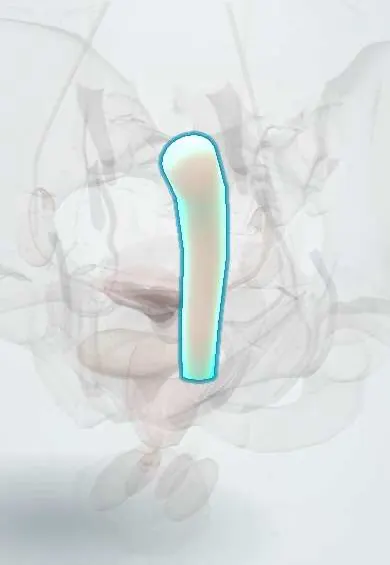
Rectal prolapse !
Rectal prolapse is when the rectum slips out through the anus, either its whole wall or only its lining; it is most common in young children and older women.
Updated 2026-10-29
Structures involved
Tap one to see what it is and open it in 3D.
- Rectum
- External anal sphincter
- Puborectalis
- Pubococcygeus
- Iliococcygeus
- Sacrum
- Rectouterine pouch
- Pudendal nerve
Microorganisms that cause it
In physiology
What it is
Protrusion of the rectum through the anus. In full-thickness prolapse the whole rectal wall turns inside out; in mucosal prolapse only the lining protrudes. It occurs mainly in young children and in older adults, especially women.
Who gets it
Two peaks: toddlers, usually under about four years, and older adults, in whom women predominate. In children in tropical regions, including Colombia, intestinal parasites such as whipworm and diarrhoeal illness are important triggers.
Causes
- Children: straining with constipation, acute or chronic diarrhoea, intestinal parasites (Trichuris trichiura), malnutrition
- Children: cystic fibrosis, severe cough (pertussis), neuromuscular disorders such as myelomeningocele, Hirschsprung disease
- Adults: chronic straining, weak pelvic floor and anal sphincter, redundant sigmoid colon and deep rectouterine pouch
- Adults: neurological or psychiatric conditions, previous pelvic surgery
Risk factors
- Age under about four or older age
- Female sex in adults, multiparity and previous vaginal births
- Chronic constipation or diarrhoea
- Parasitic infection and malnutrition in children
- Cystic fibrosis
- Pelvic floor dysfunction and pudendal nerve damage
Pathophysiology
In young children the rectum is straighter and its supports are loose, so straining pushes the mucosa or the whole wall through the anus. In adults, poor sacral fixation, a deep rectouterine pouch, a weak levator ani and a lax sphincter allow the rectum to telescope (intussuscept) and then emerge. Repeated prolapse stretches the sphincter and the pudendal nerves, worsening incontinence.
Classification
- Full-thickness (complete) prolapse: concentric mucosal folds
- Mucosal (partial) prolapse: radial folds, common in children
- Internal rectal intussusception: telescoping that does not pass the anus
- Incarcerated or strangulated prolapse
Symptoms and signs
- A red, moist mass protruding from the anus, first only on straining, later with walking or standing
- Spontaneous reduction or need to push it back by hand
- Mucus discharge and rectal bleeding
- Faecal incontinence in many adults; constipation or a feeling of incomplete emptying
- In children: painless red mass after defecation that often reduces on its own
Diagnosis
- Clinical
- Seeing the prolapse, ideally while the patient strains on a toilet or squatting; concentric folds suggest full-thickness prolapse and radial folds mucosal prolapse. Digital examination assesses sphincter tone.
- Tests
- In children: stool examination for parasites and a sweat chloride test for cystic fibrosis when the cause is unclear or prolapse recurs. In adults: tests of anal sphincter function (manometry) when planning surgery.
- Imaging
- Colonoscopy in adults to exclude a lead point such as a tumour; defecography for internal intussusception or associated pelvic floor prolapse.
Differential diagnosis
- Prolapsed internal haemorrhoids (radial grooves between cushions)
- Prolapsing rectal polyp
- Intussusception presenting through the anus in a child
- Rectal or anal cancer
- Anal skin tags
Goal of treatment
Reduce the prolapse, treat the cause of straining, and in adults correct the anatomy surgically to restore control of the bowel.
Treatment
- Acute
- Manual reduction with gentle steady pressure (sugar can reduce swelling in oedematous prolapse); urgent surgery for strangulation.
- Conservative
- In children, most cases resolve by treating the cause: stool softening, diet, toilet habits with feet supported, and treating diarrhoea.
- Medical
- Antiparasitic drugs for intestinal worms, nutritional support, and specific management of cystic fibrosis when found.
- Procedure
- Injection sclerotherapy in children with persistent prolapse despite conservative treatment.
- Surgical
- Adults: abdominal rectopexy (often laparoscopic, with or without mesh or resection) for fit patients; perineal operations (Delorme or perineal rectosigmoidectomy) for frail patients, with higher recurrence.
- Rehabilitation
- Pelvic floor rehabilitation and biofeedback for associated incontinence or constipation.
Complications
- Incarceration and strangulation with ischaemia or necrosis
- Ulceration and bleeding
- Faecal incontinence
- Recurrence after surgery
- Mucosal ulcer of the rectum (solitary rectal ulcer)
Prognosis
In children the outlook is very good: most resolve with conservative treatment and growth. In adults it rarely resolves without surgery; continence often improves after repair but not always completely.
Prevention
- Avoiding constipation and prolonged straining
- Deworming and sanitation where intestinal parasites are common
- Good nutrition in children
Test yourself
Think of the answer, then tap the question to see it.
How can full-thickness rectal prolapse be told apart from mucosal prolapse?
Full-thickness prolapse shows concentric mucosal folds; mucosal prolapse and haemorrhoids show radial folds.
Which test should a child with recurrent rectal prolapse and no clear cause have?
A sweat chloride test to look for cystic fibrosis, plus stool examination for parasites.
Which intestinal parasite is classically linked to rectal prolapse in children?
Trichuris trichiura (whipworm), especially with heavy infection.
What is the usual first-line treatment of rectal prolapse in children?
Conservative: manual reduction, stool softening and treating the cause; most resolve without surgery.
Which operations are used for adult rectal prolapse?
Abdominal rectopexy (often laparoscopic) for fit patients; perineal procedures such as Delorme or Altemeier for frail patients.
Related conditions
- Haemorrhoids
- Pelvic organ prolapse
- Obstetric perineal tears and anal sphincter injury
- Intussusception (children)
Educational information, not medical advice. For any symptom, see a health professional.
Sources: Pediatric Rectal Prolapse (StatPearls (NCBI Bookshelf), 2026).
Spotted a mistake?We are always improving for the community. Tell us what is wrong and our team will review it.Report a mistake
Representative model, for educational purposes only.