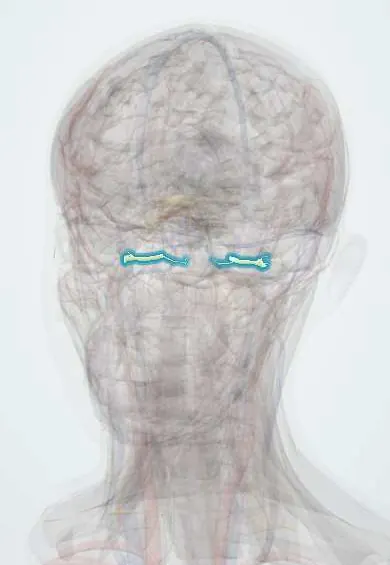
Vestibular schwannoma (acoustic neuroma) !
A vestibular schwannoma (acoustic neuroma) is a slow-growing benign tumour on the hearing and balance nerve; it causes hearing loss in one ear.
Updated 2026-10-29
Structures involved
Tap one to see what it is and open it in 3D.
- Vestibulocochlear nerve (VIII)
- Internal acoustic meatus
- Cochlea
- Facial nerve (VII)
- Trigeminal nerve (V)
- Pons
- Cerebellum
- Cerebellar peduncles
In histology
In the clinical exam
In physiology
Why it happens
- Tumour suppressor genes: RB, TP53, APC, BRCA and the two-hit hypothesis
- Peripheral nerve: endoneurium, perineurium, epineurium; myelin
What it is
Benign, slow-growing tumour of the Schwann cells of the vestibular part of the vestibulocochlear nerve, usually in the internal acoustic meatus and cerebellopontine angle. Also called acoustic neuroma.
Who gets it
The most common tumour of the cerebellopontine angle, usually diagnosed in middle age. More cases are now found by MRI done for other reasons. Bilateral tumours suggest neurofibromatosis type 2.
Causes
- Sporadic (most cases), with loss of the NF2 tumour suppressor gene in the tumour
- Neurofibromatosis type 2 (NF2-related schwannomatosis): bilateral tumours, younger age
Risk factors
- Neurofibromatosis type 2
- Previous radiation to the head and neck in childhood
- Middle age
Pathophysiology
The tumour grows from Schwann cells of the vestibular nerve, usually where the nerve enters the internal acoustic meatus. It compresses the cochlear nerve and its blood supply, causing hearing loss; as it grows into the cerebellopontine angle it can press on the trigeminal and facial nerves, the brainstem and cerebellum, and block cerebrospinal fluid flow.
Classification
- Intracanalicular (within the internal acoustic meatus)
- Extending into the cerebellopontine angle
- Large, compressing the brainstem (with or without hydrocephalus); grading systems vary
Symptoms and signs
- Slowly progressive one-sided sensorineural hearing loss (most common)
- One-sided tinnitus
- Imbalance or unsteadiness (true vertigo is less common)
- Sudden hearing loss in some cases
- Facial numbness (trigeminal nerve) with larger tumours
- Headache, ataxia; facial weakness is a late sign
Diagnosis
- Clinical
- Suspected in any adult with asymmetric sensorineural hearing loss or one-sided tinnitus. Examination may show a reduced corneal reflex, facial numbness, nystagmus or ataxia.
- Tests
- Audiometry shows asymmetric sensorineural loss, often with poor speech discrimination. Auditory brainstem responses are used where MRI is not available.
- Imaging
- Gadolinium-enhanced MRI of the internal acoustic meatus and posterior fossa is the gold standard: an enhancing mass that widens the meatus («ice cream cone»).
Differential diagnosis
- Meningioma of the cerebellopontine angle
- Epidermoid cyst
- Facial nerve schwannoma
- Ménière disease
- Presbycusis or noise-induced hearing loss (usually symmetrical)
Goal of treatment
Control tumour growth, protect the brainstem and preserve hearing and facial nerve function, matching treatment to tumour size, symptoms and patient preference.
Treatment
- Follow-up
- Observation with serial MRI and audiometry («wait and scan») for small, stable or minimally symptomatic tumours, especially in older patients.
- Procedure
- Stereotactic radiosurgery to stop growth of small to medium tumours.
- Surgical
- Microsurgical resection (translabyrinthine, retrosigmoid or middle cranial fossa approach) for large tumours, brainstem compression or growth; the approach depends on size and hearing.
- Rehabilitation
- Hearing rehabilitation (CROS hearing aids, bone conduction devices, cochlear or auditory brainstem implants) and facial nerve rehabilitation after treatment.
Complications
- Permanent hearing loss on the affected side
- Facial nerve palsy (mainly after surgery)
- Hydrocephalus from compression of the fourth ventricle
- Cerebrospinal fluid leak after surgery
- Brainstem compression
Prognosis
Benign: many small tumours grow slowly or not at all. Treatment controls most tumours; the main long-term problems are hearing loss and, after surgery, facial nerve weakness.
Test yourself
Think of the answer, then tap the question to see it.
What is the most common presenting symptom of vestibular schwannoma?
Slowly progressive one-sided sensorineural hearing loss, often with tinnitus.
Which imaging test is the gold standard for vestibular schwannoma?
Gadolinium-enhanced MRI of the internal acoustic meatus and posterior fossa.
Bilateral vestibular schwannomas suggest which genetic condition?
Neurofibromatosis type 2 (NF2-related schwannomatosis).
Which cranial nerve reflex is often reduced early as the tumour grows into the cerebellopontine angle?
The corneal reflex, through compression of the trigeminal nerve.
Related conditions
- Ménière disease
- Presbycusis (age-related hearing loss)
- Benign paroxysmal positional vertigo (BPPV)
- Hydrocephalus
- Trigeminal neuralgia
Educational information, not medical advice. For any symptom, see a health professional.
Sources: Vestibular Schwannoma (StatPearls (NCBI Bookshelf), 2023).
Spotted a mistake?We are always improving for the community. Tell us what is wrong and our team will review it.Report a mistake
Representative model, for educational purposes only.