Conditions · Metabolism (biochemistry)
Prion diseases (Creutzfeldt–Jakob) !
Fatal brain diseases in which a misfolded protein (prion) copies itself and destroys neurons: very rapid dementia.
Updated 2026-11-01
Structures involved
Tap one to see what it is and open it in 3D.
In biochemistry
Microorganisms that cause it
Why it happens
What it is
Transmissible spongiform encephalopathies caused by build-up of PrPSc, the misfolded form of the prion protein; the commonest is Creutzfeldt–Jakob disease (CJD).
Who gets it
Very rare: about 1 case per million people per year worldwide. About 85 % are sporadic, 10–15 % genetic and under 1 % acquired. No Colombia-specific figures were found; CJD is notifiable in many countries.
Causes
- Sporadic: spontaneous switch from PrPC to PrPSc, cause unknown
- Genetic (autosomal dominant, PRNP variants): familial CJD, Gerstmann–Sträussler–Scheinker, fatal familial insomnia
- Acquired: iatrogenic (dura mater grafts, cornea, cadaveric growth hormone, neurosurgical instruments), variant CJD (beef with bovine spongiform encephalopathy), kuru
Risk factors
- Age 55 to 75 (sporadic)
- Family history or PRNP variant
- Methionine/methionine homozygosity at codon 129
- Exposure to contaminated tissue or instruments
Pathophysiology
β-sheet-rich PrPSc binds normal neuronal PrPC and forces it into its own shape; the new copies repeat the process and form protease-resistant aggregates. Neurons die without inflammation and the tissue fills with vacuoles (spongiform change), with neuron loss and gliosis. PRNP codon 129 and the prion strain change the age of onset, duration and regions affected (for example, the thalamus in fatal familial insomnia).
Classification
- Sporadic (sporadic CJD)
- Genetic (familial CJD, GSS, fatal familial insomnia)
- Acquired (iatrogenic, variant CJD, kuru)
Symptoms and signs
- Dementia progressing over weeks to months
- Myoclonus, often triggered by startle
- Ataxia and gait disturbance
- Visual disturbance (Heidenhain variant) and behaviour change
- In variant CJD: younger onset with psychiatric symptoms and pain or dysaesthesia
- End stage of akinetic mutism
Diagnosis
- Clinical
- Rapidly progressive dementia with myoclonus, ataxia, visual or pyramidal signs and akinetic mutism; international CJD criteria.
- Tests
- RT-QuIC on cerebrospinal fluid (highly specific), 14-3-3 protein and total tau; electroencephalogram with periodic sharp-wave complexes; PRNP genetic testing; definitive confirmation in brain tissue.
- Imaging
- Diffusion-weighted MRI: cortical ribbon hyperintensity and caudate and putamen hyperintensity; pulvinar sign in variant CJD.
Treatment
- Conservative
- No treatment cures or slows the disease; supportive and palliative care
- Medical
- Control of myoclonus, agitation and pain
- Follow-up
- Public health notification and special decontamination protocols for instruments and tissue
Complications
- Aspiration pneumonia
- Pressure ulcers
- Death
Prognosis
Fatal. In sporadic CJD most people die within a year of symptom onset; variant CJD and some genetic forms last longer.
Prevention
- Single-use instruments or specific decontamination in neurosurgery
- Deferral of at-risk blood and tissue donors
- Control of cattle feed (bovine spongiform encephalopathy)
Test yourself
Think of the answer, then tap the question to see it.
Which structural change turns the normal prion protein into the disease form?
It shifts from an α-helix-rich form (PrPC) to a β-sheet-rich form (PrPSc), which resists proteases and acts as a template.
What is the commonest prion disease?
Sporadic Creutzfeldt–Jakob disease, about 85 % of cases.
Which cerebrospinal fluid test is most specific for CJD?
RT-QuIC, which detects the seeding ability of PrPSc.
Which MRI finding is typical of CJD?
Diffusion hyperintensity in the cortex (ribboning) and in caudate and putamen; in variant CJD, the pulvinar sign.
Related conditions
Educational information, not medical advice. For any symptom, see a health professional.
Sources: Prion disease: MedlinePlus Genetics (MedlinePlus, US National Library of Medicine, 2026); Creutzfeldt-Jakob disease: MedlinePlus Medical Encyclopedia (MedlinePlus, US National Library of Medicine, 2026); PRNP gene: MedlinePlus Genetics (MedlinePlus, US National Library of Medicine, 2026); Creutzfeldt-Jakob Disease | CJD | MedlinePlus (MedlinePlus, US National Library of Medicine, 2026).
Spotted a mistake?We are always improving for the community. Tell us what is wrong and our team will review it.Report a mistake
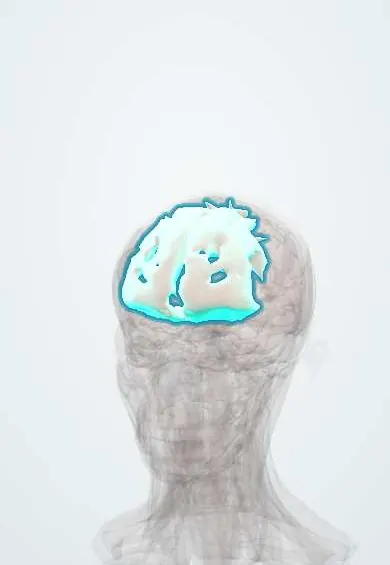
Representative model, for educational purposes only.