Reactive arthritis !
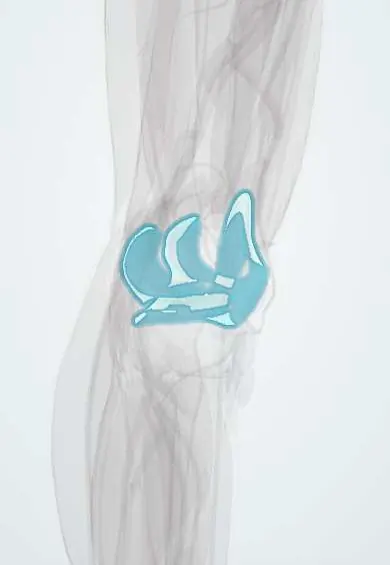
Joint inflammation that starts a few weeks after a gut or genital infection, without germs in the joint. It can also inflame the eyes and urethra.
Updated 2026-11-01
Structures involved
Tap one to see what it is and open it in 3D.
- Joint capsule
- Achilles tendon
- Urethra (male)
- Plantar fascia
- Calcaneus
- Toe joint capsules
- Sacroiliac ligaments
- Cornea
- Prostate
Why it happens
- Innate and adaptive immunity: overview
- Synovial joints: capsule, synovial membrane and articular cartilage
What it is
A sterile inflammatory arthritis that appears one to four weeks after a gastrointestinal or genitourinary infection. It belongs to the spondyloarthritis family and typically causes asymmetric arthritis of the legs, enthesitis and sometimes eye and urethral inflammation.
Who gets it
Mostly affects young adults aged 20 to 40. After sexually transmitted chlamydia it is more frequent in men; after enteric infection both sexes are affected equally. In Colombia and Latin America, where acute diarrhoeal disease and sexually transmitted infections remain common, it is a relevant cause of acute arthritis in young people.
Causes
- Genitourinary infection: Chlamydia trachomatis
- Enteric infection: Salmonella, Shigella, Campylobacter, Yersinia and Clostridioides difficile
- Immune reaction to bacterial antigens that reach the joint; the joint fluid is sterile on culture
Risk factors
- HLA-B27 (more severe and chronic disease)
- Young adult age
- Unprotected sex and sexually transmitted infections
- Food-borne gastroenteritis
- HIV infection
Pathophysiology
After a mucosal infection, bacterial antigens and fragments are carried to the synovium and entheses, where they trigger an immune response in genetically predisposed people, especially HLA-B27 carriers. Inflammation targets the joints, tendon insertions, the eye and the mucous membranes, without live bacteria growing in the joint.
Symptoms and signs
- Asymmetric arthritis of a few large joints of the legs (knees, ankles, feet), 1 to 4 weeks after diarrhoea or urethritis
- Heel pain from enthesitis at the Achilles tendon or plantar fascia insertion
- Sausage-shaped toes or fingers (dactylitis)
- Low back or buttock pain (sacroiliitis)
- Red eyes (conjunctivitis) or painful red eye with blurred vision (anterior uveitis)
- Burning urination and discharge (urethritis or cervicitis)
- Skin and mucosal lesions: keratoderma blennorrhagicum of soles and palms, circinate balanitis, painless mouth ulcers
Diagnosis
- Clinical
- Clinical diagnosis based on typical arthritis and enthesitis following a recent diarrhoeal or genitourinary infection; the triad of arthritis, conjunctivitis and urethritis is classic but often incomplete.
- Tests
- Raised ESR and CRP; nucleic acid amplification tests for chlamydia and gonorrhoea in urine or swabs; stool culture if diarrhoea persists. Joint aspiration shows inflammatory, culture-negative fluid without crystals. HLA-B27 supports the diagnosis and predicts chronicity; HIV and syphilis testing are offered.
- Imaging
- Radiographs are often normal early; later they may show enthesophytes (heel spurs) and asymmetric sacroiliitis. MRI or ultrasound detect sacroiliitis and enthesitis.
Differential diagnosis
- Septic arthritis, including gonococcal arthritis
- Gout and pseudogout
- Psoriatic arthritis
- Ankylosing spondylitis
- Enteropathic arthritis (inflammatory bowel disease)
- Post-streptococcal arthritis and rheumatic fever
- Viral arthritis (chikungunya, parvovirus B19)
Goal of treatment
Treat any persisting infection and its sexual partners, control joint and eye inflammation, and preserve function while the disease usually remits.
Treatment
- Medical
- Non-steroidal anti-inflammatory drugs are the first-line treatment for arthritis and enthesitis.
- Medical
- Antibiotics treat an active chlamydial infection (and sexual partners); they do not shorten arthritis after enteric infection. Intra-articular glucocorticoids once infection is excluded; topical eye glucocorticoids for uveitis under ophthalmology care.
- Medical
- Disease-modifying drugs (sulfasalazine, methotrexate) and, for refractory cases, TNF inhibitors in chronic disease.
- Rehabilitation
- Rest of acutely inflamed joints, then physiotherapy and stretching of the Achilles and plantar fascia to maintain movement.
Complications
- Chronic or recurrent arthritis (more likely with HLA-B27)
- Progression to chronic spondyloarthritis with sacroiliitis
- Recurrent anterior uveitis and vision loss if untreated
- Aortic regurgitation and conduction defects (rare)
- Joint damage and disability
Prognosis
Most attacks settle within 3 to 12 months. A minority, more often HLA-B27 carriers, develop recurrent or chronic arthritis or a persistent spondyloarthritis.
Prevention
- Safe food and water handling to prevent enteric infections
- Condom use and screening of sexually transmitted infections
- Prompt treatment of chlamydial infection in patients and partners
Test yourself
Think of the answer, then tap the question to see it.
Which infections typically trigger reactive arthritis?
Chlamydia trachomatis urethritis and enteric infections with Salmonella, Shigella, Campylobacter or Yersinia.
What is the classic triad of reactive arthritis?
Arthritis, conjunctivitis and urethritis, often incomplete.
Which HLA allele is associated with reactive arthritis?
HLA-B27, which predicts more severe and chronic disease.
What must be excluded in a single hot, swollen joint before diagnosing reactive arthritis?
Septic arthritis, including gonococcal arthritis, by joint aspiration with Gram stain and culture.
Related conditions
- Chlamydia infection
- Gonorrhoea
- Conjunctivitis
- Uveitis
- Ankylosing spondylitis
- Psoriatic arthritis
- Septic Arthritis of the Knee
- Achilles Tendinopathy
- Plantar Fasciitis
- HIV infection and AIDS
Educational information, not medical advice. For any symptom, see a health professional.
Sources: Reactive arthritis (MedlinePlus (U.S. National Library of Medicine), 2025).
Spotted a mistake?We are always improving for the community. Tell us what is wrong and our team will review it.Report a mistake
Representative model, for educational purposes only.