Conditions · Ophthalmology and ENT
Vestibular neuritis and labyrinthitis !
Inflammation of the balance nerve or inner ear that causes sudden, severe spinning vertigo for days; labyrinthitis also affects hearing.
Updated 2026-11-01
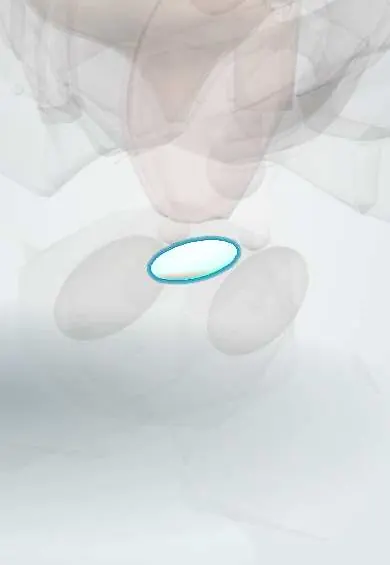
Structures involved
Tap one to see what it is and open it in 3D.
Why it happens
What it is
Vestibular neuritis is an inflammation of the vestibular part of the eighth cranial nerve that causes an acute, continuous vertigo without hearing loss. In labyrinthitis the inner ear itself is inflamed, so hearing loss and tinnitus are added.
Who gets it
One of the commonest causes of acute vertigo seen in emergency departments, after benign positional vertigo. It mostly affects adults of middle age and often follows a viral upper respiratory infection.
Causes
- Viral, most often reactivation of herpes simplex virus type 1 in the vestibular ganglion (presumed)
- Labyrinthitis: viral, or bacterial from otitis media or meningitis
- Vascular causes are considered in older people
Risk factors
- Recent cold or flu-like illness
- Acute or chronic otitis media (bacterial labyrinthitis)
- Meningitis (bacterial labyrinthitis, especially in children)
- Middle age
Pathophysiology
Inflammation suddenly silences the vestibular input from one ear, usually the superior division of the vestibular nerve. The brain reads the imbalance between the two sides as rotation, giving vertigo and a horizontal-torsional nystagmus beating away from the affected side. In labyrinthitis the cochlea is also involved. Recovery comes from partial return of nerve function and from central compensation by the brainstem and cerebellum.
Classification
- Vestibular neuritis: vertigo without hearing loss
- Labyrinthitis: vertigo with hearing loss and tinnitus
- Serous (viral) or suppurative (bacterial) labyrinthitis
Symptoms and signs
- Sudden, constant spinning vertigo lasting days, worse with head movement
- Nausea and vomiting
- Unsteady gait, leaning toward the affected side
- Spontaneous horizontal nystagmus
- Hearing loss and ringing in one ear (labyrinthitis)
Diagnosis
- Clinical
- Clinical: acute continuous vertigo with spontaneous unidirectional nystagmus. The HINTS examination (head impulse, nystagmus, test of skew) by a trained examiner separates a peripheral cause (abnormal head impulse, unidirectional nystagmus, no skew) from a cerebellar or brainstem stroke. Otoscopy and a bedside hearing test.
- Tests
- Audiometry for hearing loss; video head impulse testing and caloric tests to confirm the vestibular deficit.
- Imaging
- Not needed in a typical case with a peripheral HINTS pattern. MRI with diffusion when there are central signs or risk of stroke; CT misses many posterior fossa strokes.
Differential diagnosis
- Posterior circulation stroke (cerebellar or brainstem infarct or haemorrhage)
- Vestibular migraine
- Meniere disease
- Benign paroxysmal positional vertigo
- Vestibular schwannoma and multiple sclerosis
Goal of treatment
Relieve vertigo and vomiting in the first days, rule out stroke and bacterial infection, and speed central compensation so balance recovers.
Treatment
- Medical
- Short course of vestibular suppressants (antihistamines, benzodiazepines) and antiemetics only for the first days, since longer use delays compensation.
- Medical
- Early oral glucocorticoids are sometimes used in vestibular neuritis, but their benefit is uncertain and antivirals have no proven role; antibiotics and ear surgery for bacterial labyrinthitis.
- Acute
- Intravenous fluids and admission when vomiting is severe or the person cannot walk.
- Rehabilitation
- Early mobilisation and vestibular rehabilitation exercises (gaze stabilisation and balance training).
- Follow-up
- Nursing care focuses on fall prevention, hydration and watching for new neurological signs; no driving or climbing until symptoms resolve.
Complications
- Chronic imbalance from incomplete compensation
- Persistent postural-perceptual dizziness
- Secondary benign positional vertigo
- Permanent hearing loss in labyrinthitis, especially bacterial
- Falls and injuries
Prognosis
Severe vertigo improves within days and most people recover over weeks to a few months, though older adults may stay unsteady longer. Recurrence on the same side is uncommon. Hearing loss after bacterial labyrinthitis is often permanent.
Test yourself
Think of the answer, then tap the question to see it.
What distinguishes labyrinthitis from vestibular neuritis?
Labyrinthitis also causes hearing loss and tinnitus because the cochlea is involved; vestibular neuritis spares hearing.
Which HINTS findings suggest a peripheral cause rather than a stroke?
An abnormal (corrective saccade) head impulse test, unidirectional horizontal nystagmus and no skew deviation.
Why are vestibular suppressants limited to a few days?
Prolonged use slows central compensation and delays recovery of balance.
Which imaging test is preferred when a posterior circulation stroke is suspected in acute vertigo?
MRI with diffusion-weighted imaging, since CT often misses posterior fossa infarcts.
Related conditions
- Benign paroxysmal positional vertigo (BPPV)
- Ménière disease
- Ischaemic stroke
- Vestibular schwannoma (acoustic neuroma)
- Acute otitis media
- Hearing loss (conductive and sensorineural, including sudden hearing loss)
- Migraine
Educational information, not medical advice. For any symptom, see a health professional.
Sources: Labyrinthitis: MedlinePlus Medical Encyclopedia (MedlinePlus (U.S. National Library of Medicine), 2024); Harrison's Principles of Internal Medicine, 21st ed., ch. 22 Dizziness and Vertigo (McGraw Hill, 2022).
Spotted a mistake?We are always improving for the community. Tell us what is wrong and our team will review it.Report a mistake
Representative model, for educational purposes only.