Conditions · Pediatrics and neonatology
Williams syndrome !
A chromosome 7 deletion causing an elfin face, a very friendly personality, learning difficulties and narrowing of the aorta.
Updated 2026-11-01
Structures involved
Tap one to see what it is and open it in 3D.
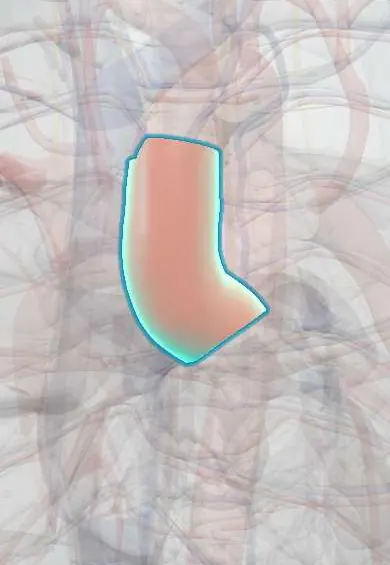
- Ascending aorta
- Aortic arch
- Pulmonary trunk
- Pulmonary arteries
- Right renal artery
- Left renal artery
- Kidneys
Why it happens
- Chromosome abnormalities: number and structure
- Elastin
- Blood vessels: artery, vein and capillary layers
What it is
A multisystem genetic disorder caused by a microdeletion of chromosome 7q11.23 that includes the elastin gene (ELN). It combines a characteristic face, supravalvular aortic stenosis and other arterial narrowing, intellectual disability with a distinctive cognitive and social profile, and sometimes hypercalcemia.
Who gets it
About 1 in 7,500 to 18,000 people, affecting both sexes and all ethnic groups. Most cases are new (de novo) deletions.
Causes
- Deletion of about 25 to 27 genes at 7q11.23, usually arising during formation of an egg or sperm
- Loss of one copy of ELN explains the arterial and connective tissue features; loss of other genes (such as GTF2I and LIMK1) is linked to the cognitive and behavioral profile
- Autosomal dominant: an affected person has a 50% chance of passing it on
Risk factors
- Parent with Williams syndrome (rare)
- Most cases occur without any family history
Pathophysiology
With half the normal elastin, arterial walls develop thickened smooth muscle and fewer elastic fibers, producing narrowing (stenosis) of large and medium arteries, classically just above the aortic valve (supravalvular aortic stenosis), and also of the pulmonary, renal, coronary and other arteries. Renal artery stenosis and arterial stiffness cause hypertension. Hypercalcemia in infancy is thought to reflect increased sensitivity to vitamin D. Brain differences underlie poor visuospatial skills with relatively strong language and marked sociability.
Symptoms and signs
- Elfin facial features: broad forehead, periorbital fullness, stellate iris, short upturned nose, long philtrum, wide mouth with full lips, small widely spaced teeth
- Heart murmur; signs of left ventricular outflow obstruction from supravalvular aortic stenosis
- Mild to moderate intellectual disability, very weak visuospatial skills, relative strengths in language and music
- Overly friendly, socially disinhibited personality, anxiety and attention problems
- Infant irritability, feeding difficulties, poor growth, hypercalcemia
- Hypertension, hoarse voice, hernias, joint laxity or contractures
Diagnosis
- Clinical
- Suspected from the facial features, supravalvular aortic stenosis, developmental profile and sociable personality.
- Tests
- Confirmed by chromosomal microarray or FISH for the 7q11.23 deletion. Serum and urine calcium, kidney and thyroid function, and developmental and cognitive assessment.
- Imaging
- Echocardiogram to look for supravalvular aortic stenosis and peripheral pulmonary artery stenosis; CT or MR angiography when arterial narrowing is suspected; renal ultrasound for kidney anomalies and stones.
Differential diagnosis
- Isolated familial supravalvular aortic stenosis (ELN variant without deletion)
- Noonan syndrome
- DiGeorge syndrome (22q11.2 deletion)
- Fetal alcohol spectrum disorder
- Other causes of infant hypercalcemia
Goal of treatment
Treat arterial narrowing and hypertension, avoid hypercalcemia, and support learning and behavior with a coordinated multidisciplinary team.
Treatment
- Surgical
- Surgical repair of significant supravalvular aortic stenosis or other arterial stenoses; anesthesia and sedation only with specialized teams because of the risk of sudden cardiac events.
- Medical
- Treatment of hypertension; management of hypercalcemia by avoiding extra calcium and vitamin D and with a low-calcium diet if indicated.
- Rehabilitation
- Early intervention, speech, occupational and physical therapy, individualized education and support for anxiety and attention problems.
- Follow-up
- Regular follow-up of heart and blood pressure, calcium, kidney and thyroid function, vision, hearing and teeth; genetic counseling.
Complications
- Left ventricular hypertrophy and heart failure
- Sudden death related to coronary stenosis, especially with anesthesia
- Systemic hypertension and stroke
- Nephrocalcinosis and kidney stones
- Anxiety disorders and social vulnerability
Prognosis
Life expectancy is somewhat reduced, mainly from cardiovascular disease. Most adults need some degree of support for daily living, but many have good social and work participation with lifelong follow-up.
Test yourself
Think of the answer, then tap the question to see it.
Which chromosomal deletion causes Williams syndrome?
A microdeletion at 7q11.23 that includes the elastin gene (ELN).
What is the classic heart lesion of Williams syndrome?
Supravalvular aortic stenosis.
Which electrolyte disturbance is typical in infants with Williams syndrome?
Hypercalcemia.
What personality and cognitive profile are typical?
Very friendly, socially disinhibited personality with relative strength in language and marked weakness in visuospatial skills.
Related conditions
- Hypercalcaemia
- Arterial hypertension
- Renovascular hypertension (renal artery stenosis)
- Aortic Valve Stenosis
- Pulmonary valve stenosis
- Noonan syndrome
- DiGeorge syndrome (22q11.2 deletion syndrome)
- Attention-deficit/hyperactivity disorder (ADHD)
- Autism spectrum disorder (ASD)
- Coarctation of the aorta
Educational information, not medical advice. For any symptom, see a health professional.
Sources: Williams syndrome (MedlinePlus Genetics (U.S. National Library of Medicine), 2024).
Spotted a mistake?We are always improving for the community. Tell us what is wrong and our team will review it.Report a mistake
Representative model, for educational purposes only.