Conditions · Pediatrics and neonatology
DiGeorge syndrome (22q11.2 deletion syndrome) !
DiGeorge syndrome is caused by a small missing piece of chromosome 22. It can bring heart defects, low calcium, weak immunity and cleft palate.
Updated 2026-11-01
Structures involved
Tap one to see what it is and open it in 3D.
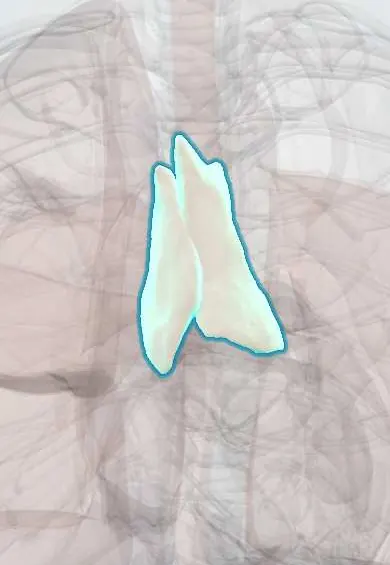
- Thymus
- Parathyroid glands
- Aortic arch
- Pulmonary trunk
- Interventricular septum
- Ascending aorta
- Soft palate
- Thyroid gland
In embryology
- Germ-layer derivatives: ectoderm, mesoderm, endoderm
- Neural crest cells and their derivatives
- The pharyngeal apparatus: arches, pouches, clefts and membranes
- Pharyngeal pouches: tonsil, thymus, parathyroids and C cells
- 22q11.2 deletion (DiGeorge): the third and fourth pouches
- Outflow tract: the spiral aorticopulmonary septum and neural crest
- Aortic arch arteries and their derivatives
- Tetralogy of Fallot
- Persistent truncus arteriosus
- Vascular rings and aberrant right subclavian artery
- Prenatal diagnosis: ultrasound, serum screening, cell-free DNA, CVS, amniocentesis
- Isotretinoin and other retinoids
Why it happens
- Chromosome abnormalities: number and structure
- Trisomies 21, 18 and 13, and the 22q11.2 deletion
- Calcium regulation: PTH, vitamin D and calcitonin
- Thymus and tonsils under the microscope
- Thyroid follicles, C cells and parathyroid
What it is
A multisystem genetic disorder caused by a microdeletion on the long arm of chromosome 22 (22q11.2), which disrupts development of the third and fourth pharyngeal pouches and the cardiac outflow tract. It includes the conditions once called DiGeorge and velocardiofacial syndromes.
Who gets it
The most common microdeletion syndrome, affecting about 1 in 4,000 people; it is probably underdiagnosed because its features vary so much. It is a leading genetic cause of congenital heart disease after Down syndrome.
Causes
- A deletion of about 3 million base pairs at 22q11.2, including the TBX1 gene
- Usually a new (de novo) event; about 1 in 10 inherited from a parent in an autosomal dominant pattern
Risk factors
- A parent with the deletion (50% chance of passing it on)
- Otherwise no known modifiable factor
Pathophysiology
Abnormal migration of neural crest cells into the third and fourth pharyngeal pouches and arches leads to absent or small thymus (T-cell deficiency), absent or small parathyroid glands (hypocalcaemia) and conotruncal heart defects. Palate and facial development are also affected.
Classification
- Partial DiGeorge syndrome: reduced but present T cells (most patients)
- Complete DiGeorge syndrome: athymia with almost no T cells (rare, severe combined immunodeficiency picture)
Symptoms and signs
- Conotruncal heart defects: interrupted aortic arch type B, truncus arteriosus, tetralogy of Fallot, ventricular septal defect
- Neonatal hypocalcaemia with tetany or seizures
- Recurrent viral, fungal and bacterial infections from T-cell deficiency
- Cleft palate or velopharyngeal insufficiency with nasal speech and feeding difficulties
- Characteristic face: long face, hooded eyelids, small ears and a small mouth
- Developmental and learning delay; later risk of ADHD, anxiety and psychosis
Diagnosis
- Clinical
- Suspected in any newborn with a conotruncal heart defect, hypocalcaemia or cleft palate, or a child with recurrent infections and typical facial features. The mnemonic CATCH-22 (cardiac, abnormal face, thymic hypoplasia, cleft palate, hypocalcaemia, 22q11) groups the main features.
- Tests
- Chromosomal microarray or FISH for the 22q11.2 deletion confirms it. Serum calcium and parathyroid hormone; lymphocyte subsets (CD3, CD4, CD8) and T-cell function; newborn screening for severe T-cell deficiency (TREC) can detect complete forms.
- Imaging
- Echocardiography for the heart defect; chest X-ray may show an absent thymic shadow; renal ultrasound for associated kidney anomalies.
Differential diagnosis
- Other causes of neonatal hypocalcaemia (maternal diabetes, prematurity, vitamin D deficiency)
- Other severe combined immunodeficiencies
- CHARGE syndrome
- Isolated congenital heart disease or isolated cleft palate
Goal of treatment
Correct the heart defect, keep calcium safe, protect against infection according to the T-cell count, and support feeding, speech, learning and mental health through coordinated multidisciplinary care.
Treatment
- Surgical
- Cardiac surgery for the conotruncal defect; palate surgery for cleft palate or velopharyngeal insufficiency.
- Medical
- Calcium and active vitamin D (calcitriol) for hypoparathyroidism.
- Medical
- In complete DiGeorge syndrome, thymus tissue transplantation or haematopoietic stem cell transplantation; irradiated blood products and avoidance of live vaccines while T cells are low.
- Rehabilitation
- Feeding, speech and language therapy and educational support.
- Follow-up
- Lifelong follow-up of calcium, immunity, hearing, growth, thyroid function and psychiatric symptoms; genetic counselling for the family.
Complications
- Heart failure or death from complex congenital heart disease
- Hypocalcaemic seizures
- Recurrent or severe infections; autoimmune disease
- Transfusion-associated graft-versus-host disease if non-irradiated blood is given to a child with low T cells
- Schizophrenia and other psychiatric disorders in adulthood
- Hearing loss and speech problems
Prognosis
Very variable. Most children with partial T-cell deficiency improve immunologically with age; outlook depends mainly on the heart defect. Complete DiGeorge syndrome is fatal without thymus or stem cell transplantation.
Test yourself
Think of the answer, then tap the question to see it.
Which embryological structures fail to develop normally in DiGeorge syndrome?
The third and fourth pharyngeal pouches (thymus and parathyroids), plus the cardiac outflow tract.
Which electrolyte problem typically presents in a newborn with DiGeorge syndrome?
Hypocalcaemia from hypoparathyroidism, with tetany or seizures.
Which test confirms the 22q11.2 deletion?
Chromosomal microarray or FISH for the 22q11.2 region.
Which immune cells are deficient in DiGeorge syndrome?
T cells, because the thymus is small or absent.
Which heart lesions are classic in 22q11.2 deletion?
Conotruncal defects: truncus arteriosus, interrupted aortic arch type B and tetralogy of Fallot.
Related conditions
- Tetralogy of Fallot
- Ventricular septal defect
- Cleft lip and palate
- Acute otitis media
- Epilepsy and seizures
Educational information, not medical advice. For any symptom, see a health professional.
Sources: 22q11.2 deletion syndrome: MedlinePlus Genetics (MedlinePlus, US National Library of Medicine, 2026).
Spotted a mistake?We are always improving for the community. Tell us what is wrong and our team will review it.Report a mistake
Representative model, for educational purposes only.