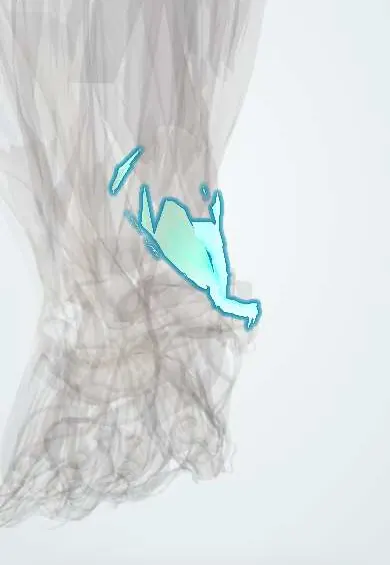
APL and EPB tendons !
The abductor pollicis longus and extensor pollicis brevis tendons run along the thumb side of the wrist; de Quervain tenosynovitis inflames them.
Official name: Abductor pollicis longus and extensor pollicis brevis tendons
Opens in the Durgical app, no sign-up needed.
What it is
Two tendons side by side in the first tunnel on the thumb side of the wrist.
What it does
Move the thumb out and back; they form the front edge of the 'snuffbox'.
Key facts
- Attaches
- 1st dorsal compartment over the radial styloid: APL to the base of the 1st metacarpal (often in several slips), EPB to the base of the thumb's proximal phalanx
- Function
- Abduct and extend the thumb; front border of the anatomical snuffbox; de Quervain tenosynovitis (Finkelstein test)
- Tight in
- Thumb flexed into the palm with ulnar deviation of the wrist
Relations
- Course
- They wind obliquely from the back of the forearm over the ECRL and ECRB tendons, pass through the 1st dorsal compartment over the radial styloid and diverge to the thumb
- Superficial
- Extensor retinaculum and the branches of the superficial radial nerve; the cephalic vein begins nearby
- Deep
- Radial styloid and, just beyond it, the radial artery as it enters the anatomical snuffbox
- Behind
- EPL tendon, the opposite border of the anatomical snuffbox
How to find it
With the thumb extended and pulled back (hitchhiker position), the tendons form the palmar border of the anatomical snuffbox; they are followed back over the radial styloid, where tenderness and swelling point to de Quervain tenosynovitis.
Examination
- Finkelstein test: the examiner grasps the thumb and tilts the wrist ulnarly; sharp pain over the radial styloid suggests de Quervain tenosynovitis
- Eichhoff test: the fist is closed over the thumb and the wrist tilted ulnarly; pain over the radial styloid is positive, but many normal wrists also hurt
- Pain and creaking (crepitus) a few centimetres above the wrist on wrist movement point to intersection syndrome instead
On imaging
Ultrasound shows thick tendons and sheath, fluid and the septum dividing the compartment, and is used to guide injections; it also shows the swelling where they cross the radial wrist extensors in intersection syndrome.
Common problems
- De Quervain's tenosynovitis: the tendons and their sheath swell in the first tunnel, causing pain at the thumb side of the wrist.
- Common in new parents lifting a baby and with repeated thumb use.
How it is diagnosed
Pain when the thumb is tucked into the fist and the wrist is tilted toward the little finger (Finkelstein-type test).
Treatment
- Thumb splint, activity changes and a steroid injection, which helps most people.
- Surgical release of the first tunnel's roof, protecting the superficial radial nerve.
Clinical notes
- De Quervain release: the superficial radial nerve branches are protected and any separate EPB tunnel is opened
- Intersection syndrome affects rowers, paddlers and weightlifters, from friction where the tendons cross
- Thumb basal joint arthritis and scaphoid fracture cause pain nearby; the grind test and snuffbox tenderness help tell them apart
Anatomical variants
- The APL usually has two or more slips; extra slips of both tendons are common
- A septum divides the 1st compartment in many wrists, more often in people with de Quervain tenosynovitis
Related conditions
Test yourself
Think of the answer, then tap the question to see it.
Where do the APL and EPB tendons insert?
APL on the base of the 1st metacarpal (often in several slips); EPB on the base of the thumb's proximal phalanx.
What classic cause of persistent de Quervain pain involves the EPB tendon?
A septum giving the EPB its own tunnel in the 1st compartment, left unopened at surgery.
Which nerve branches are at risk in de Quervain release of the APL and EPB tendons?
Branches of the superficial radial nerve, which cross over the 1st compartment.
Which border of the anatomical snuffbox do the APL and EPB tendons form?
The front (palmar-radial) border; the EPL forms the back border.
Educational information, not medical advice. For any symptom, see a health professional.
Its names
- Official Latin (TA2)
- tendines musculorum abductoris longi et extensoris brevis pollicis TA2 2517
- Official Spanish (DeCS)
- Tendones de los músculos abductor largo y extensor corto del pulgar
- English (TA2)
- Abductor pollicis longus and extensor pollicis brevis tendons
Related
- 1st compartment sheath
- Superficial radial nerve
- Radial artery
- 1st metacarpal
- Proximal phalanx, thumb
- Radius
- APL
- EPB
Sources: Terminologia Anatomica (TA2); Anatomy, Shoulder and Upper Limb: Hand Anatomical Snuff Box; Anatomy, Shoulder and Upper Limb, Wrist Extensor Muscles.
Spotted a mistake?We are always improving for the community. Tell us what is wrong and our team will review it.Report a mistake
Representative model, for educational purposes only.