Joints and ligaments · Upper limb
IGHL !
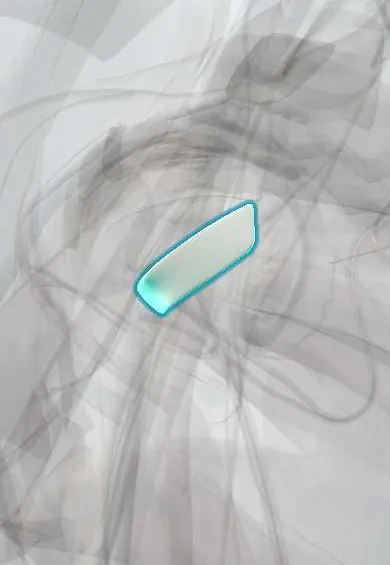
The inferior glenohumeral ligament is the band under the shoulder joint that stops the ball slipping out the front with the arm raised, as in throwing.
Official name: Inferior glenohumeral ligament
Opens in the Durgical app, no sign-up needed.
What it is
A hammock-like thickening of the lower shoulder capsule, from the labrum to the humeral neck.
What it does
The main restraint that stops the ball slipping out the front when the arm is raised and turned back (throwing position).
Key facts
- Attaches
- Anteroinferior glenoid labrum and rim to the anatomical neck of the humerus (anterior band, axillary pouch, posterior band)
- Function
- Main restraint to anterior-inferior dislocation
- Tight in
- Abduction + external rotation (90/90 position)
Relations
- Medial
- Glenoid labrum and rim of the lower half of the glenoid
- Lateral
- Anatomical neck of the humerus, just below the articular margin of the head
- Below
- Axillary nerve and posterior circumflex humeral artery heading for the quadrangular space; the axillary pouch is the lowest part of the shoulder capsule
- In front
- Lower subscapularis muscle and tendon; the middle glenohumeral ligament (MGHL) just above the anterior band
- Behind
- Teres minor tendon and lower infraspinatus tendon over the posterior band
How to find it
Not palpable. From the posterior arthroscopic portal the anterior band appears as a thick fold running from the anteroinferior labrum to the humeral neck; the axillary pouch lies under the head and is inspected while the arm is rotated.
Examination
- Apprehension test (arm at 90° abduction and external rotation): apprehension means the anterior band and labrum no longer hold the head
- Relocation (Jobe) test: a backward push on the head removes the apprehension, confirming anterior instability; releasing it suddenly brings it back (release or surprise test)
- Load and shift test: grades anterior and posterior translation of the head (to the rim, over the rim and reducing, or locking out)
- Gagey hyperabduction test: passive abduction clearly greater than the other side (over about 105°) with the scapula held down suggests a lax IGHL
On imaging
MR arthrography distends the axillary pouch: on coronal images a normal pouch is U-shaped; in a HAGL lesion it becomes J-shaped as the humeral end drops away (J sign), with contrast leaking down the humeral neck. The ABER view stretches the anterior band and shows labroligamentous tears.
Common problems
- Stretched or torn from the labrum or the humerus when the shoulder dislocates forward.
- A loose ligament lets the shoulder slip out again (recurrent instability).
How it is diagnosed
Apprehension test with the arm raised and turned back. MRI or MR arthrogram shows the ligament and labrum.
Treatment
- Strengthening program after a first dislocation in some patients.
- Arthroscopic repair that re-attaches and re-tensions the labrum and this ligament.
Clinical notes
- Bankart repair reattaches the labrum with the IGHL to the glenoid rim; a capsular shift tightens a stretched axillary pouch in multidirectional instability
- HAGL lesions are missed if the humeral side is not checked at arthroscopy; left untreated they cause recurrent instability after a Bankart repair
- GIRD and posterior band tightness are linked to internal impingement and SLAP tears in overhead athletes; posterior capsule stretching is the usual first step
Related conditions
Test yourself
Think of the answer, then tap the question to see it.
What are the three parts of the inferior glenohumeral ligament?
The anterior band, the axillary pouch and the posterior band.
In which arm position is the inferior glenohumeral ligament the main restraint to dislocation?
Abduction with external rotation (90/90), when the anterior band swings under the head like a sling.
What is a HAGL lesion?
Humeral avulsion of the inferior glenohumeral ligament; on MR arthrography the axillary pouch becomes J-shaped.
Which nerve runs just below the axillary pouch of the inferior glenohumeral ligament?
The axillary nerve, at risk in dislocations and inferior capsular surgery.
What causes glenohumeral internal rotation deficit (GIRD) in throwers?
Tightness of the posterior band of the inferior glenohumeral ligament and the posteroinferior capsule.
Educational information, not medical advice. For any symptom, see a health professional.
Its names
- Official Latin (TA2)
- ligamentum glenohumerale inferius TA2 1769
- Official Spanish (DeCS)
- Ligamento glenohumeral inferior
- English (TA2)
- Inferior glenohumeral ligament
- Also called
- inferior glenohumeral band
Related
Sources: Terminologia Anatomica (TA2); Anatomy, Shoulder and Upper Limb, Glenohumeral Joint; Anatomy, Shoulder and Upper Limb, Shoulder.
Spotted a mistake?We are always improving for the community. Tell us what is wrong and our team will review it.Report a mistake
Representative model, for educational purposes only.