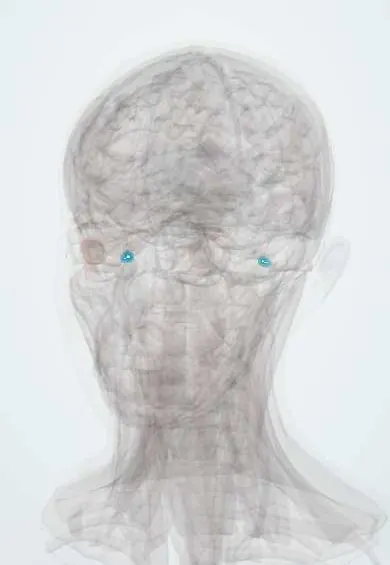
Stapes !
The stapes (stirrup) is the smallest bone in the body, the last middle ear bone; its footplate passes sound into the inner ear and stiffens in otosclerosis.
Opens in the Durgical app, no sign-up needed.
What it is
The smallest bone in the body, its footplate in the oval window; it stiffens in otosclerosis.
What it does
Passes and amplifies the eardrum's vibrations to the inner ear.
Key facts
- Joints with
- Incus; footplate in the oval window
- Landmarks
- Head, neck, anterior and posterior limbs, footplate; smallest bone
Relations
- Lateral
- Lenticular process of the incus at the incudostapedial joint
- Medial
- Footplate in the oval window, opening onto the vestibule of the inner ear, with the saccule and utricle beyond
- Above
- Tympanic segment of the facial nerve in its bony canal, just above the oval window; the canal is often thin or open here
- Behind
- Stapedius tendon, emerging from the pyramidal eminence on the posterior wall to reach the neck
- Below
- Promontory, the bulge of the basal turn of the cochlea, with the round window below and behind it
How to find it
Not seen through a normal eardrum. At surgery it is exposed by lifting the eardrum and removing a little bone from the posterosuperior canal wall, which shows the incudostapedial joint, the stapedius tendon and the facial nerve above.
Examination
- Rinne negative (bone louder than air) on the affected side and Weber lateralising to it: conductive loss, as in otosclerosis
- Acoustic (stapedial) reflex testing: absent when the stapes is fixed or the facial nerve is interrupted proximal to the nerve to stapedius
On imaging
Too small for radiographs; high-resolution temporal bone CT shows its crura and the footplate in the oval window. In fenestral otosclerosis, CT shows a lucent focus just in front of the oval window and sometimes a thickened footplate; cochlear otosclerosis adds a lucent ring around the cochlea (double ring). After stapes surgery, CT checks the position of the prosthesis.
Common problems
- Otosclerosis: bone grows around the stapes footplate and fixes it, causing slowly worsening hearing loss.
How it is diagnosed
Hearing tests showing a conductive loss with a normal eardrum.
Treatment
- Hearing aids.
- Stapes surgery (stapedotomy) that replaces it with a tiny piston.
Clinical notes
- Otosclerosis is usually bilateral, often familial and may progress in pregnancy; a reddish blush on the promontory seen through the drum (Schwartze sign) marks the active phase
- Stapedotomy: a small opening is made in the fixed footplate and a piston prosthesis is hooked onto the incus; risks include sensorineural loss, vertigo and taste change from chorda tympani injury
- Hearing aids are the non-surgical alternative for the conductive loss of otosclerosis
- A low-lying or exposed facial nerve overhanging the oval window can block access in stapes surgery
Anatomical variants
- Persistent stapedial artery running through the arch of the stapes: rare, a bleeding risk in stapes surgery
- Congenital stapes fixation or malformation, sometimes with other second-arch anomalies
Development
The stapes forms from the second pharyngeal arch, its footplate partly from the otic capsule; the stapedial artery passes through its arch in the embryo and normally disappears.
Related conditions
Test yourself
Think of the answer, then tap the question to see it.
Which muscle inserts on the stapes, what is its nerve, and what follows its paralysis?
The stapedius, supplied by the facial nerve; a facial palsy above the nerve to stapedius causes hyperacusis.
What are the audiological features of otosclerosis?
Conductive loss with a normal drum, a bone-conduction dip near 2 kHz (Carhart notch) and an absent acoustic reflex.
What does a stapedotomy involve?
A small opening in the fixed stapes footplate with a piston prosthesis hooked onto the incus; risks include sensorineural loss, vertigo and taste change.
Which nerve lies just above the oval window and the stapes, often in a thin or open bony canal?
The tympanic segment of the facial nerve.
Educational information, not medical advice. For any symptom, see a health professional.
Its names
- Official Latin (TA2)
- stapes TA2 895
- Official Spanish (DeCS)
- Estribo DeCS D013199
- English (TA2)
- Stapes
- Also called
- stirrup
Related
Sources: Terminologia Anatomica (TA2); DeCS; Otosclerosis; Ear, Hearing, and Facial Nerve Evaluation.
Spotted a mistake?We are always improving for the community. Tell us what is wrong and our team will review it.Report a mistake
Representative model, for educational purposes only.