Conditions · Ophthalmology and ENT
Otosclerosis !
Abnormal bone growth that fixes the stapes in the middle ear, causing slowly worsening hearing loss, usually in young adults. Surgery or hearing aids help.
Updated 2026-11-01
Structures involved
Tap one to see what it is and open it in 3D.
Why it happens
- Bone remodeling
- Hearing: middle ear, cochlea and auditory pathway
- Ossification, growth plate and bone remodeling
What it is
A disease of bone remodelling in the otic capsule of the temporal bone. New spongy bone forms around the oval window and fixes the stapes footplate, causing progressive conductive hearing loss; when the cochlea is involved the loss becomes mixed or sensorineural.
Who gets it
It usually starts between about 15 and 45 years, more often in women, and is often bilateral. It is more frequent in people of European ancestry; there are no reliable Colombian figures, but it is a classic cause of conductive hearing loss with a normal eardrum.
Causes
- Hereditary tendency, often autosomal dominant with incomplete penetrance
- Abnormal bone remodelling of the otic capsule (cause not fully known; viral and hormonal factors proposed)
Risk factors
- Family history of otosclerosis
- Female sex
- Pregnancy, which can accelerate hearing loss
- Age 15 to 45
Pathophysiology
An active phase of bone resorption with vascular spongy bone (otospongiosis) is followed by sclerotic remodelling. The focus most often lies just in front of the oval window and fixes the stapes footplate, so sound vibrations cannot reach the inner ear. Spread into the cochlea causes sensorineural loss.
Classification
- Fenestral (stapedial): fixation of the stapes, conductive loss
- Cochlear (retrofenestral): involves the cochlea, mixed or sensorineural loss
Symptoms and signs
- Slowly progressive hearing loss, often starting in one ear and becoming bilateral
- Tinnitus
- Hearing better in a noisy background (paracusis of Willis)
- Normal eardrum on otoscopy; sometimes a reddish blush behind it (Schwartze sign) in the active phase
- Occasional dizziness
Diagnosis
- Clinical
- Normal eardrum with conductive loss: Rinne negative (bone conduction louder than air) and Weber lateralising to the more affected ear.
- Tests
- Pure-tone audiometry shows an air-bone gap and often a dip in bone conduction near 2000 Hz (Carhart notch); tympanometry is normal or shallow (type As), and the stapedial reflex is absent.
- Imaging
- High-resolution CT of the temporal bone can show the otosclerotic foci and is used in atypical cases or before surgery.
Differential diagnosis
- Otitis media with effusion
- Ossicular discontinuity or tympanosclerosis
- Cholesteatoma
- Superior semicircular canal dehiscence
- Paget disease of bone and osteogenesis imperfecta
Goal of treatment
Restore useful hearing, by amplification or surgery, and monitor progression.
Treatment
- Conservative
- Hearing aids are effective and avoid surgical risk; they do not stop progression.
- Surgical
- Stapedotomy or stapedectomy, replacing the fixed stapes with a prosthesis, closes the air-bone gap in most patients; the worse ear is operated first.
- Medical
- Fluoride compounds have been used to try to slow the active cochlear form; evidence is limited.
- Surgical
- Cochlear implant for far-advanced otosclerosis with severe sensorineural loss.
Complications
- Bilateral progressive hearing loss with social and work impact
- After surgery: sensorineural hearing loss or dead ear, vertigo, taste change from chorda tympani injury, and rarely facial palsy
- Mixed or sensorineural loss with cochlear involvement
Prognosis
Not life-threatening. Stapes surgery gives lasting improvement in most patients, and hearing aids work well; the cochlear form may keep progressing.
Test yourself
Think of the answer, then tap the question to see it.
What is the classic hearing pattern of otosclerosis?
Progressive conductive hearing loss with a normal eardrum, often bilateral, in a young adult woman.
What is the Carhart notch?
A dip in bone-conduction thresholds near 2000 Hz on the audiogram.
Which ossicle is fixed in otosclerosis?
The stapes, at its footplate in the oval window.
Which surgery treats otosclerosis?
Stapedotomy or stapedectomy with a prosthesis.
Related conditions
- Hearing loss (conductive and sensorineural, including sudden hearing loss)
- Presbycusis (age-related hearing loss)
- Otitis media with effusion and chronic suppurative otitis media
- Osteogenesis imperfecta
- Paget disease of bone
- Ménière disease
Educational information, not medical advice. For any symptom, see a health professional.
Sources: Otosclerosis (MedlinePlus, US National Library of Medicine, 2026).
Spotted a mistake?We are always improving for the community. Tell us what is wrong and our team will review it.Report a mistake
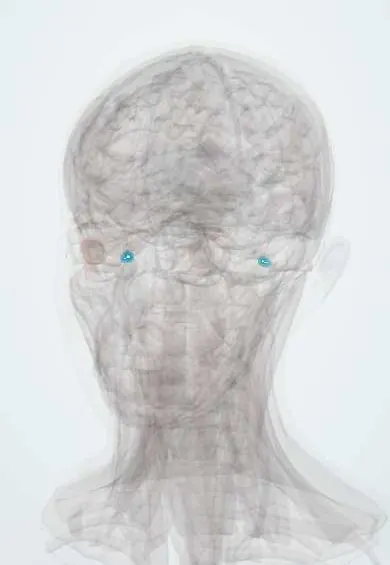
Representative model, for educational purposes only.