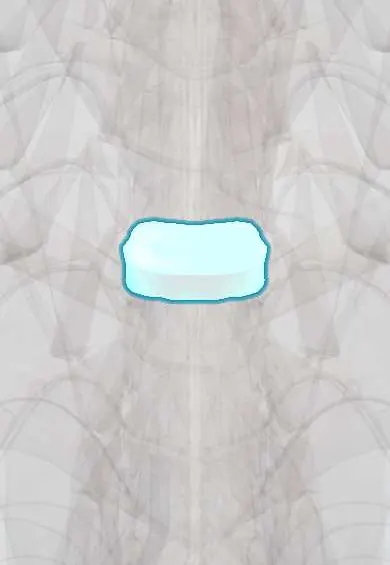
T10–T11 disc !
The T10-T11 disc is the thin cushion between the T10 and T11 vertebrae in the mid-back; it allows the small movement the ribs permit.
Official name: T10-T11
Opens in the Durgical app, no sign-up needed.
What it is
The cushion between T10 and T11: a tough outer ring of fibres (annulus fibrosus) around a soft centre.
What it does
Absorbs load and allows the small amount of movement the rib cage permits.
Key facts
- Where
- Between T10 and T11 bodies; thin thoracic disc; no rib head attaches
- Attaches
- Annulus fibrosus anchored to the endplates and ring apophyses of T10 and T11; anterior and posterior longitudinal ligaments
- Function
- Absorbs and spreads load; herniation rare (most at T8–T12), often central onto the cord; lateral herniation may irritate the T10 root
Relations
- In front
- Thoracic aorta just in front, approaching the aortic hiatus at T12; the azygos vein and thoracic duct to its right; the back of the diaphragm and the pleural recess curve around the sides
- Lateral
- No rib head; the sympathetic trunk, now on the side of the bodies, with the lesser splanchnic nerve
- Behind
- Posterior longitudinal ligament and the spinal cord near its lumbar enlargement
How to find it
Follow the floating ribs (11 and 12) back toward the spine and count up from T12; the disc lies roughly level with the tip of the T10 spinous process.
Examination
- Abdominal reflexes: each quadrant is stroked toward the umbilicus; loss of the lower ones (about T10–T12) with brisk leg reflexes fits cord compression in the lower thoracic spine
On imaging
This level often appears on abdominal CT, where a calcified disc or gas in the disc space is usually an incidental finding; MRI is the test that shows the disc against the canal.
Common problems
- Thoracic disc herniations are uncommon; many are found by chance on MRI and cause no symptoms.
- A large one can press on the spinal cord, or cause band-like pain around the chest.
How it is diagnosed
MRI; CT shows whether the herniation is calcified (hardened), which matters for surgery.
Treatment
- Usually physical therapy and pain medicine; surgery only if the spinal cord is pressed.
Clinical notes
- Leg weakness or bladder trouble with a normal lumbar MRI should prompt imaging of the lower thoracic spine, where a disc at T10–T11 can press on the cord
- In a lateral approach there is usually no rib head on this disc to follow, so the T11 pedicle and imaging guide the surgeon to the level
Test yourself
Think of the answer, then tap the question to see it.
Which dermatome belongs to the root that leaves at the T10–T11 disc?
T10: a band circling the trunk at the umbilicus, the classic T10 dermatome.
Why does the T10–T11 segment move more than mid-thoracic segments?
No rib head touches the T10–T11 disc: ribs 11 and 12 (and often 10) join only their own vertebra, so the segment is less splinted.
Why can a central T10–T11 disc herniation weaken the legs and affect the bladder instead of causing a chest band?
The lumbar enlargement of the spinal cord lies behind about T10–T12, so a central herniation presses on the cord there.
Which reflex finding suggests cord compression in the lower thoracic spine near the T10–T11 disc?
Loss of the lower abdominal reflexes (about T10–T12) together with brisk leg reflexes.
Educational information, not medical advice. For any symptom, see a health professional.
Its names
- Official Latin (TA2)
- discus intervertebralis T10-T11 TA2 1684
- Official Spanish (DeCS)
- Disco T10-T11 DeCS D007403
- English (TA2)
- T10-T11
- Also called
- fibrous ring · fibrocartilago intervertebralis
Related
Sources: Terminologia Anatomica (TA2); DeCS; Anatomy, Back, Intervertebral Discs; 7.3 The Vertebral Column (OpenStax (Rice University), 2022) · adapted, CC BY 4.0.
Spotted a mistake?We are always improving for the community. Tell us what is wrong and our team will review it.Report a mistake
Representative model, for educational purposes only.