
A and V pattern strabismus
A squint that changes between looking up and looking down, forming an A or V shape. Usually linked to overacting oblique muscles.
What it is
A and V patterns are horizontal deviations whose size changes between upgaze and downgaze: a V diverges more in upgaze, an A in downgaze. They usually come from oblique muscle dysfunction and must be measured in up- and downgaze before strabismus surgery.
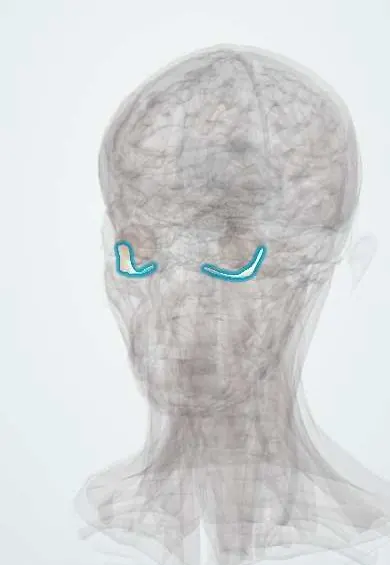
Who gets it
Present in a substantial proportion of children with horizontal strabismus; V patterns are more common than A patterns, often with congenital esotropia or intermittent exotropia.
Causes
- Inferior oblique overaction (V pattern)
- Superior oblique overaction (A pattern)
- Superior oblique palsy (V pattern) or inferior oblique palsy (A pattern)
- Craniofacial anomalies with excyclorotated orbits (Crouzon, Apert)
- Brown syndrome (V pattern), horizontal rectus or pulley displacement
Risk factors
- Infantile esotropia
- Intermittent exotropia
- Craniosynostosis syndromes
- Hydrocephalus or spina bifida (A pattern)
Pathophysiology
The oblique muscles have an abducting action, greatest in their field of action. An overacting inferior oblique abducts the eyes in upgaze (V pattern); an overacting superior oblique abducts them in downgaze (A pattern). Orbital torsion or displaced rectus pulleys shift the muscle paths and give similar patterns.
Classification
- V pattern: at least 15 prism dioptres more divergent in upgaze than downgaze
- A pattern: at least 10 prism dioptres more divergent in downgaze than upgaze
- Variants: Y, lambda and X patterns
Symptoms and signs
- Squint more obvious in up- or downgaze
- Chin-up or chin-down head posture to keep the eyes aligned
- Double vision or difficulty reading in downgaze (A-pattern exotropia)
Diagnosis
- Clinical
- Prism cover test at distance in primary position, 25-30 degrees upgaze and downgaze; versions for oblique overaction; fundus torsion; head posture.
- Tests
- Bielschowsky head-tilt test and torsion measurement when an oblique palsy is suspected.
- Imaging
- Orbital imaging in craniofacial patients or when pulley abnormalities are suspected.
Differential diagnosis
- Fourth nerve palsy
- Brown syndrome
- Duane retraction syndrome
- Dissociated vertical deviation
A squint that changes between up- and downgaze: V or A?
| Feature | V pattern | A pattern |
|---|---|---|
| Eyes diverge more in | Upgaze | Downgaze |
| Difference that counts | At least 15 prism dioptres | At least 10 prism dioptres |
| Usual oblique cause | Inferior oblique overaction or superior oblique palsy | Superior oblique overaction or inferior oblique palsy |
| Common associations | Infantile esotropia, Brown syndrome, Crouzon and Apert syndromes | Hydrocephalus or spina bifida |
| Typical complaint | Squint more obvious when looking up | Double vision or reading difficulty in downgaze (A-pattern exotropia) |
| Transposition when obliques are normal | Medial recti down, lateral recti up | Medial recti up, lateral recti down |
Goal of treatment
Align the eyes in primary position and downgaze for reading, with a normal head posture.
Treatment
- Surgical
- Weakening of the overacting oblique (inferior oblique recession for V, superior oblique weakening for A) when oblique overaction is present.
- Surgical
- Vertical transposition of the horizontal recti (medial recti towards the apex of the pattern) when the obliques are normal.
- Conservative
- Glasses and amblyopia treatment before surgery.
Complications
- Over- or undercorrection
- Iatrogenic torsion or superior oblique palsy after weakening
- Amblyopia
Common traps
- The letter describes the shape of the eyes: it describes how the horizontal deviation changes with gaze; the open end of the letter is where the eyes diverge most (V open at the top, A open at the bottom)
- Measuring in primary position is enough before surgery: a pattern only shows when the deviation is also measured in upgaze and downgaze; missing it leaves the eyes misaligned in the reading position
- Any small up-down difference is a pattern: a V needs at least 15 and an A at least 10 prism dioptres of difference, because a small change across gaze is normal
- Superior oblique palsy gives an A pattern: a weak superior oblique lets the inferior oblique dominate, so the palsy gives a V pattern, often with a head tilt and a positive Bielschowsky test
- The medial recti are always moved down in transposition surgery: they are moved towards the apex of the letter, down for a V and up for an A, with the lateral recti moved the opposite way
Prognosis
Good with surgery tailored to oblique function; recurrences occur.
Test yourself
Think of the answer, then tap the question to see it.
Why does an overacting inferior oblique produce a V pattern rather than an A pattern?
The obliques also abduct, most in their own field. The inferior oblique acts in upgaze, so its excess pulls the eyes apart when looking up, widening the top of the letter: a V.
A child's exotropia is 10 prism dioptres in upgaze and 30 in downgaze. Which pattern is this, and which muscle would you check first?
An A pattern: the eyes diverge 20 prism dioptres more in downgaze, above the threshold of 10. Check the versions for superior oblique overaction.
A child with a V pattern also tilts the head and has a positive Bielschowsky test. What is the likely cause?
Superior oblique (fourth nerve) palsy: the weak superior oblique lets the inferior oblique overact, giving a V pattern with a compensatory head tilt.
The obliques act normally, but a significant V pattern is present. Which surgical option is used?
Vertical transposition of the horizontal recti: the medial recti are moved towards the apex (down for a V) and the lateral recti towards the open end (up).
Why do children with Crouzon or Apert syndrome often have a V pattern?
Their orbits are excyclorotated, which shifts the muscle paths and pulleys, so the inferior obliques appear to overact and the eyes diverge in upgaze.
Connections
Educational information, not medical advice. For any symptom, see a health professional.
Sources: Pattern Strabismus (EyeWiki (American Academy of Ophthalmology), 2025).
Spotted a mistake?We are always improving for the community. Tell us what is wrong and our team will review it.Report a mistake
Representative model, for educational purposes only.