Conditions · Metabolism (biochemistry)
Cadmium poisoning !
Cadmium from tobacco, contaminated food or industry builds up in kidney and bone: it damages the tubule and weakens bones.
Updated 2026-11-01
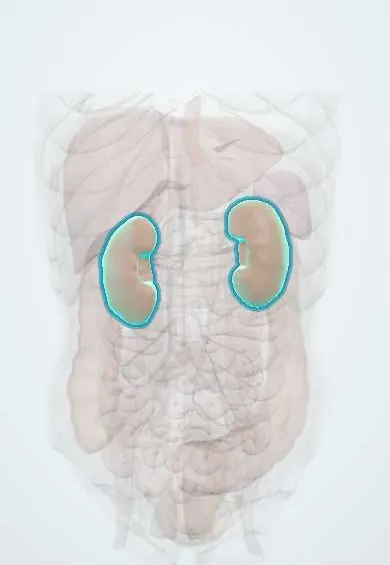
Structures involved
Tap one to see what it is and open it in 3D.
Why it happens
What it is
Poisoning by cadmium, a heavy metal with no biological role that accumulates over decades, mainly in the kidney, bound to metallothionein.
Who gets it
For non-smokers the main source is diet (grains, tubers, shellfish and organ meats from contaminated soils); tobacco doubles the body burden. Japan's itai-itai disease, from rice irrigated with mining water, is the historical example. In Latin America cadmium has been described in cocoa from some Andean soils, a monitoring issue for exporters, Colombia included.
Causes
- Tobacco smoke
- Food grown in contaminated soils
- Work with nickel–cadmium batteries, electroplating, pigments, welding and zinc smelting
- Acute inhalation of cadmium oxide fumes when welding or cutting coated metal
Risk factors
- Smoking
- Unprotected occupational exposure
- Iron deficiency (increases gut absorption)
- Multiparous women and older age
Pathophysiology
Cadmium enters through transporters for essential metals (such as iron's DMT1) and in the liver induces metallothionein, a cysteine-rich protein that traps it. The cadmium–metallothionein complex is filtered at the glomerulus and reabsorbed in the proximal tubule, where it releases the cadmium: it binds sulfhydryl groups, displaces zinc and calcium, causes oxidative stress and damages mitochondria. The result is a proximal tubulopathy (Fanconi syndrome): low-molecular-weight proteinuria (β2-microglobulin), glucosuria, aminoaciduria, phosphaturia and calcium loss. With phosphate and active vitamin D lacking (the damaged tubule makes less calcitriol) bone decalcifies: osteomalacia and osteoporosis with fractures. Inhaled, it causes acute chemical pneumonitis and, in the long term, emphysema and lung cancer (group 1 carcinogen).
Classification
- Acute by inhalation (metal fume fever, pneumonitis)
- Acute by ingestion (gastroenteritis)
- Chronic (kidney, bone, lung)
Symptoms and signs
- Cough, fever and breathlessness hours after inhaling fumes (acute)
- Nausea, vomiting and abdominal pain after swallowing salts (acute)
- Bone pain, especially lower back and legs (chronic)
- Fractures from minor trauma
- Kidney stones
Diagnosis
- Clinical
- Occupational history, smoking and diet; suspected with proximal tubulopathy or unexplained fractures.
- Tests
- Urine cadmium (reflects body burden) and blood cadmium (recent exposure); urinary β2-microglobulin and other low-molecular-weight proteins; urine glucose, phosphate and calcium; kidney function.
- Imaging
- Chest X-ray after acute inhalation; bone densitometry and X-rays for osteomalacia and fractures.
Treatment
- Conservative
- Stopping exposure: quitting smoking and workplace protection measures.
- Acute
- Respiratory support in chemical pneumonitis from inhalation.
- Medical
- Calcium, vitamin D and phosphate according to the tubulopathy and bone status; chelation has no clear proven benefit and some chelators increase kidney damage.
- Follow-up
- Follow-up of tubular function, bone density and the lung.
Complications
- Chronic kidney disease
- Osteomalacia, osteoporosis and fractures (itai-itai)
- Emphysema
- Lung cancer
Prognosis
Cadmium stays in the kidney for decades: advanced tubular damage does not reverse even when exposure stops.
Prevention
- Not smoking
- Control of cadmium in soils, fertilisers and food
- Ventilation and respiratory protection when welding
Test yourself
Think of the answer, then tap the question to see it.
Which protein traps cadmium and why does the kidney end up damaged?
Metallothionein; the complex is filtered, reabsorbed in the proximal tubule and releases the cadmium there.
Which urine marker indicates cadmium tubular damage?
β2-microglobulin (low-molecular-weight proteinuria).
Which historical bone disease is linked to cadmium?
Itai-itai: painful osteomalacia with fractures, in Japan, from contaminated rice.
What is a smoker's main source of cadmium?
Tobacco smoke, which doubles the body burden compared with non-smokers.
Related conditions
- Mercury poisoning
- Chronic kidney disease
- Osteoporosis
- Rickets and osteomalacia
- Kidney stones (urolithiasis)
- Lung cancer
- Chronic obstructive pulmonary disease (COPD)
Educational information, not medical advice. For any symptom, see a health professional.
Sources: Cadmium | ToxFAQs™ | ATSDR (Agency for Toxic Substances and Disease Registry (CDC), 2026); Fanconi syndrome: MedlinePlus Medical Encyclopedia (MedlinePlus, US National Library of Medicine, 2026); Textbook of Biochemistry for Medical Students, 6th ed. (Jaypee Brothers Medical Publishers (Vasudevan DM, Sreekumari S, Vaidyanathan K), 2011).
Spotted a mistake?We are always improving for the community. Tell us what is wrong and our team will review it.Report a mistake
Representative model, for educational purposes only.