Cushing syndrome !
Cushing syndrome is caused by too much cortisol over a long time, most often from steroid medicines; it causes weight gain, a round face and high blood sugar.
Updated 2026-10-29
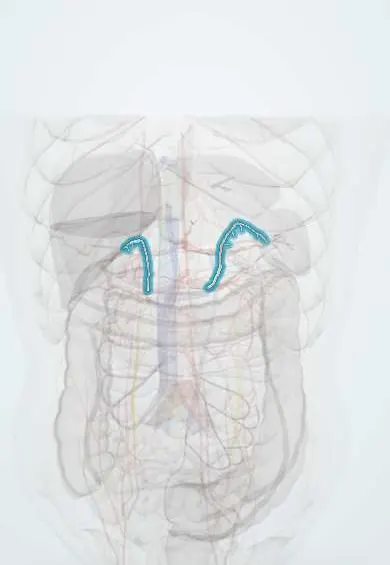
Structures involved
Tap one to see what it is and open it in 3D.
In biochemistry
- Phosphoenolpyruvate carboxykinase (PEPCK)
- Steroid hormone synthesis (overview)
- G protein-coupled receptors and cAMP
- Nuclear receptors
- Hormone classes and mechanisms
- Adrenal enzymes and congenital adrenal hyperplasia
- Protein kinase A (PKA)
- 11β-Hydroxylase (CYP11B1)
- Cortisol
In histology
In embryology
In the clinical exam
In physiology
- The HPA axis and its circadian rhythm
- Actions of cortisol
- Measuring hormones: stimulation and suppression tests
- The adrenal cortex: zones, hormones and androgens
- Bone remodeling
- Metabolic alkalosis and its compensation
Why it happens
What it is
Clinical syndrome caused by long-term exposure to excess glucocorticoid (cortisol), most often from steroid medication and otherwise from a pituitary, adrenal or ectopic source.
Who gets it
Iatrogenic Cushing syndrome from prescribed or self-administered glucocorticoids is by far the most common form, and unprescribed steroid-containing products are a concern in the region. Endogenous disease is rare and more frequent in women; Cushing disease (pituitary) is its main cause.
Causes
- Exogenous glucocorticoids (oral, inhaled, injected or topical): the most common cause
- Cushing disease: an ACTH-secreting pituitary adenoma (most endogenous cases)
- Ectopic ACTH secretion, e.g. small cell lung cancer or neuroendocrine (carcinoid) tumours
- Cortisol-secreting adrenal adenoma or carcinoma (ACTH-independent)
- Bilateral adrenal hyperplasia (rare)
Risk factors
- Long-term or high-dose glucocorticoid treatment
- Use of unprescribed steroid-containing products
- Glucocorticoids combined with strong CYP3A4 inhibitors (e.g. some HIV protease inhibitors), which raise steroid levels
- Female sex (endogenous forms)
- Multiple endocrine neoplasia type 1 (pituitary tumours)
Pathophysiology
Excess cortisol drives gluconeogenesis and insulin resistance, breaks down protein in muscle, skin and bone, and moves fat to the trunk, face and back. It also suppresses immunity and raises blood pressure. In ACTH-dependent disease, ACTH stimulates both adrenals; with exogenous steroids or an adrenal tumour, ACTH is suppressed and the rest of the adrenal tissue atrophies.
Classification
- ACTH-dependent: pituitary (Cushing disease) or ectopic ACTH
- ACTH-independent: exogenous glucocorticoids, adrenal adenoma, carcinoma or hyperplasia
Symptoms and signs
- Central obesity with a rounded face (moon face) and a dorsocervical fat pad (buffalo hump)
- Wide purple striae on the abdomen, thighs and breasts
- Thin, fragile skin, easy bruising and poor wound healing
- Proximal muscle weakness
- Hypertension and diabetes or impaired glucose tolerance
- Osteoporosis and fractures
- Low mood, irritability and insomnia
- Menstrual changes, hirsutism and acne; in children, weight gain with slowed growth
Diagnosis
- Clinical
- Exogenous steroids are excluded first, including creams, inhalers, injections and unprescribed products. Testing is done when several features are present and progressive, especially the more specific ones: easy bruising, facial plethora, proximal myopathy and wide purple striae.
- Tests
- Screening with at least one of: overnight low-dose dexamethasone suppression test (morning cortisol fails to suppress), late-night salivary cortisol or 24-hour urinary free cortisol. After confirmation, plasma ACTH separates ACTH-dependent from independent causes; further dynamic tests and petrosal sinus sampling find the source.
- Imaging
- Only after biochemical confirmation: pituitary MRI for ACTH-dependent disease, adrenal CT for ACTH-independent disease, and chest CT or functional imaging to find an ectopic source.
Differential diagnosis
- Obesity with metabolic syndrome
- Pseudo-Cushing states: depression, alcohol use disorder, poorly controlled diabetes
- Polycystic ovary syndrome
- Pregnancy
- Adrenal incidentaloma without hormone excess
Goal of treatment
Normalise cortisol exposure, remove the cause, treat the complications, and replace cortisol safely while the hypothalamic–pituitary–adrenal axis recovers.
Treatment
- Medical
- Exogenous Cushing syndrome: supervised gradual tapering of glucocorticoids to the lowest effective dose or to withdrawal, to avoid adrenal insufficiency.
- Surgical
- Cushing disease: transsphenoidal resection of the pituitary adenoma.
- Surgical
- Adrenal adenoma or carcinoma: adrenalectomy (usually laparoscopic for adenomas); ectopic ACTH: resection of the tumour when possible.
- Medical
- Glucocorticoid replacement after surgery until the axis recovers.
- Medical
- When surgery fails or is not possible: steroidogenesis inhibitors, pituitary-directed agents or glucocorticoid receptor antagonists; pituitary radiotherapy or bilateral adrenalectomy in selected cases.
- Medical
- Treatment of hypertension, diabetes and osteoporosis, and prevention of infection and venous thrombosis.
Drugs for this condition
Complications
- Hypertension, diabetes and cardiovascular disease
- Osteoporosis and vertebral fractures
- Infections
- Venous thromboembolism
- Depression and cognitive changes
- Adrenal crisis when steroids are stopped abruptly
- Nelson syndrome after bilateral adrenalectomy
Prognosis
Untreated endogenous Cushing syndrome carries high cardiovascular and infection mortality. Successful surgery cures most patients, although some effects, such as bone loss and cardiovascular risk, may persist.
Prevention
- Glucocorticoids at the lowest effective dose for the shortest time
- Avoiding abrupt withdrawal of long-term steroids
- Bone protection in long-term steroid users
Test yourself
Think of the answer, then tap the question to see it.
What is the most common cause of Cushing syndrome?
Exogenous glucocorticoids (iatrogenic Cushing syndrome).
What is the most common cause of endogenous Cushing syndrome?
Cushing disease: an ACTH-secreting pituitary adenoma.
Which screening tests are used for Cushing syndrome?
Overnight low-dose dexamethasone suppression test, late-night salivary cortisol and 24-hour urinary free cortisol.
What does a suppressed plasma ACTH mean in confirmed Cushing syndrome?
An ACTH-independent cause: an adrenal tumour or exogenous steroids.
Which features suggest ectopic ACTH rather than a pituitary cause?
Rapid onset, marked hypokalaemia, hyperpigmentation and very high ACTH, often with weight loss.
Related conditions
- Adrenal insufficiency
- Type 2 diabetes mellitus
- Arterial hypertension
- Osteoporosis
- Obesity
- Metabolic syndrome
- Polycystic ovary syndrome
Educational information, not medical advice. For any symptom, see a health professional.
Sources: Hypercortisolism (Cushing Syndrome) (StatPearls (NCBI Bookshelf), 2025).
Spotted a mistake?We are always improving for the community. Tell us what is wrong and our team will review it.Report a mistake
Representative model, for educational purposes only.