Conditions · Gastroenterology and hepatology
Dumping syndrome (rapid gastric emptying) !
After stomach surgery, food passes too fast into the small bowel, causing cramps, diarrhoea, flushing and dizziness soon after eating, or low sugar later.
Updated 2026-11-01
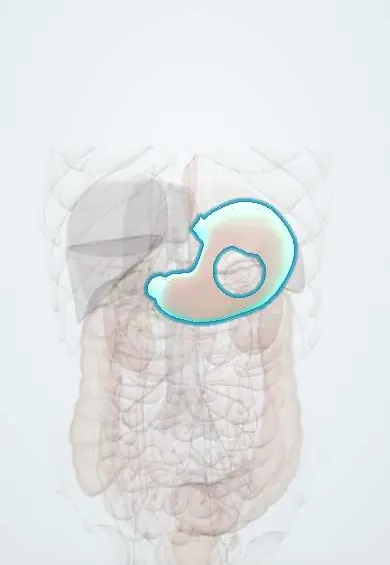
Structures involved
Tap one to see what it is and open it in 3D.
Why it happens
- Gastric motility and emptying
- Osmosis, osmolarity and tonicity
- Gastrointestinal hormones
- Islets and insulin: secretion and actions
- The physiological response to hypoglycemia
What it is
A set of digestive and circulatory symptoms caused by abnormally rapid passage of food, especially sugars, from the stomach into the small intestine. It is most often a consequence of surgery that removes or bypasses the pylorus.
Who gets it
Common after gastric surgery: it affects a sizeable share of people after gastrectomy, oesophagectomy and gastric bypass. Bariatric surgery and gastrectomy for gastric cancer, which remains frequent in Colombia, make it a condition seen in surgical follow-up and nutrition clinics.
Causes
- Partial or total gastrectomy (for gastric cancer or peptic ulcer)
- Roux-en-Y gastric bypass and other bariatric operations, including sleeve gastrectomy
- Oesophagectomy with gastric pull-up
- Vagotomy and pyloroplasty
- Fundoplication with vagal injury (less often)
Risk factors
- Surgery that removes, bypasses or opens the pylorus
- Meals rich in simple sugars and refined carbohydrates
- Drinking fluids with meals
- Large meals
Pathophysiology
Without a working pylorus and gastric reservoir, a hyperosmolar food load enters the jejunum quickly. In early dumping (within about 30 minutes), fluid shifts from the blood into the bowel lumen, distending it and releasing gut hormones that are vasoactive; this causes cramps, diarrhoea and vasomotor symptoms such as flushing, palpitations and dizziness. In late dumping (1 to 3 hours), fast absorption of glucose causes a high glucose peak and an exaggerated insulin release driven by incretins such as GLP-1, followed by reactive hypoglycaemia.
Classification
- Early dumping: 10 to 30 minutes after a meal; gastrointestinal and vasomotor symptoms from fluid shifts
- Late dumping: 1 to 3 hours after a meal; symptoms of hypoglycaemia from excess insulin
Symptoms and signs
- Early: abdominal cramps, bloating, nausea and diarrhoea soon after eating
- Early: flushing, sweating, palpitations, tachycardia, dizziness and a need to lie down
- Late: sweating, tremor, hunger, weakness, confusion and fainting from low blood glucose
- Avoidance of food and weight loss
Diagnosis
- Clinical
- Based on typical symptoms after meals in a person with previous gastric or oesophageal surgery. Symptom scores (such as the Sigstad score) support the diagnosis.
- Tests
- A modified oral glucose tolerance test can show a rise in heart rate or haematocrit in the first hour (early dumping) and hypoglycaemia at two to three hours (late dumping). Continuous glucose monitoring can capture late hypoglycaemia. Blood tests look for anaemia, iron, vitamin B12 and other nutritional deficiencies.
- Imaging
- Gastric emptying studies show rapid emptying but are not required. Endoscopy or contrast studies are used when another cause such as a stricture, ulcer or obstruction is suspected.
Differential diagnosis
- Insulinoma or other causes of hypoglycaemia (for late symptoms)
- Bile acid diarrhoea or small intestinal bacterial overgrowth after surgery
- Anastomotic ulcer or stricture
- Lactose intolerance or exocrine pancreatic insufficiency
- Anxiety or panic attacks
Goal of treatment
Reduce symptoms and prevent hypoglycaemia while keeping adequate nutrition, mainly through diet; medicines and surgery are reserved for refractory cases.
Treatment
- Lifestyle
- Six small meals a day, protein and fibre with each meal, avoiding simple sugars, and drinking fluids at least 30 minutes before or after meals rather than with them; lying down after eating can ease early symptoms.
- Medical
- Thickening agents and soluble fibre slow absorption. Alpha-glucosidase inhibitors (acarbose) reduce late hypoglycaemia. Somatostatin analogues (octreotide) are used for severe, refractory dumping.
- Surgical
- Rarely, revision surgery (reconstruction of the pylorus, conversion of the anastomosis) or feeding through a jejunostomy for refractory cases.
- Follow-up
- Nursing focus: teaching the diet, food and symptom diaries, recognising and treating hypoglycaemia, weight and nutritional checks, and monitoring iron, vitamin B12, folate, calcium and vitamin D after gastric surgery.
Complications
- Recurrent hypoglycaemia with falls, injury or loss of consciousness
- Weight loss and malnutrition
- Iron deficiency and vitamin B12 deficiency anaemia
- Bone loss from poor calcium and vitamin D absorption
- Reduced quality of life and fear of eating
Prognosis
Symptoms often improve over the first months to a year after surgery as the bowel adapts, and most patients are controlled with diet. A small group has persistent, severe symptoms that need medicines or further surgery.
Prevention
- Dietary teaching before and after gastric or bariatric surgery
- Choosing operations that preserve the pylorus when possible
Test yourself
Think of the answer, then tap the question to see it.
What is the most common cause of dumping syndrome?
Surgery that removes or bypasses the pylorus, such as gastrectomy or Roux-en-Y gastric bypass.
What causes the symptoms of early dumping syndrome?
A hyperosmolar load in the small bowel pulls fluid from the blood into the lumen and releases vasoactive gut hormones.
What causes late dumping syndrome?
Reactive hypoglycaemia from an exaggerated insulin release after rapid absorption of glucose.
Which dietary advice is taught to prevent dumping?
Small frequent meals rich in protein and fibre, avoiding simple sugars, and taking fluids between meals rather than with them.
Which drug class is used for severe dumping that does not respond to diet?
Somatostatin analogues such as octreotide.
Related conditions
- Obesity
- Gastric cancer
- Peptic ulcer disease
- Hypoglycaemia (including insulin-induced)
- Iron deficiency anaemia
- Megaloblastic anaemia (B12 or folate deficiency)
- Gastroparesis (delayed gastric emptying)
- Type 2 diabetes mellitus
Educational information, not medical advice. For any symptom, see a health professional.
Sources: Dumping Syndrome - NIDDK (National Institute of Diabetes and Digestive and Kidney Diseases (NIDDK), 2025).
Spotted a mistake?We are always improving for the community. Tell us what is wrong and our team will review it.Report a mistake
Representative model, for educational purposes only.