Conditions · Metabolism: cholesterol and lipoproteins
Familial hypercholesterolemia !
An inherited disorder in which the liver cannot clear LDL cholesterol from the blood; it causes early heart attacks if untreated.
Updated 2026-11-01
Structures involved
Tap one to see what it is and open it in 3D.
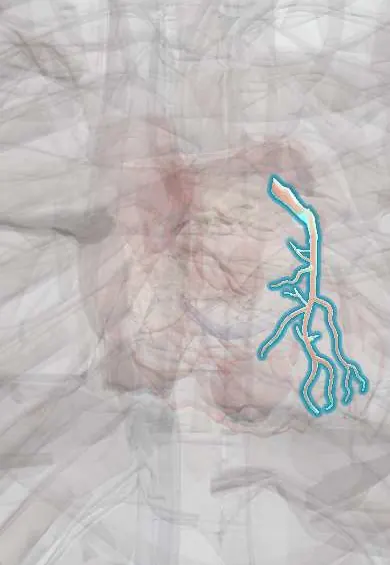
- LAD (anterior descending artery)
- Achilles tendon
- Left main coronary artery
- Right coronary artery
- Circumflex artery
- Ascending aorta
- Cornea
- Eyelids
In biochemistry
- LDL receptor
- PCSK9
- Apolipoprotein B (ApoB-100 and ApoB-48)
- Cholesterol
- Lipoprotein metabolism
- LDL (low-density lipoprotein)
- Fredrickson classification of hyperlipoproteinaemias
In physiology
Why it happens
- How a single gene causes disease: enzymes, receptors and structural proteins
- Intracellular accumulations: cholesterol, proteins, hyaline, glycogen
- Mendelian inheritance: autosomal dominant, recessive and X-linked
What it is
A genetic disorder, almost always autosomal dominant, with very high LDL from birth due to defects in the LDL receptor, ApoB or PCSK9.
Who gets it
It affects about 1 in 200 to 250 people worldwide and is the most common inherited cardiovascular disorder. Colombia and Latin America are thought to have a similar frequency, but most cases are undiagnosed. The homozygous form is very rare.
Causes
- LDLR variants (most cases)
- APOB variants that prevent receptor binding
- Gain-of-function PCSK9 variants
- Rarely, a recessive form due to LDLRAP1 variants
Risk factors
- A parent with the condition (50% chance of inheriting it)
- Family history of premature heart attack
- Related parents (homozygous form)
Pathophysiology
With fewer working LDL receptors the liver takes up less LDL and, receiving less cholesterol, makes more. LDL circulates longer, is oxidised in the artery wall and forms plaques from childhood. It also deposits in tendons (xanthomas), eyelids and cornea.
Classification
- Heterozygous: LDL often 190 mg/dL or more in adults
- Homozygous or compound heterozygous: LDL often above 400–500 mg/dL, with coronary disease in childhood
Symptoms and signs
- Often silent until coronary disease appears
- Tendon xanthomas (thickened Achilles or hand extensor tendons)
- Xanthelasma on the eyelids
- Corneal arcus before age 45
- Angina or heart attack at a young age
Diagnosis
- Clinical
- Suspected from very high LDL, xanthomas and family history; criteria such as the Dutch Lipid Clinic Network or Simon Broome are used.
- Tests
- Lipid panel; exclusion of secondary causes (TSH, glucose, kidney and liver function, proteinuria); genetic testing of LDLR, APOB and PCSK9; cascade screening of relatives.
- Imaging
- Carotid or Achilles tendon ultrasound; CT coronary calcium score; echocardiography in the homozygous form to assess the aortic valve and root.
Treatment
- Lifestyle
- Diet low in saturated fat, physical activity and no smoking, from childhood
- Medical
- High-intensity statins as the foundation
- Medical
- Ezetimibe and, if not enough, PCSK9 inhibitors or inclisiran
- Procedure
- LDL apheresis in the homozygous or resistant form
- Medical
- Lomitapide or evinacumab (anti-ANGPTL3) in the homozygous form, in specialist centres
- Follow-up
- Cascade screening of relatives and cardiovascular follow-up
Drugs for this condition
Complications
- Premature coronary disease and heart attack
- Supravalvular and valvular aortic stenosis (homozygous form)
- Stroke
- Peripheral artery disease
Prognosis
Untreated, about half of heterozygous men have coronary disease by age 50; early treatment brings the risk close to that of the general population.
Prevention
- Cascade screening of a patient's relatives
- Childhood cholesterol testing when there is a family history
Test yourself
Think of the answer, then tap the question to see it.
Which gene is altered in most cases of familial hypercholesterolaemia?
LDLR, the LDL receptor gene.
Which Achilles tendon finding suggests familial hypercholesterolaemia?
Thickening from a tendon xanthoma, caused by cholesterol deposits.
Why are a patient's relatives tested?
Inheritance is dominant: each child, sibling or parent is likely to have it and benefits from early treatment.
Why do some homozygous patients respond poorly to statins?
Statins lower LDL by increasing LDL receptors; with no working receptors the effect is small.
Related conditions
- Familial dysbetalipoproteinemia (type III hyperlipoproteinemia)
- Atherosclerosis and dyslipidaemia
- Myocardial Infarction (Heart Attack)
Educational information, not medical advice. For any symptom, see a health professional.
Sources: Familial hypercholesterolemia: MedlinePlus Genetics (MedlinePlus, US National Library of Medicine, 2026); Familial hypercholesterolemia: MedlinePlus Medical Encyclopedia (MedlinePlus, US National Library of Medicine, 2026); LDLR gene: MedlinePlus Genetics (MedlinePlus, US National Library of Medicine, 2026); PCSK9 gene: MedlinePlus Genetics (MedlinePlus, US National Library of Medicine, 2026).
Spotted a mistake?We are always improving for the community. Tell us what is wrong and our team will review it.Report a mistake
Representative model, for educational purposes only.