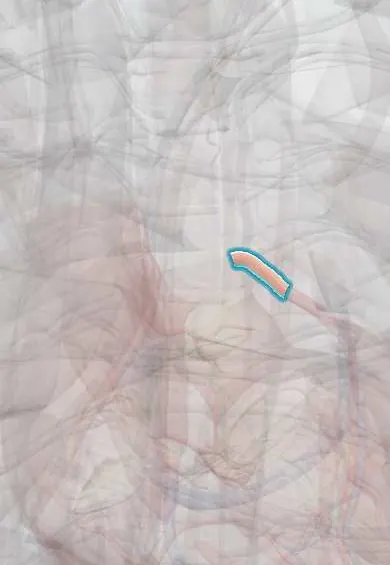
Left main coronary artery !
The left main coronary artery is the short first part of the left heart artery; it supplies most of the left ventricle, so narrowing here is serious.
Official name: Left coronary artery
Opens in the Durgical app, no sign-up needed.
What it is
The short first part of the left coronary artery, which splits into the LAD and the circumflex.
What it does
Supplies most of the left ventricle, so a narrowing here is especially dangerous.
Key facts
- Origin
- Left aortic sinus (above left coronary cusp); runs between pulmonary trunk and left auricle
- Branches
- LAD and circumflex (sometimes a ramus intermedius between them)
- Supplies
- Most of left ventricle, left atrium, anterior 2/3 of septum
Relations
- Course
- Leaves the left aortic sinus and runs a short way to the left and forward, between the pulmonary trunk and the left atrium, before dividing in the coronary groove
- In front
- Pulmonary trunk
- Behind
- Left atrium
- Superficial
- Left auricle (left atrial appendage), which overhangs its bifurcation, and epicardial fat
How to find it
Not palpable. Seen at surgery only after the pulmonary trunk is pulled forward: it leaves the left aortic sinus and runs briefly between the pulmonary trunk and the left auricle before dividing. At angiography the catheter tip is engaged in its ostium, and the short trunk is viewed from several angles because its bifurcation is easily hidden by overlap.
On imaging
On coronary angiography its bifurcation is opened out in the left anterior oblique caudal ('spider') view and the right anterior oblique caudal view; a drop (damping) of the catheter pressure on engagement suggests an ostial stenosis. Intravascular ultrasound helps judge a doubtful lesion; CT coronary angiography shows its origin and course.
Common problems
- Coronary artery disease: fatty plaque narrows them, causing chest pain on exertion (angina).
- Heart attack: a plaque breaks open and a clot suddenly blocks the artery.
How it is diagnosed
ECG and troponin for a heart attack; stress test, CT coronary angiography or a catheter angiogram to see narrowings.
Treatment
- Medicines (aspirin, statins, blood-pressure control) and stopping smoking.
- Angioplasty and stent through a catheter.
- Bypass surgery (CABG) for several or complex blockages.
Clinical notes
- Bypass grafts go to its branches, not to the trunk itself: the left internal thoracic artery to the LAD and further grafts to circumflex branches
- Stenting is an option in selected anatomy; lesions at the bifurcation, involving the openings of the LAD and the circumflex artery, are the technically demanding ones
- Aortic root procedures can obstruct its ostium; in root replacement it is reattached to the graft as a 'coronary button'
Anatomical variants
- Absent left main: the LAD and the circumflex artery arise by separate openings from the left aortic sinus (uncommon)
- Anomalous left coronary artery from the pulmonary artery (ALCAPA, Bland–White–Garland syndrome): myocardial ischemia and heart failure in infancy
Development
Coronary arteries grow from a vessel plexus laid down by the epicardium, which then links up with the aortic sinuses; a faulty link-up explains the anomalous origins listed under variants.
Related conditions
- Familial combined hyperlipidaemia
- Atherosclerosis and dyslipidaemia
- Vasospastic (Prinzmetal) angina
- Cocaine and sympathomimetic toxicity
- Kawasaki disease
- Stable angina
- Myocardial Infarction (Heart Attack)
Test yourself
Think of the answer, then tap the question to see it.
Where does the left main coronary artery arise and run before it divides?
From the left aortic sinus, a short way left and forward between the pulmonary trunk and the left atrium, under the left auricle; it divides into the LAD and circumflex.
What ECG pattern suggests acute left main occlusion or critical stenosis?
Widespread ST depression with ST elevation in aVR (often also in V1), frequently with cardiogenic shock.
Why is significant left main disease a classic indication for revascularization?
It threatens most of the left ventricle; it is traditionally treated by coronary artery bypass grafting.
Which anomalous course of the left coronary artery is a cause of sudden death in young athletes?
Origin from the right aortic sinus with a course between the aorta and the pulmonary trunk.
Educational information, not medical advice. For any symptom, see a health professional.
Its names
- Official Latin (TA2)
- arteria coronaria sinistra TA2 4142
- Official Spanish (DeCS)
- Arteria coronaria izquierda DeCS D003331
- English (TA2)
- Left coronary artery
- Also called
- left main · arteria coronaria cordis sinistra
Related
Sources: Terminologia Anatomica (TA2); DeCS; Anatomy, Thorax, Heart; Anatomy, Thorax, Sinoatrial Nodal Artery; 19.1 Heart Anatomy (OpenStax (Rice University), 2022) · adapted, CC BY 4.0.
Spotted a mistake?We are always improving for the community. Tell us what is wrong and our team will review it.Report a mistake
Representative model, for educational purposes only.