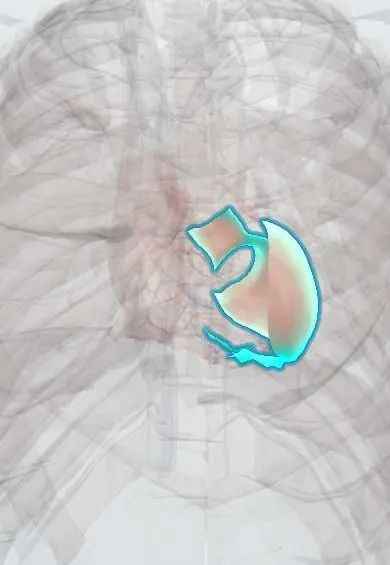
Myocardial Infarction (Heart Attack) !
A heart attack (myocardial infarction) is the death of heart muscle when a coronary artery is blocked; it is a medical emergency.
Updated 2026-10-30
Structures involved
Tap one to see what it is and open it in 3D.
In biochemistry
- Prostaglandin and thromboxane synthesis: Step 4 · Thromboxane A synthase (TBXAS1, CYP5A1)
- Aspartate aminotransferase (AST, GOT)
- LDL receptor
- PCSK9
- LDL (low-density lipoprotein)
- Aminotransferases (ALT and AST) as lab tests
- Creatine kinase (CK) and CK-MB as lab tests
- Cardiac troponin as a lab test
- Eicosanoids: prostaglandins, thromboxanes and leukotrienes
- Lactate dehydrogenase (LDH) as a lab marker
- Myoglobin
- Prostaglandin H₂ (PGH₂)
- Thromboxane A₂ (TXA₂)
- Isoenzymes
- HMG-CoA reductase
- Cyclooxygenase (COX-1 and COX-2)
In histology
- Cardiac muscle: intercalated discs
- Muscle injury, repair and satellite cells
- Cell injury, apoptosis and necrosis
In the clinical exam
- Heart failure syndrome: left- and right-sided signs
- Shock: the clinical signs and the types
- Chest pain: ischemic, pericardial, pleural and other patterns
- Analysing a symptom: onset, site, character, radiation and more
In physiology
- The cardiac conduction system
- ECG basics: waves, intervals and leads
- Shock physiology
- How arrhythmias arise
- Heart failure physiology
- The cardiac electrical axis
- The ECG in ischemia and infarction
- Coronary circulation and myocardial ischemia
- Visceral and referred pain
Why it happens
- Infarction: red vs white, and what decides the damage
- The myocardial infarct over time: what the pathologist sees from hours to months
- Tissue repair: regeneration or scar; labile, stable and permanent cells
- Granulation tissue and scar formation
- Reversible vs irreversible cell injury: the point of no return
- Mechanisms of cell injury: ATP, mitochondria, calcium, membranes and DNA
Show 14 more
- Hypoxia, ischemia and reperfusion injury
- Patterns of necrosis: coagulative, liquefactive, caseous, fat, fibrinoid, gangrenous
- Apoptosis vs necrosis: the comparison table
- Thrombosis and Virchow's triad
- The autopsy: clinical and medicolegal
- Causes of cell injury
- Arterial vs venous thrombi; mural thrombi and lines of Zahn
- Systemic (arterial) thromboembolism
- Watershed areas and the organs most sensitive to ischemia
- Oxidative stress and free-radical injury
- Other forms of cell death: necroptosis, pyroptosis, ferroptosis
- Drugs of abuse: cocaine, opioids, amphetamines, cannabis
- Fibrosis in organs: TGF-β and the myofibroblast
- Tobacco: how smoking injures tissue
What it is
Death of heart muscle due to prolonged lack of blood supply, usually from a blocked coronary artery. It is a medical emergency.
Who gets it
Most cardiovascular deaths occur in low- and middle-income countries. A 2022 meta-analysis of studies from Latin America and the Caribbean since 2000 found an in-hospital mortality of 9.9% for ST-elevation infarction, higher than in high-income countries; mortality was lower where more patients received reperfusion therapy.
Causes
- Atherosclerotic plaque rupture with thrombus
- Coronary artery spasm or embolism (less common)
Symptoms and signs
- Chest pain or pressure (may radiate to arm, jaw, back)
- Shortness of breath
- Nausea, sweating, light-headedness
- Some patients (especially women, older adults, people with diabetes) have atypical symptoms
Diagnosis
- Clinical
- History and exam
- Tests
- ECG changes, cardiac biomarkers (troponin)
- Imaging
- Echocardiography, coronary angiography
Treatment
- Acute
- Immediate reperfusion (PCI preferred when available) or thrombolysis, plus antiplatelet and anticoagulant therapy.
- Medical
- Medicines to reduce further risk.
- Rehabilitation
- Cardiac rehabilitation.
- Lifestyle
- Lifestyle changes.
Drugs for this condition
- Acetylsalicylic acid
- Morphine
- Heparin
- Metoprolol
- Atenolol
- Captopril
- Carvedilol
- Lisinopril
- Valsartan
- Ramipril
- Telmisartan
- Clopidogrel
- Enoxaparin
- Ticagrelor
- Argatroban
- Bivalirudin
- Prasugrel
- Eptifibatide
- Tirofiban
- Dalteparin
- Abciximab
- Alteplase
- Tenecteplase
- Reteplase
- Streptokinase
- Atorvastatin
- Simvastatin
- Rosuvastatin
- Pravastatin
- Evolocumab
Related conditions
- Acute mesenteric ischaemia
- Peripheral artery disease
- Acute limb ischaemia
- Aortic dissection
- Type 2 diabetes mellitus
- Arterial hypertension
- Atherosclerosis and dyslipidaemia
- Metabolic syndrome
Educational information, not medical advice. For any symptom, see a health professional.
Sources: Myocardial Infarction (StatPearls (NCBI Bookshelf), 2024); Hospital Mortality from Myocardial Infarction in Latin America and the Caribbean: Systematic Review and Meta-Analysis (Arquivos brasileiros de cardiologia, 2022) · adapted, CC BY 4.0.
Spotted a mistake?We are always improving for the community. Tell us what is wrong and our team will review it.Report a mistake
Representative model, for educational purposes only.