Conditions · Pediatrics and neonatology
Marfan syndrome !
Marfan syndrome is an inherited connective tissue disorder that makes people tall and loose-jointed and can dislocate the eye's lens and weaken the aorta.
Updated 2026-11-01
Structures involved
Tap one to see what it is and open it in 3D.
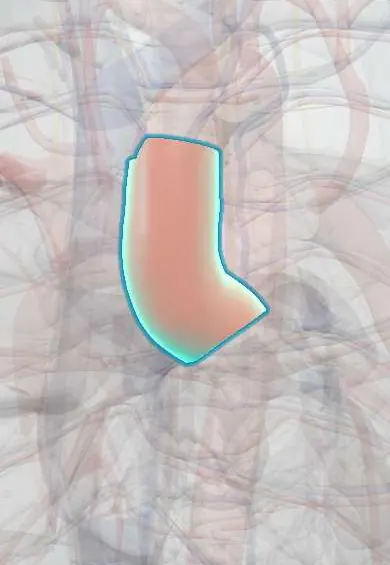
- Ascending aorta
- Lens
- Mitral anterior leaflet
- Zonular fibres
- Aortic arch
- Aortic right coronary cusp
- Mitral posterior leaflet
- Sternum
- Pleura
- Retina
Why it happens
- Mendelian inheritance: autosomal dominant, recessive and X-linked
- How a single gene causes disease: enzymes, receptors and structural proteins
- Fibrillin-1
- Extracellular matrix: collagen types, elastin, ground substance
What it is
An autosomal dominant connective tissue disorder caused by mutations in FBN1, the gene for fibrillin-1. It mainly affects the cardiovascular system (aortic root dilation, aneurysm and dissection; mitral valve prolapse), the eyes (lens dislocation) and the skeleton.
Who gets it
Affects about 1 in 5,000 people worldwide, equally in both sexes and all ethnic groups. About a quarter of cases arise from a new mutation with no family history. Features may appear at any age from infancy to adulthood.
Causes
- Mutations in the FBN1 gene on chromosome 15, encoding fibrillin-1
- Autosomal dominant inheritance with full penetrance but variable expression
- At least a quarter of cases are de novo mutations
Risk factors
- A parent with Marfan syndrome (50% chance for each child)
- Advanced paternal age is linked to de novo mutations
Pathophysiology
Fibrillin-1 forms microfibrils that support elastic fibres and also hold TGF-beta in an inactive state. Defective fibrillin weakens elastic tissue and increases TGF-beta signalling, which degrades the aortic media (cystic medial degeneration). The aortic root dilates and can dissect, the ciliary zonules that hold the lens stretch, and bones overgrow in length with joint laxity.
Symptoms and signs
- Tall, thin build with long limbs; arm span greater than height
- Long, slender fingers and toes (arachnodactyly); positive thumb and wrist signs
- Chest wall deformity: pectus excavatum or carinatum
- Scoliosis, flat feet and joint hypermobility
- Lens dislocation (ectopia lentis), usually upward, and severe myopia
- Stretch marks without weight change; high-arched palate and dental crowding
- Mitral valve prolapse: mid-systolic click, sometimes a murmur and palpitations
Diagnosis
- Clinical
- The revised Ghent criteria combine aortic root dilation (Z-score) and ectopia lentis, a systemic score of skeletal and other findings, family history and FBN1 testing. Examination includes height, arm span, thumb and wrist signs, chest wall, spine and slit-lamp eye examination.
- Tests
- Genetic testing for FBN1 mutations confirms the diagnosis and allows family testing; ECG for arrhythmias.
- Imaging
- Echocardiography measuring the aortic root at the sinuses of Valsalva, with serial follow-up; CT or MRI angiography of the whole aorta; slit-lamp examination for lens dislocation; spine X-rays for scoliosis.
Differential diagnosis
- Loeys-Dietz syndrome
- Vascular Ehlers-Danlos syndrome
- Homocystinuria (downward lens dislocation, intellectual disability, thrombosis)
- Familial thoracic aortic aneurysm syndromes
- Constitutional tall stature and Klinefelter syndrome
Goal of treatment
Slow aortic dilation and prevent aortic dissection and rupture, protect vision and manage skeletal problems, with lifelong follow-up.
Treatment
- Medical
- Beta-blockers and/or angiotensin II receptor blockers to reduce stress on the aortic wall and slow root dilation.
- Follow-up
- Regular echocardiography and aortic imaging, eye examinations and spine checks; screening of first-degree relatives.
- Surgical
- Prophylactic aortic root replacement (valve-sparing when possible) when the diameter or growth rate reaches surgical thresholds; mitral valve repair, lens surgery or scoliosis surgery when needed.
- Lifestyle
- Activity guidance usually limits contact sports, isometric exercise and heavy lifting; pregnancy is planned with cardiology and high-risk obstetrics.
Complications
- Aortic root aneurysm, aortic dissection and rupture (main cause of death)
- Aortic regurgitation and mitral regurgitation with heart failure
- Arrhythmias and infective endocarditis
- Ectopia lentis, retinal detachment, glaucoma and early cataract
- Spontaneous pneumothorax
- Scoliosis and dural ectasia
Prognosis
Untreated, life expectancy was much shorter because of aortic dissection. With early diagnosis, medical therapy, imaging follow-up and timely aortic surgery, many people reach a near-normal lifespan.
Prevention
- Genetic counselling for affected people and families
- Screening of first-degree relatives with clinical examination, echocardiography and genetic testing
- Regular surveillance to prevent dissection
Test yourself
Think of the answer, then tap the question to see it.
Which gene and protein are defective in Marfan syndrome?
The FBN1 gene, encoding fibrillin-1, a component of elastic microfibrils.
What is the inheritance pattern of Marfan syndrome?
Autosomal dominant, with about a quarter of cases arising from new mutations.
What is the main cause of death in Marfan syndrome?
Aortic root dilation leading to aortic dissection or rupture.
In which direction does the lens usually dislocate in Marfan syndrome, versus homocystinuria?
Upward (superotemporal) in Marfan; downward (inferonasal) in homocystinuria.
Which drug classes are used to slow aortic dilation in Marfan syndrome?
Beta-blockers and angiotensin II receptor blockers.
Related conditions
- Aortic dissection
- Aortic regurgitation
- Mitral valve prolapse
- Mitral regurgitation
- Pneumothorax
- Scoliosis
- Retinal detachment
- Homocystinuria
- Ehlers–Danlos syndrome
Educational information, not medical advice. For any symptom, see a health professional.
Sources: Marfan syndrome (MedlinePlus Genetics (U.S. National Library of Medicine), 2024).
Spotted a mistake?We are always improving for the community. Tell us what is wrong and our team will review it.Report a mistake
Representative model, for educational purposes only.