Aortic dissection !
An aortic dissection is a tear in the inner wall of the aorta that lets blood split the wall; it causes sudden, severe chest or back pain and is an emergency.
Updated 2026-10-29
Structures involved
Tap one to see what it is and open it in 3D.
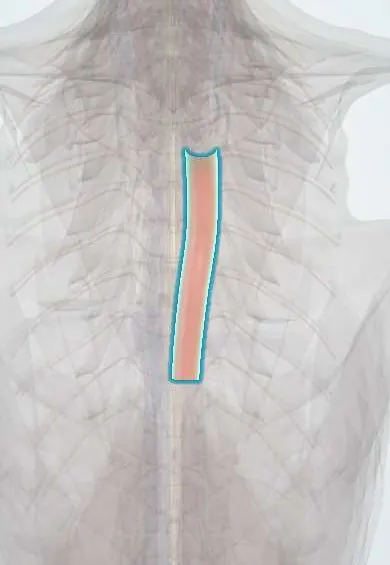
- Thoracic aorta
- Abdominal aorta
- Common iliac arteries
- Carotid arteries
- Posterior intercostal arteries
- Artery of Adamkiewicz
- Spinal cord
- Esophagus
In biochemistry
In histology
In the clinical exam
- Peripheral pulses and the ankle–brachial index
- Cardiac tamponade: Beck triad and pulsus paradoxus
- Chest pain: ischemic, pericardial, pleural and other patterns
- Hypertensive emergency: target-organ signs
- Blood pressure measurement
Why it happens
- How a single gene causes disease: enzymes, receptors and structural proteins
- The autopsy: clinical and medicolegal
- Drugs of abuse: cocaine, opioids, amphetamines, cannabis
- Physiology of hypertension
What it is
A tear in the inner layer (intima) of the aorta that lets blood enter the media and split the wall, creating a false lumen. It is a life-threatening emergency.
Who gets it
Most patients are older adults with long-standing hypertension, more often men. In young people it suggests a connective tissue disorder, a bicuspid aortic valve or stimulant use.
Causes
- Chronic hypertension (the main factor)
- Connective tissue disorders: Marfan, Ehlers–Danlos (vascular type), Loeys–Dietz
- Bicuspid aortic valve and coarctation of the aorta
- Pre-existing aortic aneurysm
- Cocaine or amphetamine use
- Iatrogenic: cardiac surgery or catheterisation; blunt trauma
Risk factors
- Poorly controlled hypertension
- Age over 60 and male sex
- Atherosclerosis and smoking
- Family history of aortic disease
- Pregnancy, mainly in women with Marfan syndrome
- Inflammatory aortitis (giant cell, Takayasu) or syphilitic aortitis
Pathophysiology
An intimal tear lets blood under pressure dissect along the media, spreading forward or backward. The false lumen can compress or occlude branches (coronary, carotid, spinal, renal, mesenteric, iliac), rupture outward or extend into the aortic root, causing aortic regurgitation or cardiac tamponade.
Classification
- Stanford A: involves the ascending aorta, wherever the tear starts
- Stanford B: does not involve the ascending aorta; usually starts beyond the left subclavian artery
- DeBakey I (ascending and beyond), II (ascending only), III (descending only)
- Acute (under 2 weeks), subacute, chronic
Symptoms and signs
- Sudden, severe chest pain described as tearing or ripping, maximal at onset
- Pain radiating to the back between the shoulder blades, migrating as the dissection extends
- Pulse deficit or a difference of systolic blood pressure between the arms
- New diastolic murmur of aortic regurgitation (type A)
- Syncope, stroke, paraplegia, limb ischaemia or abdominal pain from branch involvement
Diagnosis
- Clinical
- High-risk history (hypertension, Marfan syndrome), the pain features and exam findings (pulse or blood pressure difference, aortic regurgitation murmur) raise suspicion; clinical risk scores help.
- Tests
- ECG to look for ischaemia; troponin, lactate and renal function. D-dimer is usually raised; a normal value lowers probability in low-risk patients, though criteria vary.
- Imaging
- CT angiography of the whole aorta is the standard test. Transoesophageal echo in unstable patients; bedside transthoracic echo may show a flap, aortic regurgitation or tamponade. Chest X-ray may show a wide mediastinum, but a normal film does not exclude it.
Differential diagnosis
- Acute coronary syndrome
- Pulmonary embolism
- Pericarditis or tamponade from another cause
- Ruptured abdominal aortic aneurysm
- Oesophageal rupture
- Tension pneumothorax
Goal of treatment
Stop the dissection from extending or rupturing by lowering heart rate and blood pressure fast, repair type A emergently and treat complications of type B.
Treatment
- Acute
- Emergency care in a monitored setting with strong pain control.
- Medical
- Intravenous beta-blockers first to lower heart rate and the force of ejection, then vasodilators if blood pressure stays high.
- Surgical
- Stanford type A: emergency open surgery to replace the ascending aorta, with valve repair or replacement when needed.
- Procedure
- Complicated type B (rupture, malperfusion, persistent pain or uncontrolled blood pressure): thoracic endovascular repair (TEVAR) or surgery.
- Follow-up
- Uncomplicated type B: medical therapy and lifelong blood pressure control, with serial CT or MRI surveillance.
Drugs for this condition
Complications
- Aortic rupture and death
- Cardiac tamponade
- Acute aortic regurgitation and heart failure
- Myocardial infarction, stroke or paraplegia
- Renal, mesenteric or limb ischaemia
- Later aneurysm of the false lumen
Prognosis
Untreated type A dissection has very high early mortality, rising every hour; surgery greatly improves survival. Type B treated medically has better short-term survival but needs lifelong follow-up because the aorta may dilate.
Prevention
- Blood pressure control
- Surveillance and timely repair in Marfan syndrome, bicuspid valve or known aortic dilation
- Avoiding stimulant drugs
Test yourself
Think of the answer, then tap the question to see it.
What is the difference between Stanford type A and type B aortic dissection?
Type A involves the ascending aorta and needs emergency surgery; type B spares it and is usually treated medically unless complicated.
What is the classic presentation of aortic dissection?
Sudden severe tearing chest pain radiating to the back, with a pulse deficit or a blood pressure difference between the arms.
What is the imaging test of choice in a stable patient with suspected aortic dissection?
CT angiography of the whole aorta.
Which drug class is used first to control heart rate and blood pressure in acute aortic dissection?
Intravenous beta-blockers, to reduce shear stress on the aortic wall before adding vasodilators if needed.
Why can aortic dissection be mistaken for an inferior myocardial infarction?
The dissection can extend into the right coronary artery and cause ST elevation; giving anticoagulation or thrombolysis can be fatal.
Related conditions
- Abdominal aortic aneurysm
- Myocardial Infarction (Heart Attack)
- Aortic Valve Stenosis
- Pulmonary embolism
- Acute mesenteric ischaemia
- Giant cell arteritis
- Acute pericarditis
- Cardiac tamponade
Educational information, not medical advice. For any symptom, see a health professional.
Sources: Aortic Dissection (StatPearls (NCBI Bookshelf), 2024).
Spotted a mistake?We are always improving for the community. Tell us what is wrong and our team will review it.Report a mistake
Representative model, for educational purposes only.